
🍽 Kitchen Mold Removal · Under-Sink · Cabinets · Appliance Leaks · Inwood, Manhattan · ZIP 10034
Kitchen Mold Removal in Inwood, Manhattan
Kitchen mold in Inwood apartments almost always starts under the sink, not on the counter. A slow supply-line drip or a range hood that vents into the cabinet instead of outside can soak a cabinet base for weeks before anyone notices the smell. We find the moisture source first, then remove the mold, not the other way around.
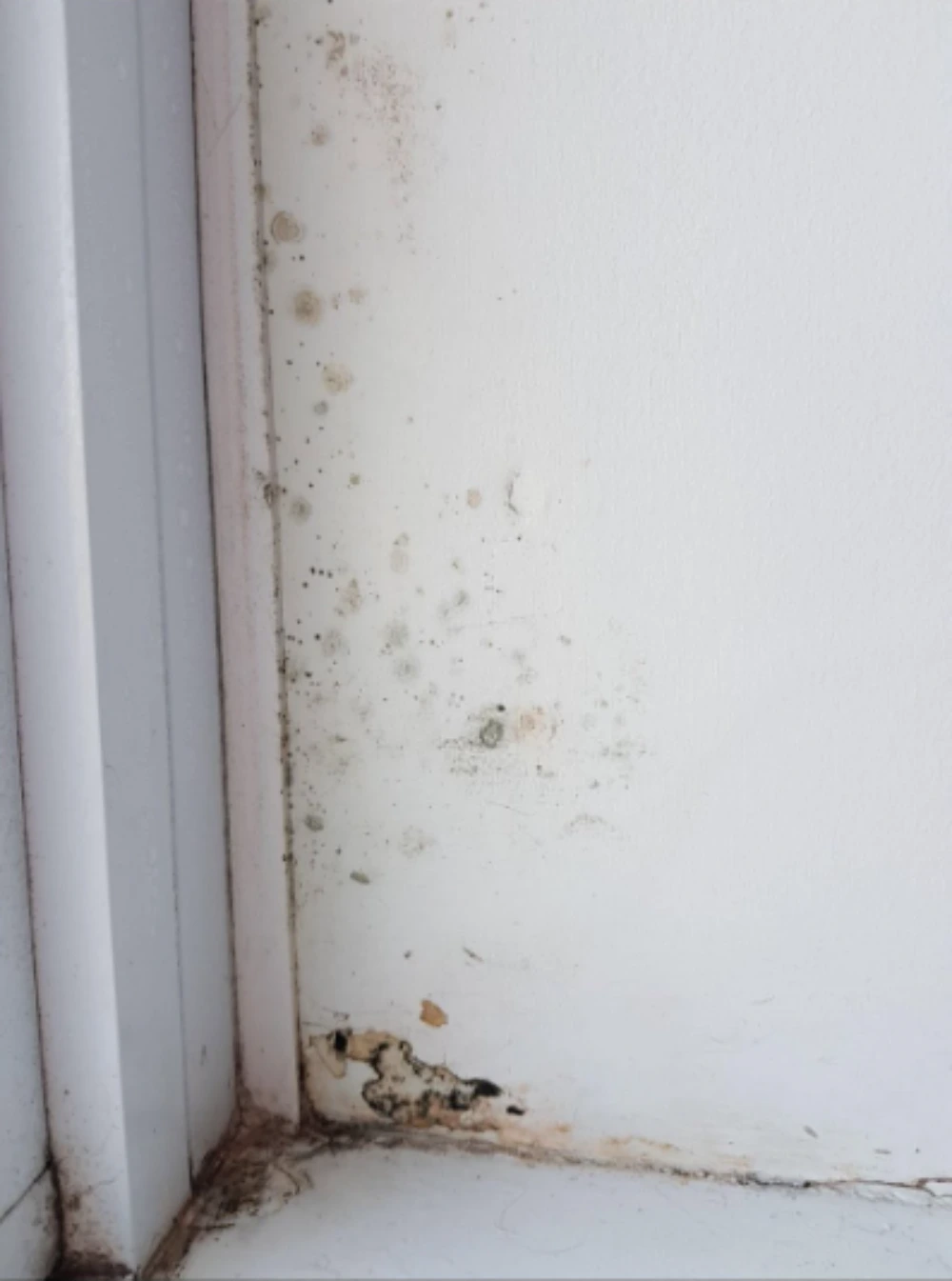
Real mold remediation job. Inwood, Manhattan – ZIP 10034.
The kitchen in a pre-war Inwood walk-up runs on plumbing and ventilation that were never designed for a dishwasher, an ice-maker line, or a range hood pushing steam somewhere it has to go. Original supply lines and drain traps sit inside a cabinet base that has nowhere to drain if something starts leaking. A stove with no vented hood turns every pot of pasta into humidity with nowhere to escape. Those two conditions together, aging plumbing and trapped moisture, are why kitchen mold in this neighborhood shows up in the same three places almost every time.
When someone calls about kitchen mold, the first thing we ask isn’t how bad it looks, it’s where the water is coming from. A dark spot under the sink is easy to wipe away. A cabinet base that’s been slowly absorbing a drip for two months is not, and by the time you can smell it, the particleboard has usually already started to swell.
Why Kitchen Mold Keeps Showing Up Under the Sink and Around Cabinets in Inwood Apartments
The recurring kitchen mold pattern in Inwood apartments almost always comes down to one of three things:
A slow supply-line or drain-line leak under the sink. A worn P-trap gasket, a loose supply-line fitting, or a garbage disposal seal that’s failed drips quietly onto the cabinet floor for weeks. The leak is silent and the cabinet door hides it, so the first sign is usually a musty smell, not visible water. By then the particleboard base has often already darkened and started to swell.
A range hood or exhaust that was never vented to the outside. Many pre-war Inwood kitchens have no window and a range hood that recirculates air back into the room instead of venting it out, or no hood at all. Every pot of boiling water and every pan of oil adds steam to a room with nowhere for it to go. Over time, that condensation settles on backsplash grout, cabinet toe-kicks, and the underside of upper cabinets near the stove.
A refrigerator or dishwasher water-line leak. Older fridges sit close to the wall with limited airflow behind them, and a failed ice-maker line or simple condensation buildup can soak the flooring underneath without being visible unless the unit is pulled out. A dishwasher with a worn door seal or a supply connection that was never fully tightened during installation causes the same slow, hidden problem near the base cabinets.
Is kitchen mold dangerous to cook around?
Kitchen mold limited to a small area under the sink or behind an appliance is mainly a hygiene and structural concern rather than an emergency, but because it’s in a food-prep space, it shouldn’t be left alone. Reactions vary from person to person, people with asthma, allergies, or a weakened immune system are more likely to notice symptoms like coughing or nasal congestion. If the mold is recurring after cleaning or you can smell it without finding the source, the moisture has gotten into material that a wipe-down can’t reach, and that’s the point to have it properly assessed.
When Kitchen Mold Requires Professional Remediation
You can safely clean small patches of surface mold on hard, sealed, non-porous kitchen surfaces, glazed tile, sealed countertops, chrome fixtures, with diluted detergent or white vinegar. That’s reasonable routine maintenance.
Professional remediation becomes necessary when:
- The mold keeps returning within a few weeks of cleaning, indicating it has gotten into the cabinet material or the subfloor beneath it
- You can smell mold but can’t find the visible source, indicating growth behind an appliance or inside the cabinet base
- The cabinet base, subfloor, or an adjoining wall shows soft or swollen material, water staining, or peeling paint
- The total affected area is over approximately 10 square feet, the Article 32 threshold that triggers the licensed-party requirement
- A family member with asthma or a respiratory condition is having symptoms that worsen at home
What Kitchen Mold Remediation Involves in an Inwood Apartment
We treat the moisture source and the mold as two separate problems, because removing mold without fixing the leak behind it means it comes back within weeks. An independent, licensed assessor identifies the extent of the mold and the moisture source first, using a moisture meter behind cabinets and under flooring rather than just a visual check, and produces a written remediation plan before any work starts. The kitchen work area is then contained with poly sheeting and negative air pressure so spores don’t spread into the rest of the apartment.
Affected material that’s absorbed moisture, cabinet particleboard, water-damaged subfloor, drywall behind the sink wall, gets physically removed. Non-porous surfaces like tile or sealed countertops can often be cleaned and treated in place. The area is dried completely with air movers and dehumidification, then treated with an EPA-registered antimicrobial to prevent regrowth. A separate, independent party performs the clearance testing before the job is called done, we don’t sign off on our own work, the same assessor and remediator separation NYS Article 32 requires everywhere on this site.
Can I just clean kitchen mold myself with vinegar or bleach?
For a small spot of mold on a hard, sealed, non-porous surface, tile grout or a sealed countertop, vinegar or a mild cleaning solution can work on the surface. Once mold has gotten into porous material like cabinet particleboard, drywall, or unsealed wood under the sink, wiping the surface doesn’t remove what’s growing inside the material. It typically returns within a few weeks because the moisture source was never addressed. That’s usually the point where a bottle of vinegar turns into a bigger job, not because the mold itself is unusual, but because the leak behind it kept feeding it the whole time.
Will Insurance Cover Kitchen Mold Remediation?
If the mold followed a sudden event, a burst supply line or a dishwasher that overflowed and was reported promptly, it’s often covered under a standard policy. If it developed gradually from a slow, unnoticed leak or ordinary cooking humidity over time, most standard homeowners or renters policies exclude it. We can’t guarantee coverage either way, but we’ll document the condition clearly enough for you to file a claim and let your insurer make that call.
Cabinet base and under-sink remediation. Inwood, Manhattan – ZIP 10034.
A dark spot under the sink is easy to wipe away. A cabinet base that’s been absorbing a slow leak for two months is not. Call and describe the situation. Call (917) 694-9003.
Kitchen mold removal is available across Inwood (ZIP 10034) and nearby Upper Manhattan, including Washington Heights and Marble Hill. Same process, same written scope, same independent clearance.
Kitchen Mold Removal – Frequently Asked Questions
Kitchen Mold Under the Sink or Behind the Fridge? Get It Properly Assessed.
Same-day assessments. Inwood, Manhattan – ZIP 10034. Article 32 licensed. Written scope, independent clearance.