📍 Washington Heights · Hudson Heights · Fort George · ZIP 10032, 10033, 10040 · Upper Manhattan
Mold Removal in Washington Heights: Hidden Leaks, Pre-War Walls and HPD Violations
Washington Heights is the neighborhood right below us, and it has the same problem we see every week in Inwood: 100-year-old buildings with tired plumbing and cold masonry walls. We find where the water is coming from, give you a written scope before work starts, and use independent clearance testing to prove it’s done. If it’s small enough to handle yourself, we’ll say so.
Updated September 26, 2026. Same-day assessments from 155th Street up to Dyckman. Hablamos Español.
Most mold removal Washington Heights jobs start with one question: where is the water coming from? If you live between 155th Street and Dyckman, you already know the look of these buildings: six-story brick walk-ups east of Broadway, big courtyard elevator buildings along Fort Washington Avenue, Art Deco co-ops perched on the ridge in Hudson Heights. We work in the same kind of building every day in Inwood, just a few blocks north. The mold problems are the same too, and so is the fix: find the water first.
This page covers what’s actually driving mold in Washington Heights, what the city’s own records say, what it costs, and what to do if you rent or own here.
Washington Heights Mold at a Glance (2025)
Why do Washington Heights apartments get mold?
Mostly because of the age and construction of the buildings. The median residential building in Washington Heights was built in 1915, and 92% went up before 1940. That means original plumbing risers, cast-iron waste stacks, uninsulated brick walls and steam heat in almost every building, which together keep walls and ceilings damp long after a leak or a humid summer.
Century-old risers
A pinhole leak in a supply riser or a weeping waste stack can wet the plaster inside a wall for weeks. By the time a stain shows up on the bathroom ceiling below, the cavity has been wet the whole time.
Built on a ridge
The neighborhood sits on Manhattan schist, and Bennett Park at 183rd is the highest natural point on the island. Rain runs downhill along the rock toward the Harlem River side, so lower-grade basements east of Broadway take on water first.
Big buildings, shared walls
Nearly 6 in 10 Washington Heights buildings have 21 or more apartments. One leak in a stacked bathroom line can reach three or four units before anyone connects the dots.
Steam heat and closed windows
Radiators run from October to May, windows stay shut, and warm indoor air condenses on cold exterior walls, window returns and behind furniture pushed against outside walls.
Our Mold Services in Washington Heights
Every service we offer in Inwood, we offer from 155th Street up to Dyckman. Every job starts the same way: find the water source first.
🏠
Basement Mold Removal
Cellar storage, laundry rooms and ground-floor units in walk-ups east of Broadway, where hillside runoff collects.
🌊
Water Damage & Post-Flood Mold
Riser leaks, burst pipes and ceiling leaks from the unit above. We document the cause for your insurance claim.
⬛
Black Mold Removal
Handled accurately, not sold on fear. “Black mold” is a color description, not a species diagnosis.
🏚️
Attic Mold Removal
Top-floor units and roof bulkheads under old flat roofs and parapets, common in Hudson Heights buildings.
🚿
Bathroom Mold Removal
Grout, ceilings, behind the tub and under the sink, usually fed by the stacked bathroom line above.
🚿
Kitchen Mold Removal
Under-sink leaks, dishwasher & fridge lines, cabinet mold. The kitchen callback nobody expects.
🕳️
Crawl Space Mold
Rare in apartment buildings, but we handle crawl spaces under additions and storefronts.
🔬
Independent Mold Testing
Done by a separate licensed assessor we coordinate for you – that’s the law. Air sampling + lab results.
⚡
Emergency / 24-Hour Response
Burst pipe, active leak, basement flooding, sewage backup. We respond fast and document for insurance.
Where does mold show up in Washington Heights buildings?
Bathrooms, basements and the apartments under them. In walk-ups along Audubon, Amsterdam and St. Nicholas Avenue, it’s usually a bathroom ceiling or the wall behind the tub, fed by the riser above. In the larger buildings on Fort Washington Avenue and in Hudson Heights along Cabrini Boulevard and Pinehurst Avenue, top-floor units see roof and parapet leaks, and ground-floor units see basement and courtyard drainage problems.
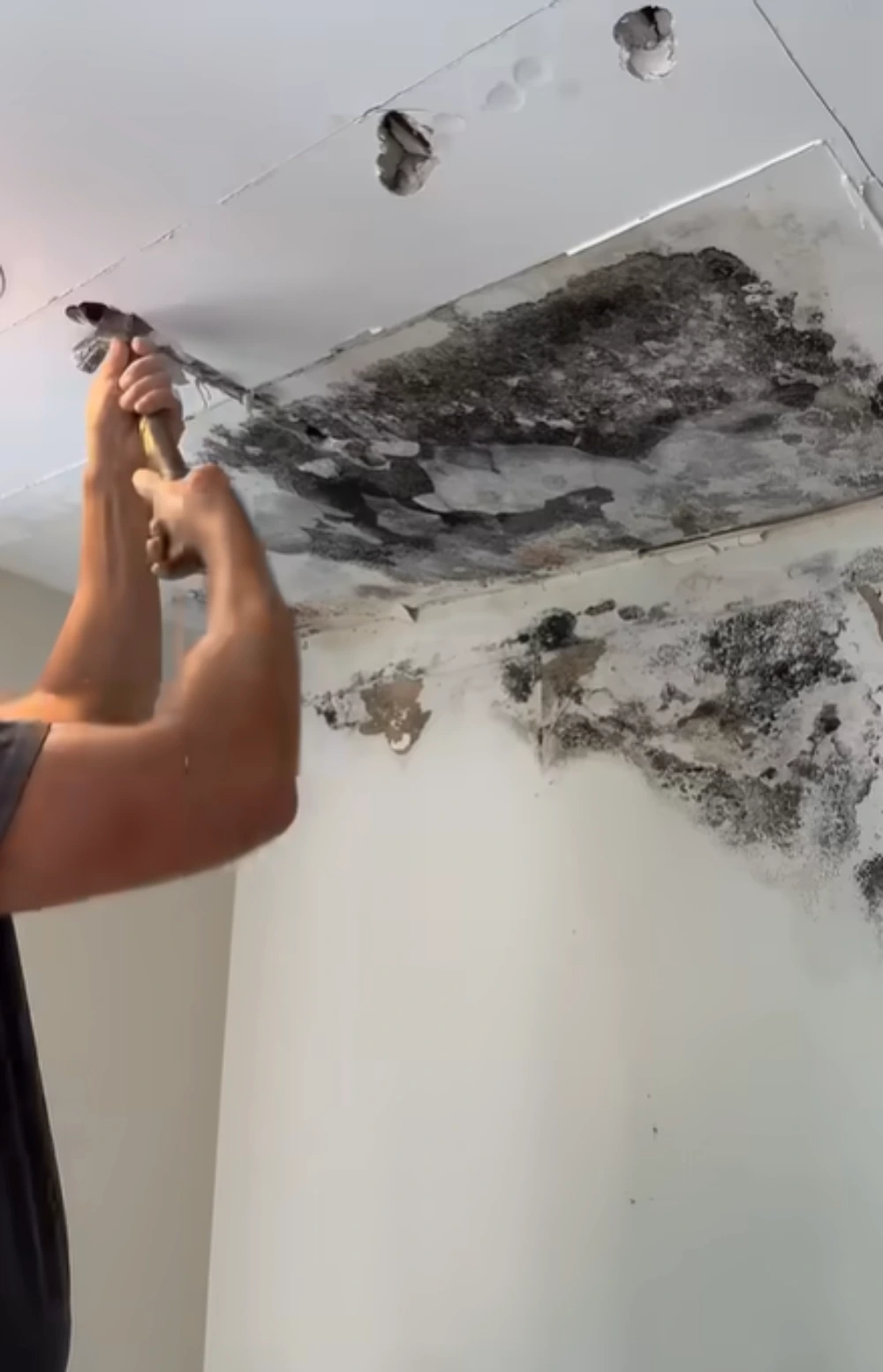
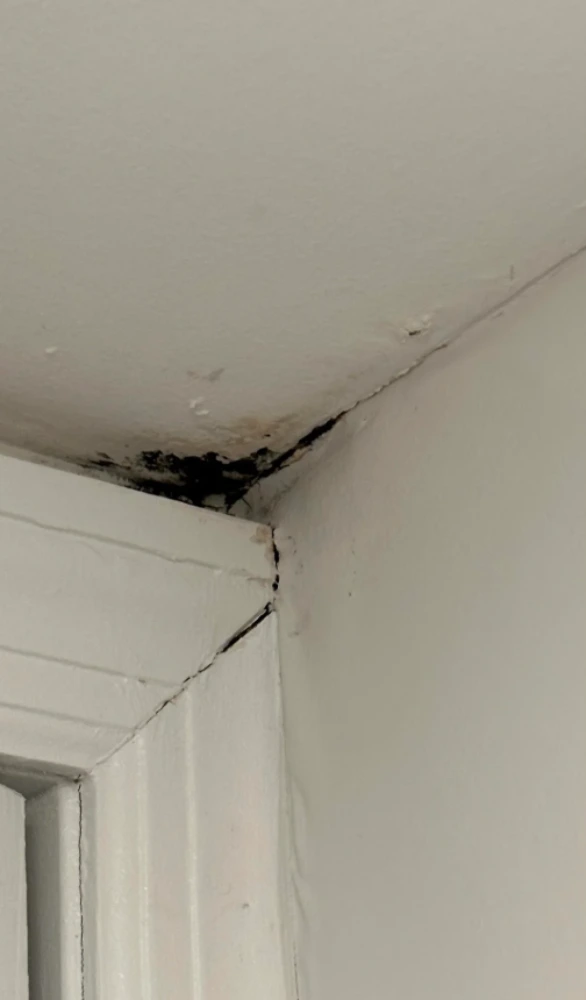
Storefronts are their own category. Along 181st Street, St. Nicholas and Broadway, cellar storage under restaurants, bakeries and bodegas stays damp year-round, and walk-in coolers sweat. That’s often a fast, contained job, but it has to be done right because inspectors and customers both notice.
Is it mold or just condensation? Condensation wipes away and stays gone for a while. Mold comes back in the same spot within days and smells musty. If it keeps returning after cleaning, treat it as mold and get it looked at.
How common is mold in Washington Heights compared to the rest of Manhattan?
About three times the Manhattan average. In 2025, Washington Heights filed 23.0 mold complaints per 1,000 apartments with 311, against 7.3 for Manhattan and 8.9 citywide. ZIP 10040, which covers Fort George and the north end of Hudson Heights, had the highest rate of the three at 26.1, among the top four ZIP codes in Manhattan.
Source: NYC Open Data (311 Service Requests, PLUTO), pulled September 2026. Method on our Inwood mold data page.
Complaints are rising, too. Washington Heights went from 987 mold complaints in 2021 to 1,371 in 2025, up 39%. HPD issued 1,650 mold violations here in 2025, and 3,167 mold violations across the three ZIP codes are still open today, 514 of them Class C.
When is mold season in Washington Heights?
September through January, peaking in October. Over 2021 to 2025, Washington Heights logged 638 mold complaints in October and 398 in April, the quietest month. Mold grows fastest in humid summer air, but people notice it and report it once the heat comes on and the windows close.
What does that mean for you? A musty closet in August is worth dealing with before October 1. Landlords: schedule Local Law 55 inspections in late summer and you’ll catch most of it before tenants start calling 311.
Mold Removal Washington Heights: How Do We Handle It?
The same way on every job: moisture source first, independent clearance last. For anything over 10 square feet, New York’s Article 32 requires a separately licensed assessor to write the plan and a licensed remediator to do the work. We remediate, and we coordinate the independent assessor for you.
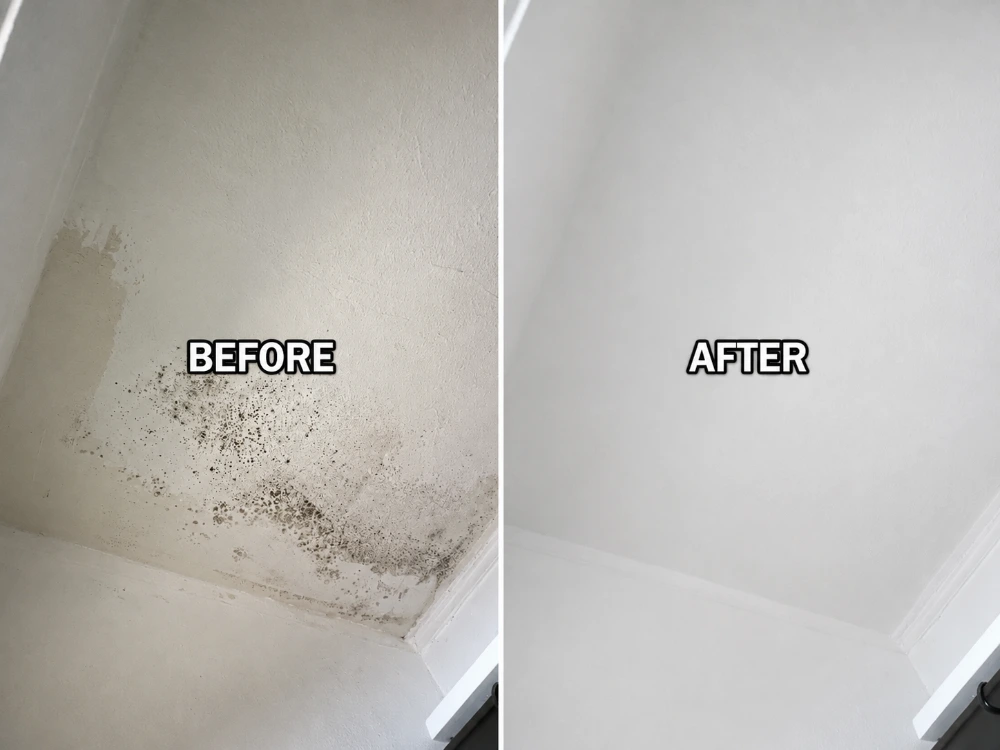
Moisture check
We find where the water is coming from: riser, roof, window, basement wall or condensation. Sometimes the honest answer is that it’s small enough to handle yourself.
Independent assessment and written scope
A licensed assessor documents the extent and writes the plan. You get the scope and estimate in writing before anyone starts.
Containment and removal
Polyethylene containment and negative air so spores stay in the work area. Contaminated drywall or plaster comes out, surfaces get HEPA cleaned and treated.
Dry, then clear
We dry the structure to a metered target, then a separate assessor runs air and surface sampling through an accredited lab. You keep the paperwork.
Full detail on each step is on our mold remediation page, and room-specific guides cover basements, bathrooms and water damage.
Mold Remediation Washington Heights Costs: What Will You Pay?
Most apartment jobs fall between $800 and $7,500. A small contained area typically runs $800 to $2,500. A bathroom, a basement wall or a similar mid-size job runs $2,500 to $7,500. Large or post-flood work runs $8,000 to $25,000 or more. Independent assessment adds $350 to $900 and clearance testing $300 to $600. Every mold remediation Washington Heights job gets a written estimate before work starts.
The biggest variable is the moisture source. A riser repair inside a shared wall costs more than a bathroom fan. The full breakdown is on our mold removal cost page.
What if you rent in Washington Heights?
Your landlord is responsible. Almost every building in the neighborhood has 3 or more apartments, which puts it under Local Law 55: the owner must inspect every unit for mold each year and fix it along with the water causing it. If they don’t, document it with dated photos, notify them in writing, then file with 311. HPD will send an inspector.
Step-by-step guides: filing a 311 and HPD mold complaint, when your landlord won’t fix mold, and tenant rights and mold in NYC. NYCHA residents follow a different process, covered in our NYCHA mold guide.
What if you own or manage a building in Washington Heights?
Plan for mold as a routine compliance item. About 1 in 4 residential buildings here got an HPD mold violation in 2025. HPD classes violations by size: Class A under 10 square feet (90 days to correct), Class B 10 to 29 (30 days), Class C 30 or more (21 days). With 10 or more units, anything over 10 square feet needs licensed professionals.
See our landlord compliance guide, what to do after an HPD violation and the Local Law 55 checklist. The rules themselves are on NYC Mold Laws Explained.
Do you serve all of Washington Heights?
Yes, from 155th Street up to Dyckman. That includes Hudson Heights and the blocks around Fort Tryon Park, Fort George near Highbridge Park, and everything along Broadway, St. Nicholas, Audubon, Amsterdam and Fort Washington Avenue. We’re based at 61 Seaman Ave in Inwood, so most of the neighborhood is a short drive down Broadway. We also cover Inwood and Marble Hill. For mold removal Washington Heights wide, from 155th Street up to Dyckman, call (917) 694-9003.
Fort Tryon and Hudson Heights
The blocks around Fort Tryon Park are a different job from the walk-ups down the hill. Hudson Heights sits high on the ridge, and most buildings along Fort Washington Avenue and Cabrini Boulevard are 1920s and 1930s elevator co-ops and apartment buildings with steam heat. The mold we find here usually comes from roof and parapet leaks, window leaks on walls facing the Hudson wind, radiator condensation in closed-up winter apartments, and old risers inside the wall.
Many owners here are co-op shareholders, so the paperwork matters as much as the cleanup. You get a written scope before work starts and an independent clearance report at the end, which is what a co-op board, managing agent or buyer’s attorney will ask for.
Frequently Asked Questions: Mold Removal in Washington Heights
Do you offer mold removal in Washington Heights?
How common is mold in Washington Heights apartments?
How much does mold removal cost in Washington Heights?
Is my Washington Heights landlord responsible for fixing mold?
When is mold season in Washington Heights?
Can the same company test for mold and remove it in Washington Heights?
Mold in Your Washington Heights Apartment or Building?
Washington Heights, Hudson Heights and Fort George – ZIP 10032, 10033, 10040. We find the moisture source first, give you a written scope, and use independent clearance testing. No pressure, no fear-mongering.
📞 Call (917) 694-9003 – Describe What You’re Seeing