
🏢 Landlord Compliance · NYS Article 32 · HPD · Local Law 55 · Inwood, Manhattan
Article 32 for Property Managers: How to Hire a Mold Assessor and Remediator in NYC
HPD notice on your desk, or mold found during your Local Law 55 inspection? New York law decides who’s allowed to fix it: a licensed assessor writes the plan, a separate licensed remediator does the work, and the assessor clears it. Here’s how to hire in the right order and end up with paperwork that holds up.
Updated September 26, 2026. For owners, managing agents and supers in Inwood and Upper Manhattan. Not legal advice.
You got the HPD notice, or your Local Law 55 inspection turned up mold in 4B. Either way, you now have a deadline, a tenant waiting, and a New York law that tells you exactly who’s allowed to fix it. Hire a mold assessor and remediator in the wrong order and you can do the work twice.
This guide covers Article 32 for property managers, supers and owners of Inwood and Upper Manhattan buildings. It covers what Article 32 of the New York Labor Law actually requires, when it applies, how to hire the assessor and remediator in the right order, and the paperwork you need at the end.
Inwood Buildings and Article 32: The Numbers
What does Article 32 require from property managers?
Separate, licensed companies for assessment and remediation. For any mold project over 10 square feet, New York Labor Law Article 32 requires a licensed mold assessor to write the plan and a different licensed remediation contractor to do the work. The same licensee can’t do both on one property, and nobody can own a stake in both. A licensed assessor then clears the work in writing.
The law came in after Superstorm Sandy, when too many “we test and remove” outfits diagnosed big problems and then billed to fix them. Splitting the two roles takes that incentive away. For a property manager, it also means you get a paper trail that holds up with HPD, in Housing Court and with your insurer.
When do you need licensed mold professionals in NYC?
Over 10 square feet, in buildings with 10 or more units. That’s the line in practice for Inwood. Article 32 defines a mold “project” as more than 10 square feet, and HPD requires owners of buildings with 10 or more units to hire NYS Department of Labor licensed assessors and remediators for mold above that size.
| Situation | Who can handle it |
|---|---|
| Under 10 sq ft, any building | Building staff, with safe work practices and the moisture source fixed |
| Over 10 sq ft, fewer than 10 units | Owner or full-time staff may qualify for the Article 32 exemption; licensed work recommended if you need clean documentation |
| Over 10 sq ft, 10 or more units | NYS-licensed assessor + separate NYS-licensed remediator (HPD requirement) |
Sources: NY Labor Law 930, 933, 936; HPD Indoor Allergen Hazards. Not legal advice.
What about the Article 32 exemption for owners and supers? Section 933 exempts an owner, managing agent or their full-time employee doing mold work on their own buildings, as long as they don’t offer mold work to the public. It’s real, but in NYC it rarely helps: HPD’s licensing requirement for 10+ unit buildings still applies, and 86% of Inwood’s residential buildings are that size.
How do you hire a mold assessor and remediator the right way?
Assessor first, remediator second, assessor again at the end. Verify both licenses, have the independent assessor write the remediation plan, get the remediator’s work plan before site prep, notify occupants, complete the work and moisture repair, then get the assessor’s written passed clearance report before filing with HPD. Hiring in this order keeps you compliant and keeps the scope honest:
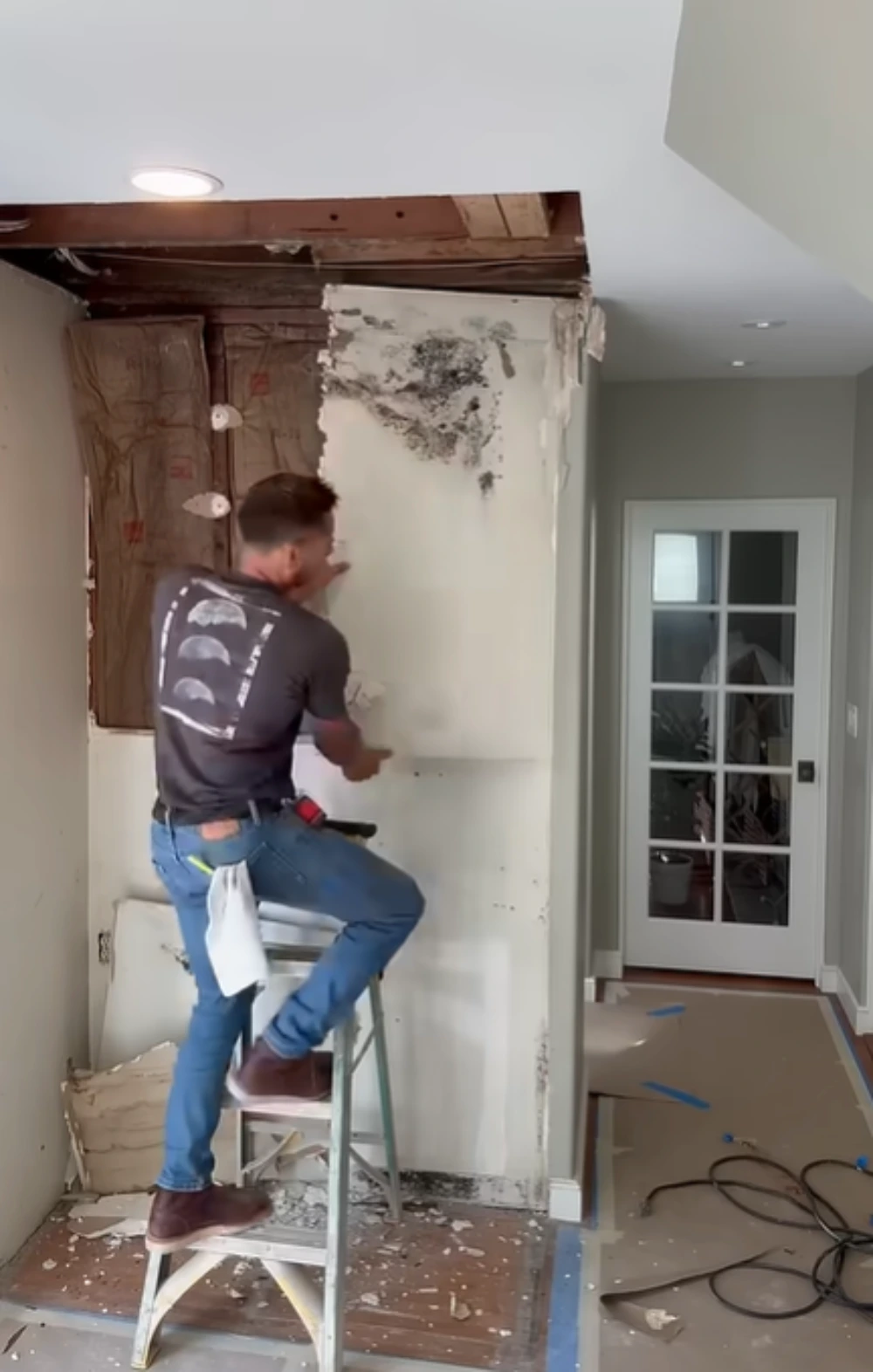
Verify licenses
Look up both companies on the NYS Department of Labor’s licensed mold contractor search at dol.ny.gov. Ask each one, in writing, whether they share any ownership.
Independent assessment and remediation plan
The licensed assessor inspects, samples if needed, and writes the mold remediation plan. You give that plan to the remediator.
Remediator’s work plan
The remediation contractor writes a project-specific work plan based on the assessor’s plan and must give it to you before site prep starts.
Notify occupants and schedule access
The plan says how occupants will be notified. Get access dates to the tenant in writing, and to neighbors if the work touches a shared riser or wall.
Remediation and moisture repair
Containment, removal, HEPA cleaning, EPA-registered treatment if specified, and the actual repair of the leak or moisture source. Then dry to a metered target.
Post-remediation assessment
The licensed assessor confirms no visible mold, work done to plan, clearance criteria met, and the underlying cause fixed. You get a written passed clearance report.
Certify the correction with HPD
If there was a violation, file the Certification of Correction, and keep the plan, work plan, photos and clearance report on file.
What must the assessor’s mold remediation plan include?
Eight required items, under NY Labor Law 945. The assessor’s plan must list the work areas, estimated quantities of material, removal methods, protective equipment, clearance criteria, how occupants will be notified, a cost and time estimate, and the underlying moisture sources. If a plan you receive is missing any of these, send it back before work starts:
- The rooms or areas where work will happen
- Estimated quantities of materials to clean or remove
- Remediation methods for each type of area
- Protective equipment the remediator must supply
- Clearance procedures and criteria
- How building occupants will be notified
- An estimated cost and time frame
- The underlying sources of moisture, with recommendations
That last item is the one that matters most in a pre-war Inwood building. If the plan doesn’t name the riser, roof, pointing or condensation feeding the mold, you’ll be back with a second violation. More on why in why pre-war Inwood buildings get mold.
What questions should you ask before hiring?
Ask five questions before you sign. Ask for the NYS DOL license number, whether the company shares ownership with the assessor, whether you get a written work plan before site prep, who fixes the moisture source, and whether they can meet your HPD deadline. A contractor who answers all five clearly, in writing, is usually safe to hire.
| Ask | A good answer |
|---|---|
| What’s your NYS DOL license number? | Given right away, and it checks out on the DOL search |
| Do you share ownership with the assessor? | No, in writing |
| Will I get your work plan before you start? | Yes, before site prep, based on the assessor’s plan |
| Who fixes the moisture source? | A clear answer: they do it, or it’s scoped for your plumber or roofer |
| Can you work to my HPD deadline? | A realistic schedule, including lab turnaround for clearance |
Red flags: anyone offering to “test and remove” as one package on a job over 10 square feet, anyone who won’t put a price in writing, and anyone whose scope doesn’t mention the water.
How long does the Article 32 process take for an HPD violation?
About 1 to 3 weeks for a typical apartment. Allow a few days to schedule the assessor, 1 to 3 days for the remediation itself, drying time, then clearance sampling with lab results in roughly 3 to 5 business days. HPD gives 90 days for Class A (under 10 sq ft), 30 days for Class B (10 to 29 sq ft) and 21 days for Class C (30 sq ft or more). Start the day the notice arrives.
Next steps after a violation are in what to do after an HPD mold violation, and annual duties are in the Local Law 55 compliance checklist.
How do we work with Inwood property managers?
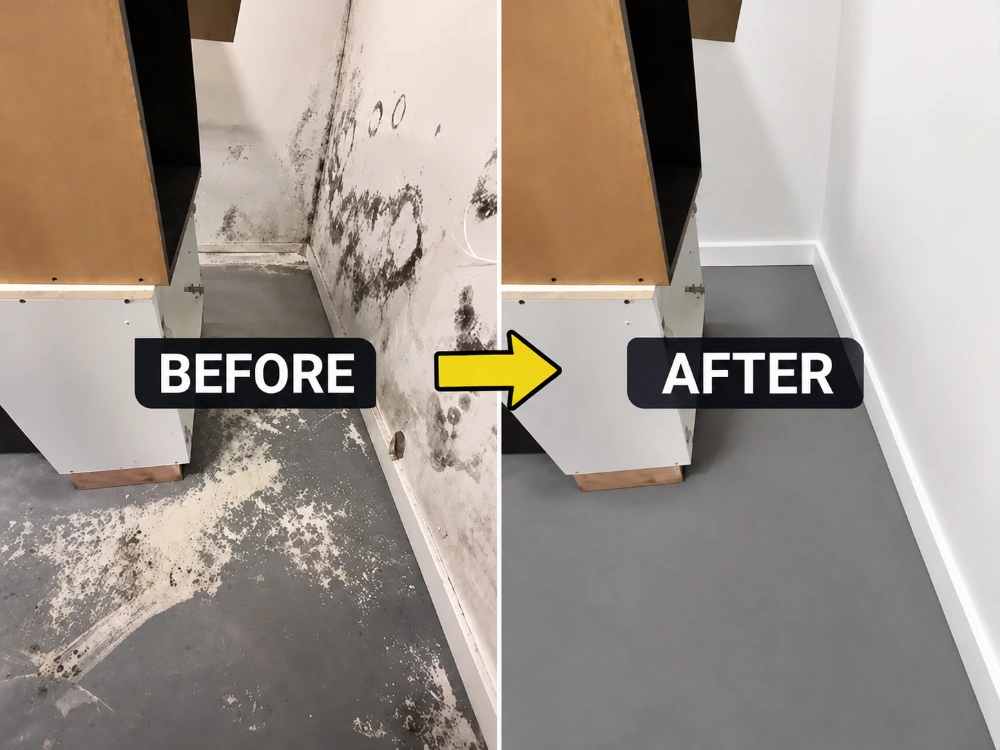
We remediate, and we handle the coordination. We bring in an independent licensed assessor with no ownership ties to us, work from their plan, fix or scope the moisture source, and hand you the documents you need for HPD and your files: plan, work plan, photos and the passed clearance report.
Prefer to start by email? Send a photo of the HPD notice or the LL55 inspection finding, the building address and the unit numbers to info@moldremovalinwoodny.com. We’ll reply with the violation class, a realistic timeline against your correction date, and next steps.
For multi-unit buildings we schedule around tenant access, give written notice templates, and can phase work across several apartments on the same riser line. We work Inwood, Washington Heights and Marble Hill. Full landlord guidance is in our landlord compliance guide. If you need help with Article 32 for property managers across Inwood and Upper Manhattan, call (917) 694-9003.
Frequently Asked Questions: Article 32 for Property Managers
Do property managers in NYC need a licensed mold assessor and remediator?
Can the same company assess and remediate mold in New York?
Can my super handle mold removal instead of a licensed contractor?
What must a mold remediation plan include?
What is a passed clearance report?
How long does the Article 32 process take for an HPD violation?
HPD Violation or LL55 Finding? Start the Article 32 Process Today.
Inwood, Washington Heights and Marble Hill. We remediate, coordinate the independent licensed assessor, and hand you the clearance paperwork for your Certification of Correction.
📞 Call (917) 694-9003 – Describe What You’re Seeing