
📊 Original Local Data · NYC Open Data · 311 · HPD · Inwood, Manhattan · ZIP 10034
Inwood Mold Data 2026: 3x Manhattan’s Complaint Rate, HPD Violations & Building Age
We pulled every 311 mold complaint and every HPD mold violation filed in ZIP 10034 since 2020, then matched them against the age of every residential building in the neighborhood. The short version: Inwood files about 3 times more mold complaints per apartment than the Manhattan average, and roughly 1 in 3 buildings got an HPD mold violation in 2025.
Updated September 26, 2026. Source: NYC Open Data, pulled September 26, 2026. Method and caveats at the bottom of this page.
This Inwood mold data comes straight from NYC Open Data. Most of the calls we get in Inwood start the same way: “Is it just my building?” After enough years working the walk-ups between Dyckman Street and West 218th, we had a strong feeling the answer was no. So we stopped guessing and pulled the city’s own records.
Everything below comes from public NYC Open Data: 311 service requests, HPD housing code violations, and the city’s PLUTO building records. No survey, no estimates, no borrowed national averages. Just Inwood, ZIP 10034, compared against the rest of Manhattan and the city as a whole.
Inwood Mold Data at a Glance (2025)
How common is mold in Inwood apartments?
Very common, by city records. Inwood residents filed 401 mold complaints with 311 in 2025, which works out to 22.9 complaints per 1,000 apartments. The Manhattan average was 7.3 and the citywide average was 8.9. That puts Inwood at roughly 3 times the Manhattan rate and 2.6 times the city rate.
Those 401 complaints came from 138 different addresses, so this isn’t one bad building skewing the numbers. It’s spread across the neighborhood, west and east of Broadway. A small number of buildings do file repeatedly (the two busiest addresses accounted for about 18% of complaints), but we don’t publish building addresses. That’s not what this page is for.
Are mold complaints in Inwood going up?
Yes. 311 mold complaints in ZIP 10034 rose from 252 in 2021 to 401 in 2025, an increase of 59%. 2024 was the highest year on record at 440. 2026 is on a similar pace, with 330 complaints filed by late September. Here is how mold complaints in Inwood moved from 2021 to 2025.
*2026 covers January 1 to September 24 only. We left 2020 out of the trend because COVID kept complaints artificially low that year (177).
Part of the rise is awareness. More tenants know 311 is an option, and Local Law 55 put mold on every landlord’s annual checklist. But awareness doesn’t explain a 59% jump on its own. Many of these buildings are now close to 100 years old, and plumbing, roofs, and pointing don’t age gracefully.
How does Inwood compare to the rest of Manhattan?
Inwood ranks 6th of 45 Manhattan ZIP codes for mold complaints per apartment in 2025. Every ZIP ahead of it is also in Upper Manhattan: Central Harlem, Hamilton Heights, and Washington Heights. Below 96th Street, rates drop sharply. Midtown and downtown ZIPs mostly sit under 5 complaints per 1,000 units.
Rates use total residential units from NYC PLUTO. ZIPs with fewer than 2,000 units excluded.
What do the top ZIPs have in common? The same building stock we work in every week: dense rows of pre-war masonry apartment buildings, mostly rentals, a large share rent-stabilized, with original risers and steam heat. The pattern follows the buildings, not the address.
How many Inwood buildings have HPD mold violations?
About 1 in 3. HPD issued 396 mold violations in ZIP 10034 in 2025, across 128 of Inwood’s 368 residential buildings. That’s 22.6 violations per 1,000 apartments, compared with 6.6 for Manhattan and 10.8 citywide. Right now, 725 mold violations in 10034 are still open, including 123 Class C.
| Year | Class A under 10 sq ft · 90 days | Class B 10-29 sq ft · 30 days | Class C 30+ sq ft · 21 days | Total |
|---|---|---|---|---|
| 2021 | 115 | 181 | 38 | 334 |
| 2022 | 122 | 171 | 40 | 333 |
| 2023 | 158 | 189 | 46 | 393 |
| 2024 | 203 | 255 | 64 | 522 |
| 2025 | 190 | 173 | 33 | 396 |
| 2026* | 117 | 146 | 27 | 290 |
*2026 is year to date. Classes and correction deadlines per HPD’s Indoor Allergen Hazards page.
A quick note on what these classes mean, because it trips people up. HPD sorts mold violations by size, not by how dangerous the mold looks: under 10 square feet in a room is Class A, 10 to 29 is Class B, and 30 or more is Class C. Most Inwood violations are Class B, which is exactly the size range where a wall cavity or a bathroom ceiling has been wet for a while. For the full process after a violation, see what to do after an HPD mold violation.
When is mold season in Inwood?
October is Inwood’s peak month for mold complaints, and May and June are the quietest. Looking at 2021 through 2025 together, October logged 194 complaints versus 107 in June, about 80% more. January and February stay high too. Mold grows fastest in humid summers, but it gets noticed and reported once the windows close.
That October spike lines up with how these buildings work. NYC heat season starts October 1, the boilers come on, steam risers start clanking, and windows shut for the next seven months. Warm, wet indoor air hits cold exterior masonry walls and window frames. Everything that got damp over the summer, including basements and closets on the Hudson side of the neighborhood, now has no way to dry out. That’s when tenants start noticing the smell.
So what does that mean practically? If you’re a landlord, do your Local Law 55 inspections before October, not after. If you’re a tenant, a musty closet in September is worth dealing with before the heat comes on.
Why does Inwood have so much mold?
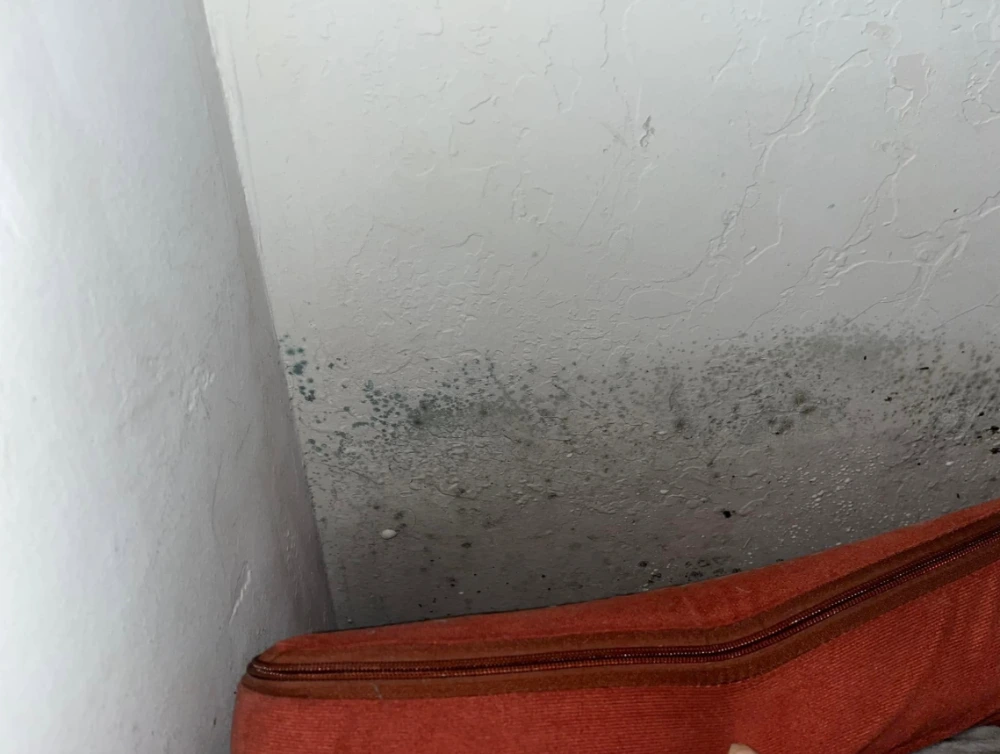
Mostly because of the buildings. 83% of Inwood’s residential buildings were built before 1940, and the median building dates to 1926. That’s 74% of all apartments in the neighborhood sitting in pre-war masonry with original plumbing risers, cast-iron waste stacks, and steam heat.
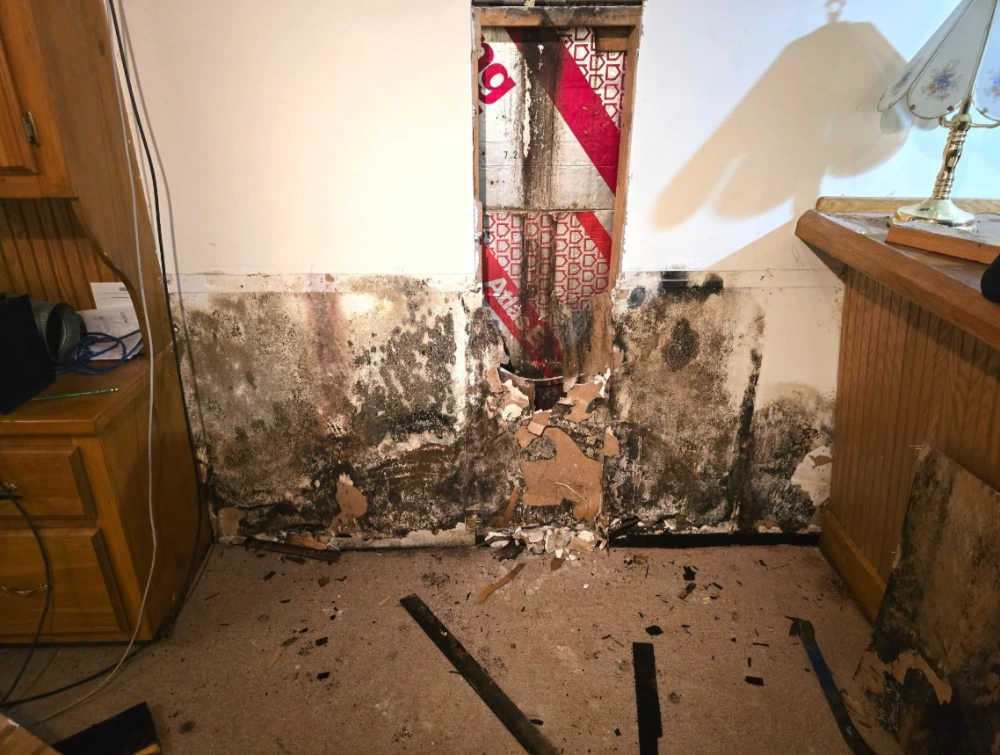
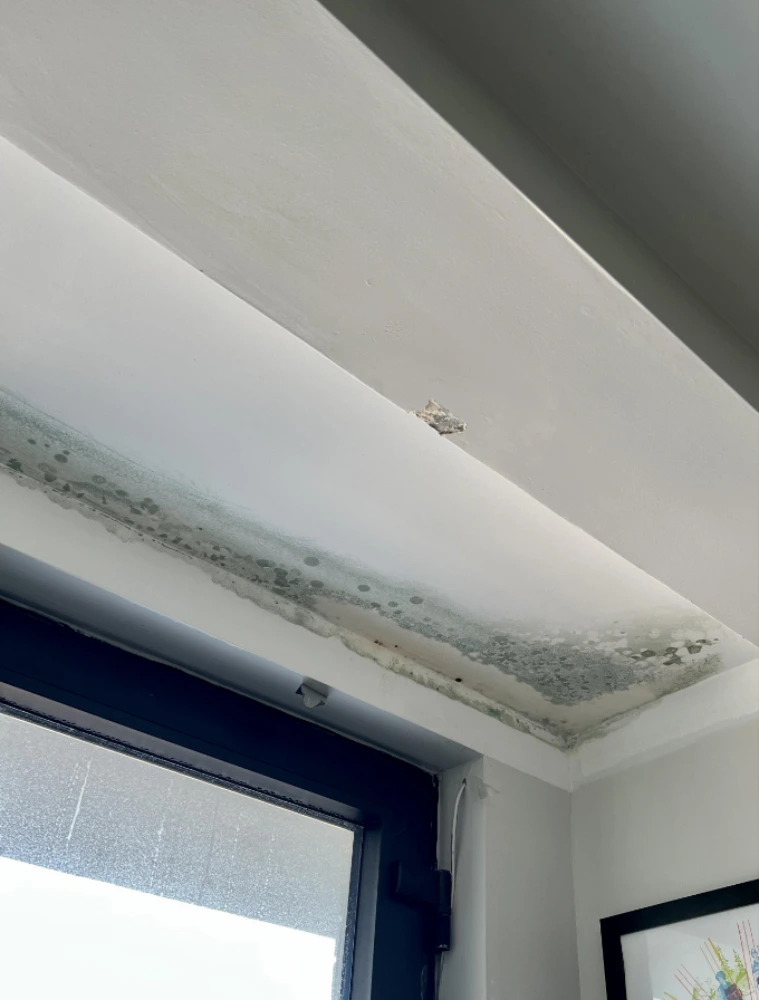
- Aging plumbing inside the walls. A pinhole leak in a 100-year-old riser can wet the plaster for weeks before anyone sees a stain.
- Solid masonry walls. Brick walls with no insulation stay cold in winter, so condensation forms on the inside surface, especially behind furniture pushed against exterior walls.
- Water on three sides. The Hudson and the Harlem River keep the air damp, and Inwood’s ridge sends groundwater downhill toward lower-grade basements when it rains hard.
- Old storm damage. Basements that flooded during Sandy in 2012 and were pumped out but never properly dried can still release moisture today.
- Lots of rentals, long tenures. Nine in ten Inwood households rent, and many have been in the same rent-stabilized apartment for decades. Slow problems have a long time to build.
We break this down further in why pre-war Inwood buildings get mold: 96% of 2025 complaints came from pre-1940 buildings, and walk-ups had about three times the rate of elevator buildings.
Did Hurricane Ida cause a spike in Inwood mold complaints?
Not in the data. Citywide, Ida (September 2021) produced one of the biggest mold-complaint months on record. In ZIP 10034, though, complaints that month (24) were in line with the months around it. We’re mentioning this because you’ll see Ida cited a lot. The honest answer for Inwood is that the problem here is steady and building-driven, not storm-driven. More on what Sandy and Ida actually did uptown in Sandy and Ida legacy mold.
What does this mean if you rent in Inwood?
It means you’re far from alone, and the complaint system does get used. HPD issued 396 mold violations in Inwood last year. If you have mold your landlord won’t address, document it with dated photos, notify the landlord in writing, then file with 311. An HPD inspector will issue a violation for visible mold, and the landlord has a fixed deadline to correct it.
The step-by-step process is in our guide to filing a 311 and HPD mold complaint, and if you’ve already tried that, see what to do when your landlord won’t fix mold. Full rights overview: tenant rights and mold in NYC.
What does this mean if you own or manage a building in Inwood?
It means mold is a routine compliance item here, not a rare event. With about a third of Inwood buildings receiving at least one HPD mold violation in a single year, the safest approach is proactive: complete the annual Local Law 55 inspection before heat season, fix the moisture source rather than repainting, and keep assessment and clearance paperwork on file.
See our Local Law 55 compliance checklist and the full landlord compliance guide. If a violation is already on your building, we coordinate the independent licensed assessor, do the remediation to the written plan, and get you the clearance documentation for your Certification of Correction.
How we got these numbers
We believe local data is only useful if you can check it. Here’s exactly what we did.
- 311 complaints: NYC Open Data dataset 311 Service Requests from 2020 to Present (erm2-nwe9), complaint type “Unsanitary Condition,” descriptor “Mold,” incident ZIP 10034. This is the standard residential mold complaint routed to HPD.
- HPD violations: dataset Housing Maintenance Code Violations (wvxf-dwi5), violation description containing “mold,” ZIP 10034, grouped by class and issue year.
- Buildings and units: dataset PLUTO (64uk-42ks), tax lots with at least one residential unit, using year built and total residential units.
- Rates: per 1,000 residential units. Manhattan and citywide rates use the same datasets, filters, and year.
- Pulled: September 26, 2026. We’ll refresh this page every October.
Caveats worth knowing. Records without a ZIP code are excluded, so these counts slightly undercount, never overcount. PLUTO units include vacant apartments. Our rates are per apartment, so they aren’t directly comparable to studies that measure per renter. NYCHA complaints can follow a different route than HPD complaints, so Dyckman Houses may be under-represented here. We will update this Inwood mold data every year as new 311 and HPD records come in.
Frequently Asked Questions About Mold in Inwood
Is mold common in Inwood, Manhattan?
Which Manhattan neighborhoods have the most mold complaints?
What month do mold complaints peak in Inwood?
What are HPD Class A, B, and C mold violations?
Can I look up mold complaints or violations for my own building?
Where does this Inwood mold data come from?
Seeing Mold in Your Inwood Apartment or Building?
Inwood, Manhattan – ZIP 10034. We find the moisture source first, give you a written scope, and use independent clearance testing. No pressure, no fear-mongering.
📞 Call (917) 694-9003 – Describe What You’re Seeing