⬛ Black Mold · Stachybotrys · Mold Identification · Inwood, Manhattan · ZIP 10034
Black Mold Removal in Inwood, Manhattan
“Black mold” is a color description, not a diagnosis. Cladosporium, Penicillium, and Aspergillus can all appear dark – and the risk level of any mold depends on the species, the extent, and who’s in the building, not the color. We identify what you’re actually dealing with, remove it properly, and prove it’s gone with independent lab testing.
Black mold is a color, not a diagnosis. We identify it accurately with lab testing.
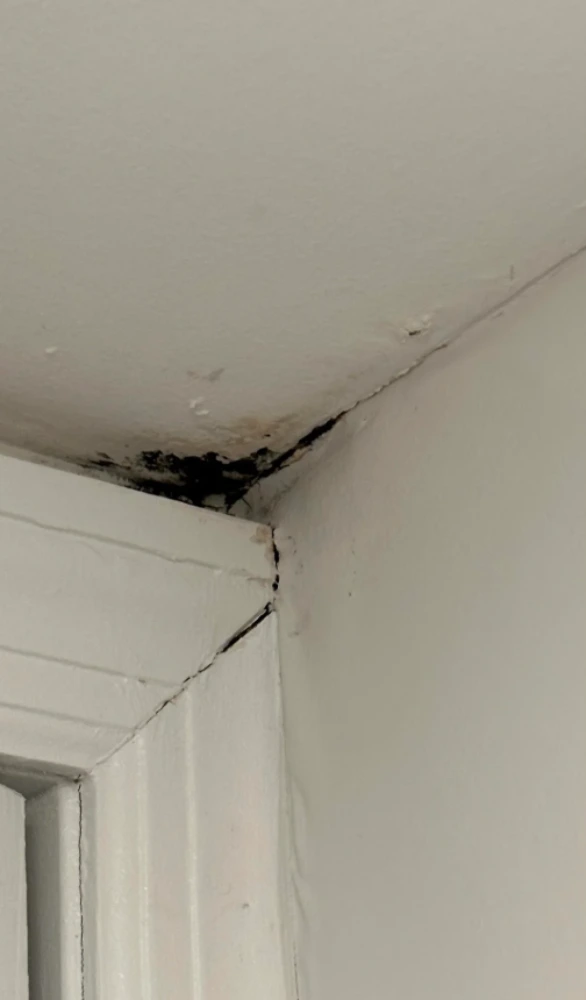
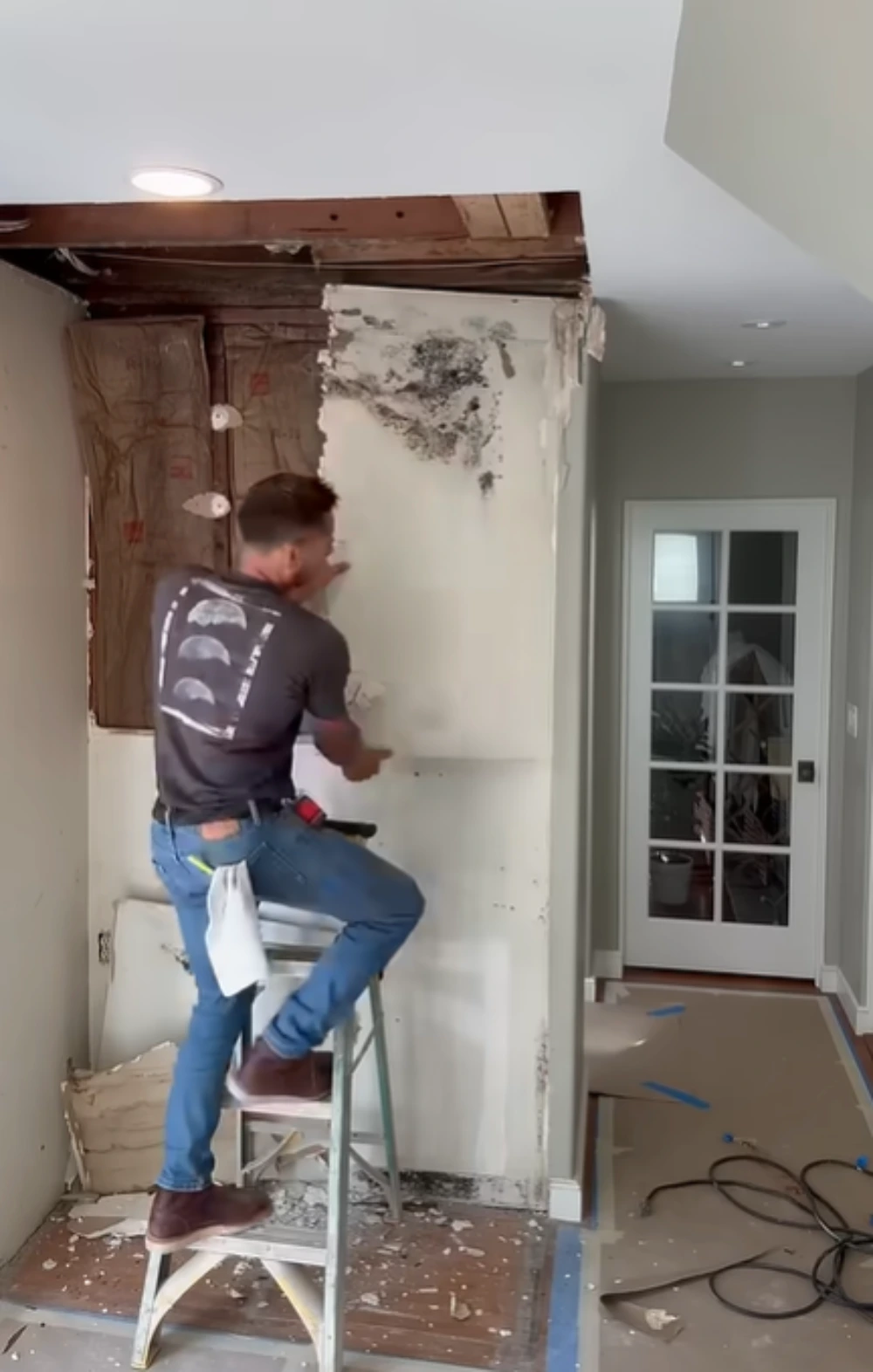
Real jobs. Lab-verified clearance. No upselling based on color. Inwood, NY 10034.
“Black Mold” Is a Color, Not a Diagnosis
The term “toxic black mold” has been amplified by decades of sensational coverage to the point where people call about any dark spot on a wall with genuine alarm. That alarm is sometimes warranted – and sometimes it’s Cladosporium, one of the most common indoor mold genera on the planet, found in virtually every building in some quantity.
The only way to know what species you’re dealing with – and in what concentration – is to test it. Air sampling and surface swabs sent to an AIHA-accredited laboratory. A good assessor will tell you what’s there, in what quantities, and at what concentrations. A company that tells you it’s definitely Stachybotrys because “it looks black” before running a test is guessing, and you should not base a significant remediation decision on a guess. That’s what independent testing is for – and it’s built into how we run mold removal in Inwood.
We don’t sell fear. If the lab comes back with Cladosporium, we’ll tell you that. If it comes back with something that warrants serious attention, we’ll tell you that too.
What “Black Mold” Usually Turns Out to Be in Inwood Walk-Ups
In our experience with pre-war buildings in the 10034 ZIP specifically, here’s what the lab results typically show when someone calls about “black mold”:
Cladosporium is the most common finding – dark, looks alarming, and is one of the most widely distributed mold genera on the planet. It commonly grows on window seals, bathroom grout, and any surface with recurring condensation in older buildings with poor ventilation. It’s an allergen for sensitive individuals but is not in the Stachybotrys category.
Penicillium and Aspergillus are common on water-damaged materials – drywall paper, ceiling tiles, cardboard storage. They appear greenish-black and are found more often in basement areas and on materials that got wet and weren’t dried quickly. Some species in these genera produce mycotoxins under certain conditions, which is why testing matters.
Stachybotrys chartarum – the “toxic black mold” most people have in mind – requires materials that are chronically wet and cellulose-rich, like drywall paper or wood continuously damp for weeks or months. It appears in Inwood basements, particularly in buildings with long-standing unresolved moisture issues, including buildings that took on water during Sandy (2012) or Ida (2021) and were never professionally dried. When it shows up, it’s significant and requires careful containment, remediation to the assessor’s written plan, and independent clearance testing.
Why Black Mold Shows Up Where It Does in Inwood Buildings
Basement and Cellar Walls
The lower-level walls of pre-war masonry buildings – concrete block, old brick, with mortar that’s been absorbing moisture for a century – are the most common location for extensive mold growth in Inwood. These walls are chronically damp from groundwater pressure, from condensation on cooler masonry, and in many buildings from moisture that has never cleared since the 2012 Sandy flooding or 2021 Ida flooding. The dark staining you see on the lower courses of a basement wall is often a mixture of efflorescence (mineral salts from water migration) and mold, sometimes Stachybotrys if the wall has been continuously wet.
Behind Bathroom Walls and Under Tile
Old plumbing in 1920s buildings means old supply lines, old waste lines, and old tile work that was grouted and never regrouted as the grout cracked and shrank over decades. Water gets behind the tile, saturates the cement board or old plaster substrate, and stays wet because it can’t evaporate. Dark mold behind bathroom walls in these buildings is extremely common, and it’s almost always more extensive than the visible surface suggests.
Window Perimeters and Exterior Wall Junctions
Inwood sits on the Hudson waterfront – coastal humidity is a real factor here, especially in summer. The thermal mass difference between the old brick exterior wall and the interior air means condensation forms regularly on the inner face of exterior walls, particularly at window frames. This is where you see Cladosporium most often: on the window sill, the lower frame, and spreading to nearby drywall.
Roof and Parapet Leaks in Top-Floor Units
Pre-war buildings with flat roofs require regular maintenance on the membrane, the flashing, and the parapets. Deferred maintenance – common in the rent-stabilized stock east of Broadway – means slow leaks that saturate ceiling insulation and upper-floor drywall. Top-floor tenants often notice the ceiling water stain first; the mold shows up weeks or months later as a dark bloom around the stain.
How We Remove Mold – The Process, No Shortcuts
The process is the same regardless of what species the lab identifies, because the fundamentals of containment, removal, and clearance don’t change based on the species. What changes is the precaution level and the extent of the scope.
Independent Licensed Assessment
Under Article 32, a separately licensed assessor – not us – inspects the space, takes samples, and writes a remediation plan. The same company cannot legally both diagnose and remediate a job over 10 square feet.
Written Scope of Work
You get it in writing before we start. What areas, what materials, what methods, what the timeline looks like. No surprises mid-job.
Containment
Polyethylene sheeting, negative air pressure, HEPA air scrubbers before we touch a contaminated surface. Mold spores released during remediation stay in the work area.
Removal
Contaminated porous materials come out – not wiped, not sprayed with biocide, but physically removed and bagged. Non-porous surfaces that can be cleaned are HEPA-vacuumed and treated.
Antimicrobial Treatment and Drying
EPA-registered treatment, and moisture monitoring until the structure reads normal. We don’t declare it done until the meter agrees.
Independent Clearance Testing
A separately licensed assessor takes air samples and surface swabs after we finish. Results go to an AIHA-accredited lab. If it passes, you get documentation. If it doesn’t, we go back.
Can I remove black mold myself?
For a small area on a hard, non-porous surface – a few square inches on tile or a window frame – you can clean it with diluted detergent or white vinegar. The issue is that visible surface mold rarely tells the full story in older buildings. If the area is larger than about 10 square feet (roughly a standard door), New York State requires the work be done by licensed parties under Article 32. More practically: DIY removal cleans the surface while leaving the moisture source and potentially interior mold growth intact. It will come back.
Does Stachybotrys require different handling than other molds?
Yes, to some degree. Stachybotrys is more fragile than other molds but is also more likely to be associated with materials that need to be wet to support its growth, meaning there’s often significant material removal involved. The containment requirements are essentially the same as for any mold project, but the assessor’s plan will typically specify more rigorous precautions than for a typical Cladosporium or Penicillium job.
Health and Black Mold – What the Evidence Actually Says
The EPA and the CDC both recommend that any visible mold growth be addressed, regardless of species, because mold can trigger allergic responses and respiratory symptoms in sensitive individuals – and “sensitive” covers a significant portion of the population: people with asthma, allergies, compromised immune systems, infants, and elderly residents. In Inwood, where a large share of the population is young families with children, this matters.
Stachybotrys chartarum can produce mycotoxins – compounds that are toxic under the right conditions. The scientific literature on indoor Stachybotrys exposure is genuinely contested; it’s more complicated than the “toxic black mold kills people” headlines, and more serious than “don’t worry.” The practical recommendation doesn’t depend on which species it is: if there’s significant mold growth in your building, get it assessed, get it documented, and get it remediated by licensed parties who will test the result.
If you or a family member has symptoms you think may be related to mold exposure, see a physician. That’s the right call, and what you get from us is the remediation side, not the medical evaluation.
How Much Does Black Mold Removal Cost in Inwood?
The cost depends almost entirely on how much surface area is affected and how deeply the mold has penetrated the structure. For a small, well-contained area – a bathroom wall, a window sill and adjacent drywall – removal typically runs $800 to $2,500 for the remediation work itself, plus independent assessment ($350 to $900) and clearance testing ($300 to $600).
For a basement with extensive dark growth on multiple walls and potentially inside wall cavities – the kind of job we see in buildings with unresolved moisture from Sandy or recurring groundwater intrusion – the range is typically $8,000 to $25,000 or more, depending on the scope of material removal required. Stachybotrys jobs tend to run toward the higher end because the materials supporting its growth are always extensively wet.
We don’t quote prices over the phone or from photos. The only accurate estimate comes from walking the space, running the moisture meter, and letting the independent assessor write the scope.
Black mold removal is available across Inwood (ZIP 10034) and nearby Upper Manhattan, including Washington Heights and Marble Hill. Same process, same written scope, same independent clearance.
Thinking about bleaching it yourself? Read our guide to DIY vs professional mold removal first. Bleach whitens the surface, it does not remove mold growing inside plaster or drywall.
Frequently Asked Questions – Black Mold in Inwood
Not sure what you’re dealing with? Call and describe it. We’ll tell you honestly whether it warrants testing. Call (917) 694-9003.
Think You Have Black Mold? Get It Assessed, Not Assumed.
Independent assessment. Lab-verified results. No upselling based on color. Inwood, Manhattan – ZIP 10034 only. Article 32 licensed.
📞 Call – Get Accurate Identification, Not Fear