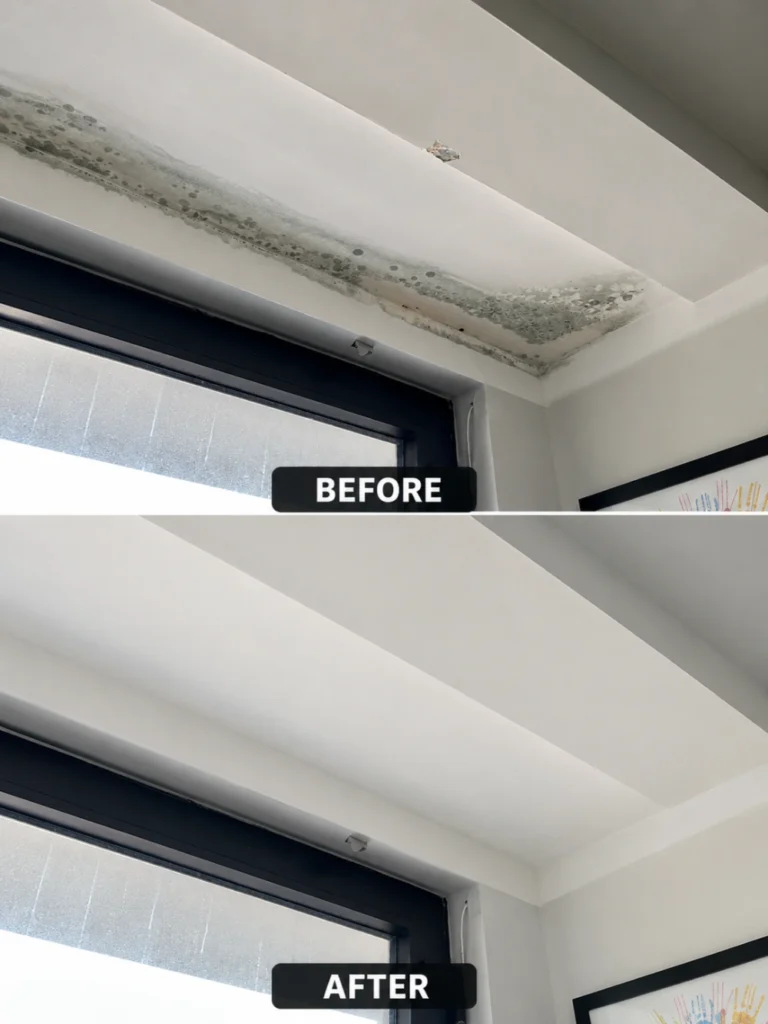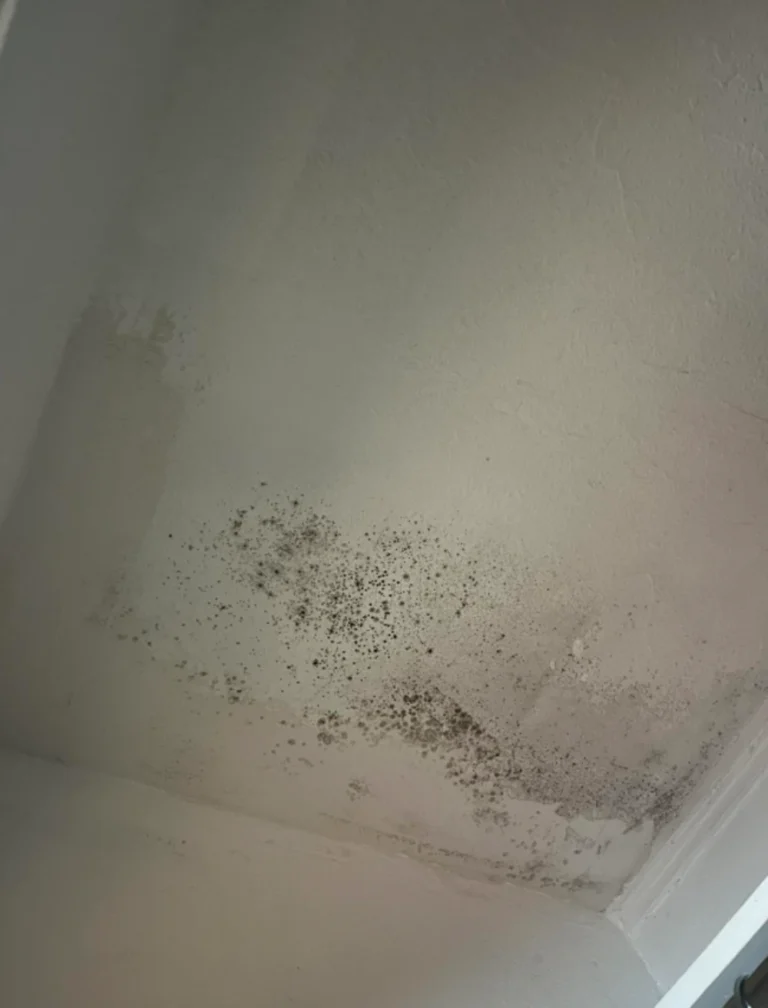
🧽 DIY vs Professional · Inwood, Manhattan · ZIP 10034
Vinegar, Bleach or a Pro? When DIY Mold Cleanup Works in Inwood, and When It Doesn’t
Got a mold quote that made you wince and wondering if a spray bottle of vinegar will do? Sometimes it will. Here is where DIY works in a pre-war Inwood apartment, where it fails, and why.
Published October 8, 2026. Written by the Inwood Mold & Remediation team. Cleanup guidance from the EPA and NYC HPD.
Can I just clean mold myself with vinegar?
Yes, if it is small and on a hard surface. Light mold on tile, glass, a sealed window sill or a shower wall can usually be cleaned with detergent and water, or vinegar, and dried. It stops working once mold has grown into porous material like plaster, drywall, wood or caulk, or covers more than about 10 square feet.
We hear some version of this question almost every week: “I got a quote for a few thousand dollars, can’t I just spray it with vinegar and scrub it?” It is a fair question, and sometimes DIY mold removal really is enough. We would rather tell you that than sell you a job you don’t need. The trick is knowing which side of the line you are on.
What is the 10 square foot rule for DIY mold cleanup?
The EPA says that if the moldy area is less than about 10 square feet, roughly a 3 by 3 foot patch, you can handle it yourself in most cases. Bigger areas, a lot of water damage, sewage, mold in heating or cooling equipment, or health concerns are the signs to bring in a professional.
That guideline comes from the EPA’s Brief Guide to Mold, Moisture and Your Home. The same 10 square foot number shows up in New York law. Under Article 32 of the NY Labor Law, a mold project over 10 square feet done by a contractor needs a licensed assessor and a separate, independent licensed remediator. And HPD classes mold violations by size starting at 10 square feet. So in Inwood, 10 square feet is the line between a cleaning job and a regulated one.
How do you measure it? Add up every patch in the room, not just the biggest one. Three 2 by 2 foot spots on one wall is already 12 square feet.
Where does DIY mold removal work, and where does it fail in a pre-war apartment?
DIY works on surfaces mold can’t get into: tile, glass, metal, sealed paint, porcelain. It fails on anything porous, because mold grows into the material and cleaning only reaches the top. In Inwood’s 1920s buildings that usually means old plaster, drywall patches, wood trim, caulk and grout that has gone soft.
| Surface | DIY cleaning usually works? | Why |
|---|---|---|
| Bathroom tile, tub, glass | Yes | Non-porous, mold stays on the surface |
| Sealed window sills, metal radiators | Yes, if dry underneath | Surface growth from condensation |
| Grout and caulk | Sometimes | Stained or soft caulk usually needs replacing, not scrubbing |
| Painted plaster walls | Small spots only | If the plaster is wet, soft or bubbling, mold is in it |
| Drywall, ceiling tiles, carpet | Rarely | EPA: porous materials may have to be thrown away |
| Wood framing, subfloor | No | Needs removal or professional treatment and drying |
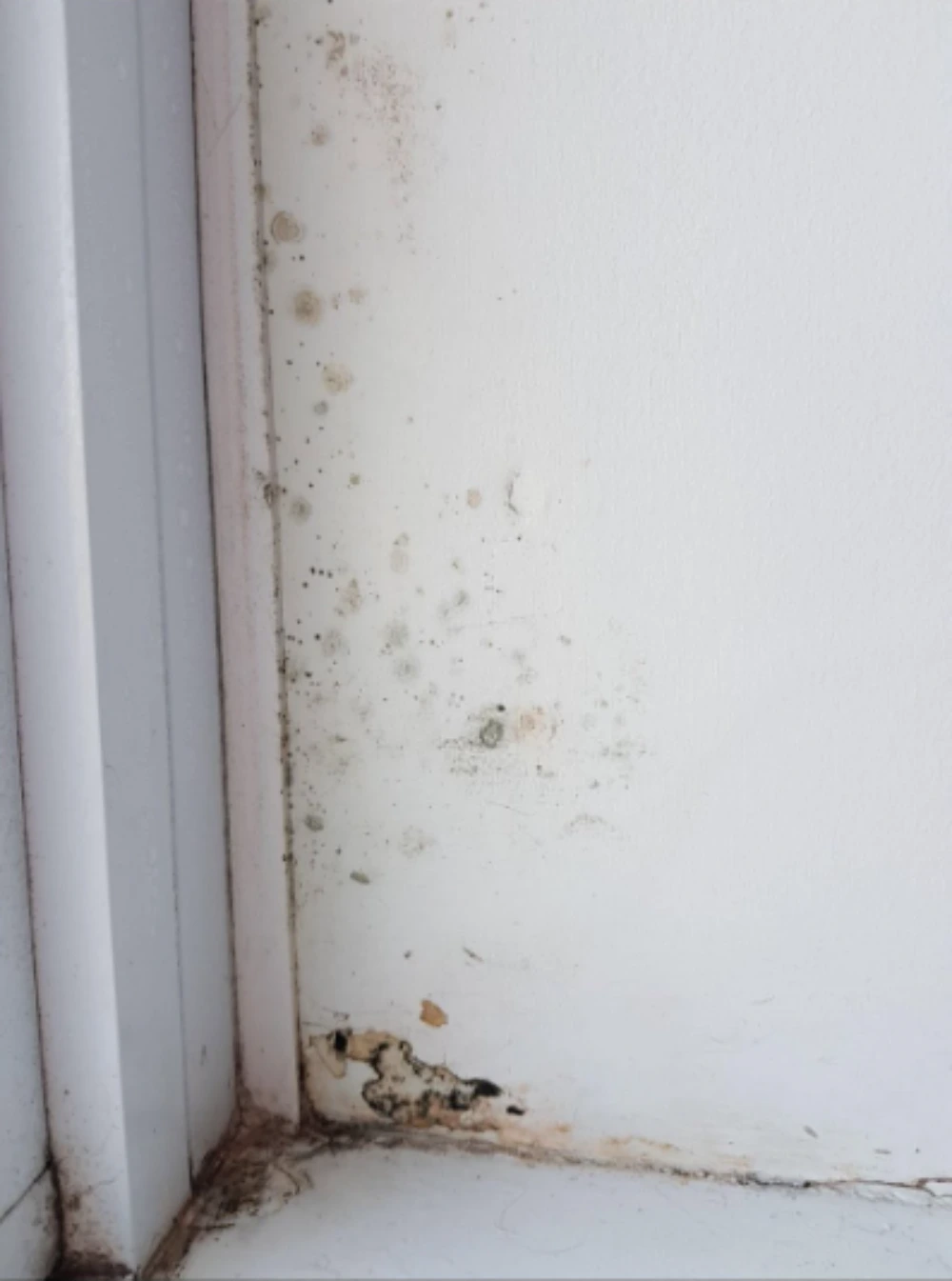
In our experience, the giveaway is the wall itself. Press gently on the plaster near the spots. If it is cool and damp, soft, crumbly or bubbling under the paint, the water is inside the wall, and nothing you spray on the surface will reach it.
Does bleach kill mold better than vinegar?
Not in the way people hope. The EPA says chlorine bleach and other biocides are not recommended as a routine part of mold cleanup. Bleach can lighten mold on a hard surface, but it does not reach mold growing inside porous material, and dead mold can still cause allergic reactions, so it has to be physically removed.
This is why “it came back” is the most common story we hear. Someone bleaches a bathroom wall near Seaman Avenue, it looks white for two weeks, then the gray dots return in the exact same spot. The bleach whitened the surface. The mold behind it, and the water feeding it, never changed.
If you do use bleach on a hard surface, open a window, wear gloves, and never mix it with anything containing ammonia. The fumes are toxic.
How do I clean a small mold spot safely?
Fix or stop the water first, then wear gloves, goggles and an N-95 respirator, scrub the hard surface with detergent and water, and dry it completely. Bag anything porous that is moldy and can’t be cleaned. Don’t paint or caulk until the area is clean and dry, and check it again in a week.
- Take photos first. Especially if you rent. They are your record if it comes back.
- Find the water. A leak, condensation, a shower with no fan. If you can’t stop it, the cleanup won’t last.
- Protect yourself. Long gloves, goggles without vent holes, and an N-95 respirator. The EPA lists all three.
- Keep dust down. Lightly mist the area with soapy water before you scrub, and close the room door.
- Scrub with detergent and water. Then rinse and dry completely, with a fan if you have one.
- Bag porous items. Moldy cardboard, fabric, ceiling tiles and soft caulk go in heavy plastic bags.
- Check it again. If spots return within a few weeks, the moisture is still there.
These steps follow the EPA’s cleanup guidance and the same safe work practices HPD lists for small mold jobs in NYC buildings: fix the moisture, keep dust down, clean with soap or detergent and water, discard what can’t be cleaned, and leave the area dry.
Not sure which side of the line you are on?
Call (917) 694-9003 and describe what you are seeing in your Inwood apartment. If it is small enough to clean yourself, we will tell you how, and you won’t need us.
When should I stop and call a professional?
Call a professional when the mold adds up to more than about 10 square feet, keeps coming back after cleaning, is growing in plaster, drywall or wood, smells musty with no visible source, followed a flood or sewage backup, or is near your heating or cooling system. Also call if anyone in the home has asthma or other health concerns.
- It came back. Recurring mold means a moisture source you haven’t found, often a riser leak or a cold exterior wall in a walk-up.
- The smell is worse than what you see. The EPA notes hidden mold on the back of drywall, wallpaper or behind furniture, and pulling wallpaper can release a lot of spores at once.
- There was a flood or sewage. Basement and ground-floor flooding near Dyckman and Sherman Creek is a different job. Contaminated water needs professionals.
- It is in the AC or ductwork. The EPA says not to run a system you suspect is contaminated.
- It is in a basement or cellar. Below-grade masonry in walk-ups along Broadway and the Dyckman corridor can pull in ground moisture for months. Wiping the wall won’t keep up with that.
Why does professional mold remediation cost what it does?
Because professional mold remediation removes the problem instead of the stain. That means containing the area, cutting out wet porous material, HEPA cleaning, drying the structure to a measured target, fixing the source, and, in New York, an independent licensed assessor who writes the plan and runs the clearance test on any job over 10 square feet.
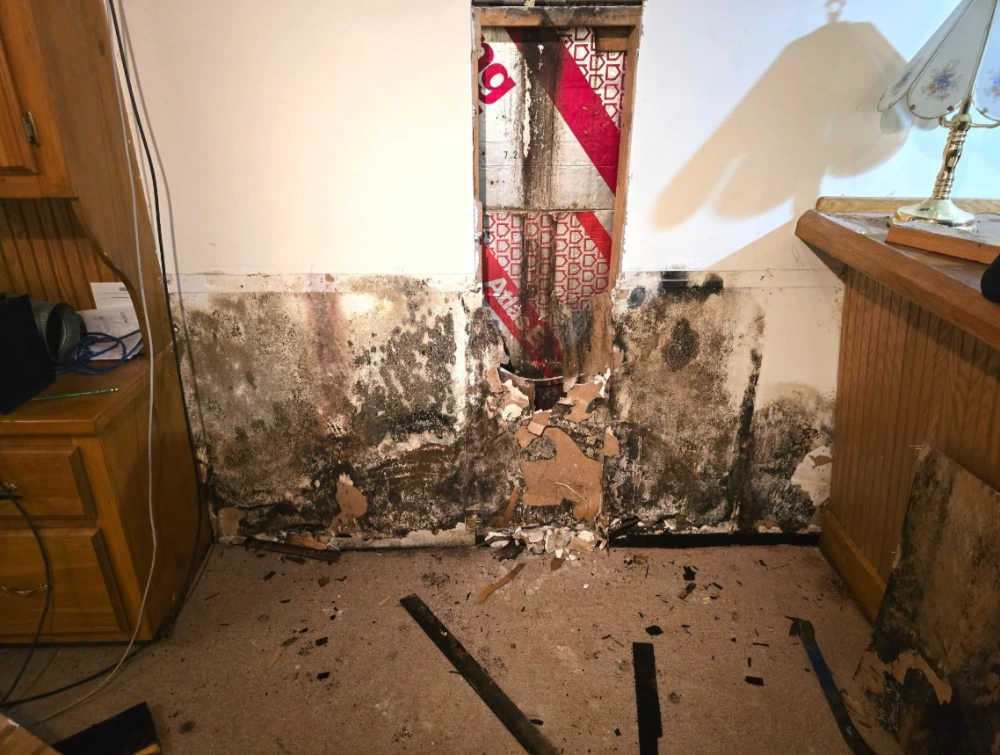
Typical ranges in Inwood run about $800 to $2,500 for a small, contained area, $2,500 to $7,500 for a mid-size job like a bathroom wall or basement wall, and more for large flood or full-basement work, plus independent assessment and clearance testing. Our mold removal cost page breaks it down, and our real jobs page shows what those jobs looked like.
We remediate, and we coordinate the independent assessor for you, as Article 32 requires. The rules are on our NYC mold laws page. If you rent, the tenant rights hub covers what your landlord has to fix.
Bottom line: start with DIY mold removal when the spot is small, on a hard surface, and the water is already fixed. When it isn’t, that is the time to call us.
We work across Inwood (ZIP 10034) and nearby Upper Manhattan, including Washington Heights and Marble Hill.
About the author
Written by the team at Inwood Mold & Remediation, a mold remediation company working only in Upper Manhattan: Inwood (ZIP 10034), Washington Heights and Marble Hill. We remediate to a written scope and coordinate an independent licensed assessor for clearance, as New York’s Article 32 requires. See who we are and real jobs we have done.
Frequently Asked Questions
Seeing Mold in Your Inwood Apartment or Building?
Inwood, Manhattan – ZIP 10034. We find the moisture source first, give you a written scope, and use independent clearance testing. No pressure, no fear-mongering.
📞 Call (917) 694-9003 – Describe What You’re Seeing