🔥 Heat Season Guide · Inwood, Manhattan · ZIP 10034
Radiator Condensation vs Mold: What’s Growing on Your Inwood Walls This Winter
The heat comes on, the windows close, and by November the same spots show up on sills, corners and closet walls across Inwood. Here is how to tell water from mold, what you can fix yourself, and what is your landlord’s job.
Published October 8, 2026. Written by the Inwood Mold & Remediation team. Local numbers from NYC Open Data (311, HPD, PLUTO).
Why does mold show up in Inwood apartments once the heat comes on?
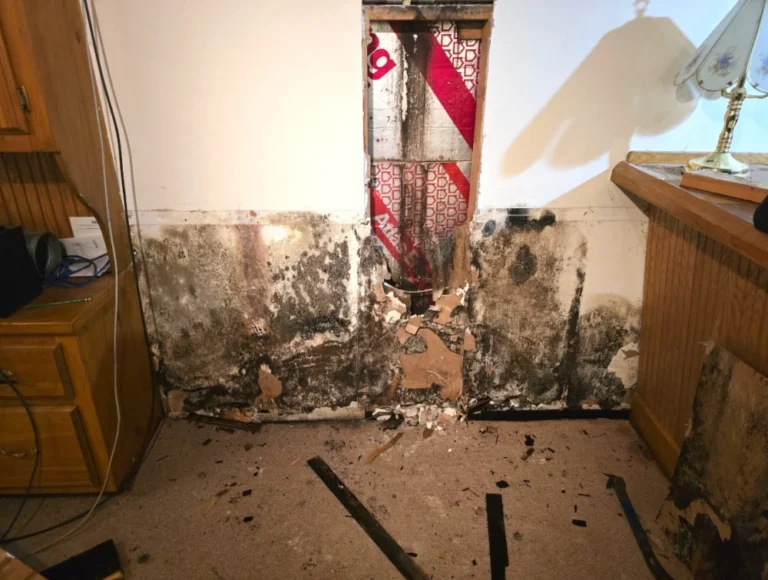
Steam heat warms the air, cooking and showers add moisture, and closed windows trap it inside. That warm, wet air condenses on the coldest surfaces in the room: exterior brick walls, old window frames, closet corners. Water that sits on those surfaces for days at a time is what turns into mold by November.
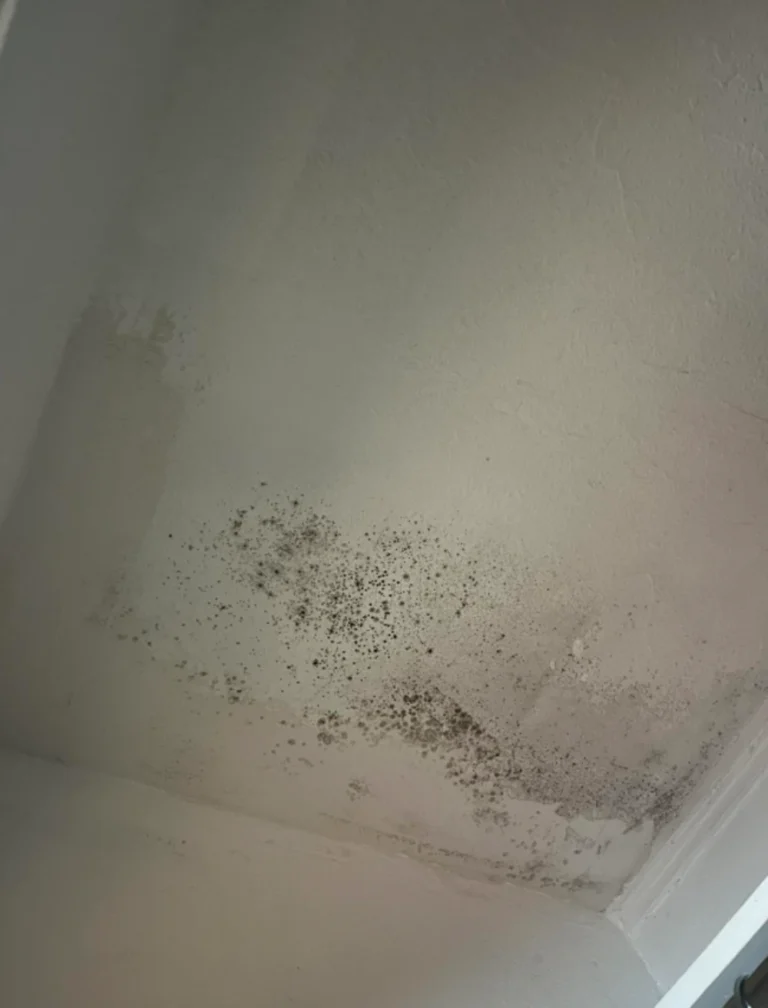
We get this call every fall in Inwood, and radiator condensation is usually where it starts. Someone in a pre-war walk-up on Seaman, Payson or Post Avenue notices dark dots along the window sill or in the top corner of a bedroom, right around the time the heat comes on. Sometimes it is just water. Often it is water that has been sitting long enough to grow something.
How do I check a spot near my radiator or window?
Use a dry paper towel and your nose. Wipe the spot. If it comes off completely and leaves the towel wet but clean, it is condensation. If it smears, leaves a dark stain, or the surface still looks spotted, it is likely mold. A musty, earthy smell near the spot points the same way.
This is the quick version for heat season. For the full guide to telling the two apart, especially when your landlord says it is only condensation, see Mold or Condensation? How Inwood Tenants Can Tell.
| What you notice | Condensation | Mold |
|---|---|---|
| Look | Clear droplets, fog, wet sheen | Dots or patches: gray, black, green, white |
| Wipe test | Wipes off clean | Smears or stains the towel |
| Timing | Mornings, after showers or cooking | There all day, slowly spreads |
| Comes back? | Only when conditions repeat | Same spot, even after cleaning |
| Smell | None | Musty, earthy, stale |
| Surface | Glass, metal, tile, painted sills | Plaster, drywall, caulk, wood, fabric |
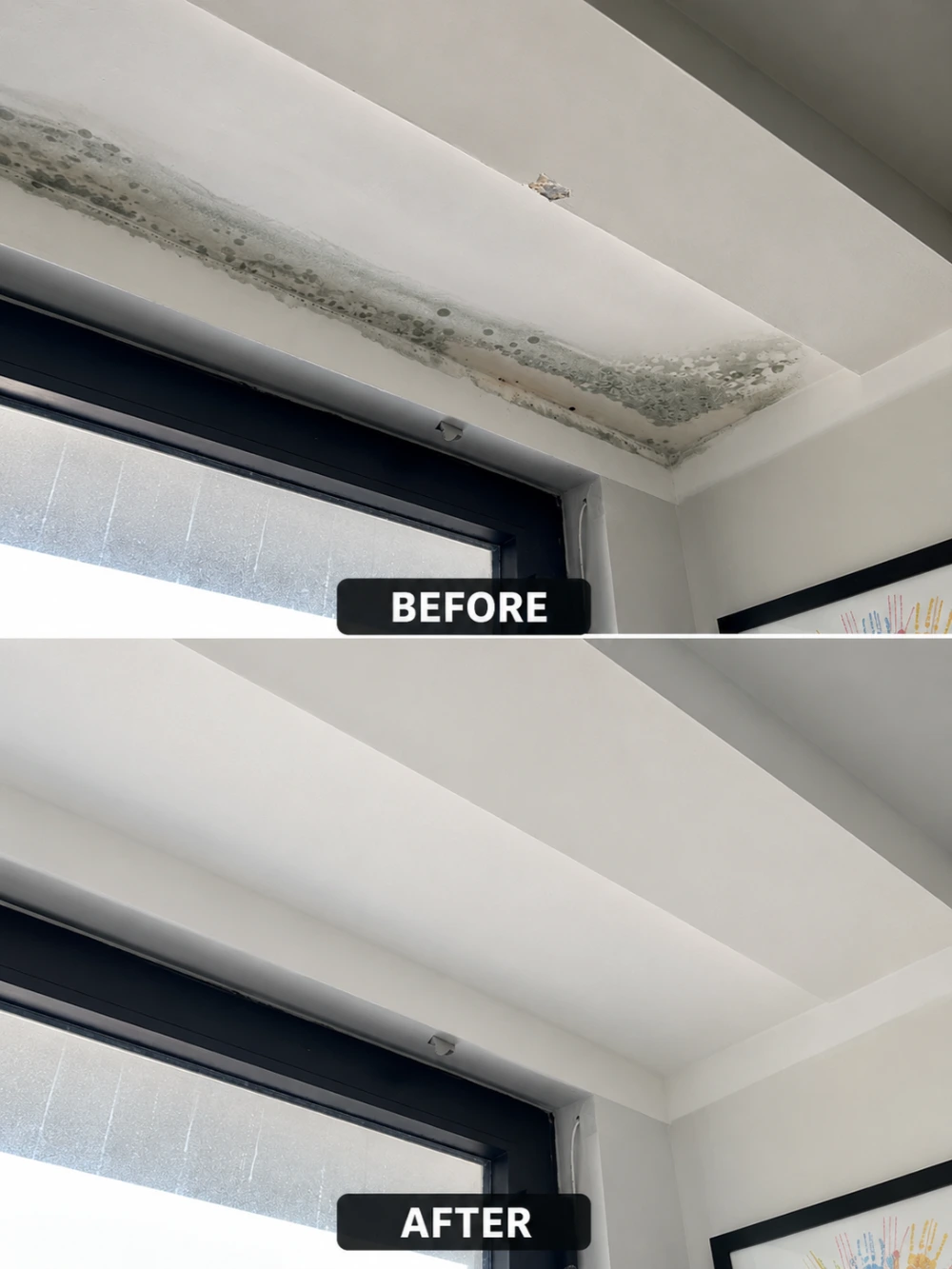
So which one is worse? Neither is an emergency on its own, but condensation is the early warning. The EPA advises drying wet materials within 24 to 48 hours to prevent mold, so a sill that is wet every morning in December is a sill that will have spots by January.
Why is radiator condensation so common in Inwood apartments?
Inwood is mostly 1920s masonry buildings heated by steam. When the heat comes on, rooms get warm and the air holds more water from cooking, showers and breathing. That warm, wet air meets cold exterior brick, old window frames and uninsulated corners, and the water condenses right there. Closed windows keep it from escaping.
The numbers back this up. 83% of Inwood’s residential buildings were built before 1940, and the median building dates to 1926. In 2025, walk-up buildings had about three times the mold complaint rate of elevator buildings per apartment. And across 2021 to 2025, October was Inwood’s peak month for 311 mold complaints, with the five months from October to February making up close to half of all complaints. Full method and sources are on our Inwood mold data page.
A few things make winter worse in these buildings specifically:
- Steam heat runs hot. NYC heat season runs October 1 to May 31, and owners must keep apartments at 68°F during the day when it is below 55°F outside, and 62°F overnight. Many steam buildings run well above that, so tenants crack a window, which chills the wall right next to it.
- Exterior brick stays cold. Solid masonry walls with little or no insulation are the coldest surface in the room. Corners where two exterior walls meet are colder still.
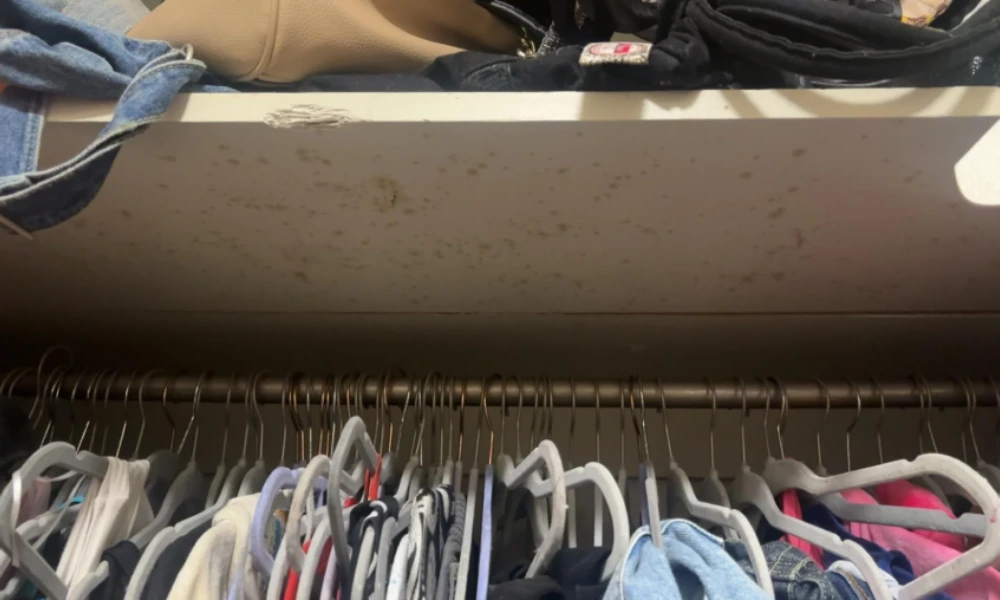
- Furniture blocks airflow. A dresser or bed pushed flat against an exterior wall traps a pocket of cold, still air. That is why mold so often shows up behind furniture and in the back of closets.
- Old windows sweat. Older frames and single-pane glass get cold enough to drip, and the water runs down onto painted sills and plaster.
Does the radiator itself cause mold?
A working steam radiator does not cause mold by itself. It heats the room. The problems come from a radiator that leaks, from what people put on it, and from the cold surfaces around it. Water on the floor or wall near a radiator is a sign of a leak, not normal condensation, and it is building equipment your landlord should fix.
Here is what we look for around radiators in Inwood apartments:
- A spitting air vent. The small valve on the side of a one-pipe steam radiator should let air out, not water. If it hisses wet or drips, the wall behind it stays damp all winter.
- A leaking supply valve. Water pooling under the valve soaks the floor and baseboard. That is how we find mold under radiators in otherwise dry rooms.
- Banging and gurgling. If the radiator is tilted the wrong way, water can’t drain back to the boiler. It bangs, and it can spit water.
- Laundry on the radiator. Drying clothes on the radiator every day adds a lot of water to a small, closed room, and that water ends up on the coldest window or wall.
What can I fix myself, and what is my landlord’s job?
Daily moisture is yours to manage: ventilation, cooking lids, drying clothes, wiping sills. Anything that is building equipment or structure is the landlord’s job: leaking radiators and valves, broken exhaust fans, window seals, pipe and roof leaks. Under Local Law 55, owners of buildings with three or more units must fix mold and the conditions causing it.
| Usually the tenant | Usually the landlord |
|---|---|
| Run the bathroom fan or crack the window during and after showers | Leaking radiator valves and spitting air vents |
| Lids on pots, range hood on while cooking | Broken or missing bathroom exhaust fans |
| Wipe window condensation in the morning | Failed window seals, rotted sills, drafty frames |
| Keep furniture a few inches off exterior walls | Pipe, riser and roof leaks |
| Limit laundry drying inside, or ventilate when you do | Mold that keeps returning because of a building moisture source |
HPD’s own guidance asks tenants to keep apartments clean and dry and to tell the landlord about leaks and mold. If you have done your part and the spots keep coming back, the moisture is probably coming from the building, not from your daily habits. Our guide for when your landlord says it is just condensation covers how to document that.
Seeing spots that won’t stay gone?
If mold keeps coming back on the same wall in your Inwood apartment, the water is still there. Call (917) 694-9003 and tell us what you are seeing. If it is small enough to handle yourself, we will tell you that.
Landlord or property manager? If a tenant has sent you this page, call (917) 694-9003. We find the moisture source, remediate to a written scope, and coordinate the independent assessor and clearance paperwork HPD asks for.
When does winter mold become a 311 or HPD issue?
If you have told your landlord in writing and nothing is fixed, you can file a mold complaint with 311. HPD may inspect and issue a violation based on the size of the mold in a room: Class A under 10 square feet (90 days to correct), Class B 10 to 29 square feet (30 days), Class C 30 square feet or more (21 days).
Take dated photos before you file, keep copies of your messages to the landlord, and note when the problem started. Our 311 and HPD complaint guide walks through each step, and the tenant rights hub covers what comes after.
How do I keep condensation from turning into mold this winter?
Keep indoor humidity below 60 percent, wipe wet surfaces the same day, and give cold walls some air. A cheap hygrometer tells you where you stand. If it reads above 60 percent most mornings, ventilate more after showers and cooking, and dry laundry with a window cracked.
- Put a hygrometer in the bedroom and check it in the morning for a week.
- Wipe window glass and sills dry every morning they are wet.
- Run the bathroom fan for 20 to 30 minutes after a shower, or crack the window.
- Pull furniture 3 to 4 inches away from exterior walls.
- Leave closet doors open on exterior walls a few hours a day.
- Clean small spots on hard surfaces with soap and water and dry them fully.
- Report radiator leaks and broken fans to your landlord in writing.
When is it time to call a mold removal company in Inwood?
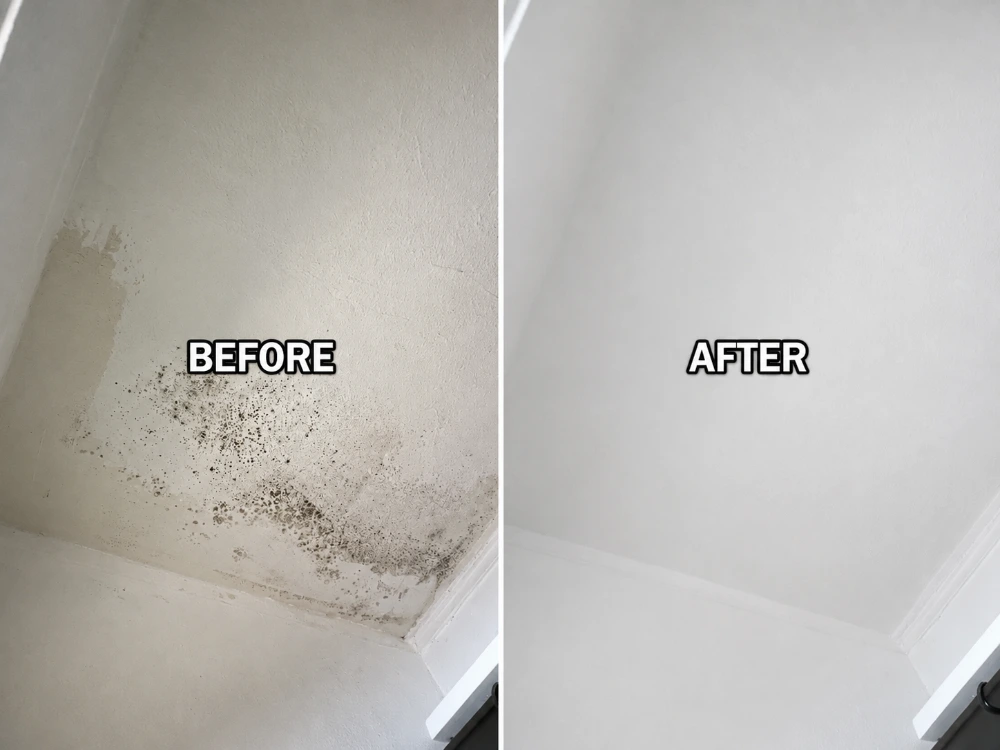
Call a professional when mold covers more than about 10 square feet, comes back after cleaning, grows on plaster or drywall instead of glass or tile, or comes with a musty smell and no visible spot. Those usually mean water is inside the wall, and wiping the surface will not reach it.
On a radiator condensation job we start by finding the moisture source with a meter, not by spraying the spots. If the wall is wet inside, the affected material comes out, the structure gets dried to a measured target, and the source gets fixed, whether that is a radiator valve, a window or a habit. In New York, any project over 10 square feet needs a licensed assessor who is independent of the remediator, so we remediate and coordinate the independent assessor for you. More on that on our NYC mold laws page, and typical prices are on our mold removal cost page.
We work across Inwood (ZIP 10034) and nearby Upper Manhattan, including Washington Heights and Marble Hill. Bathroom-specific winter mold is covered on our bathroom mold removal page.
About the author
Written by the team at Inwood Mold & Remediation, a mold remediation company working only in Upper Manhattan: Inwood (ZIP 10034), Washington Heights and Marble Hill. We remediate to a written scope and coordinate an independent licensed assessor for clearance, as New York’s Article 32 requires. See who we are and real jobs we have done.
Frequently Asked Questions
Seeing Mold in Your Inwood Apartment or Building?
Inwood, Manhattan – ZIP 10034. We find the moisture source first, give you a written scope, and use independent clearance testing. No pressure, no fear-mongering.
📞 Call (917) 694-9003 – Describe What You’re Seeing