🌊 Water Damage · Flood Mold · Post-Sandy · Inwood, Manhattan · ZIP 10034
Water Damage & Post-Flood Mold Removal in Inwood, Manhattan
Burst pipe, basement flood, roof leak, or a building that’s been quietly wet since Sandy – water damage mold in Inwood runs deep and comes back fast if the moisture source isn’t fixed first. Article 32 licensed. Same-day response available.
Water extraction and drying can start same-day. We document everything for insurance.
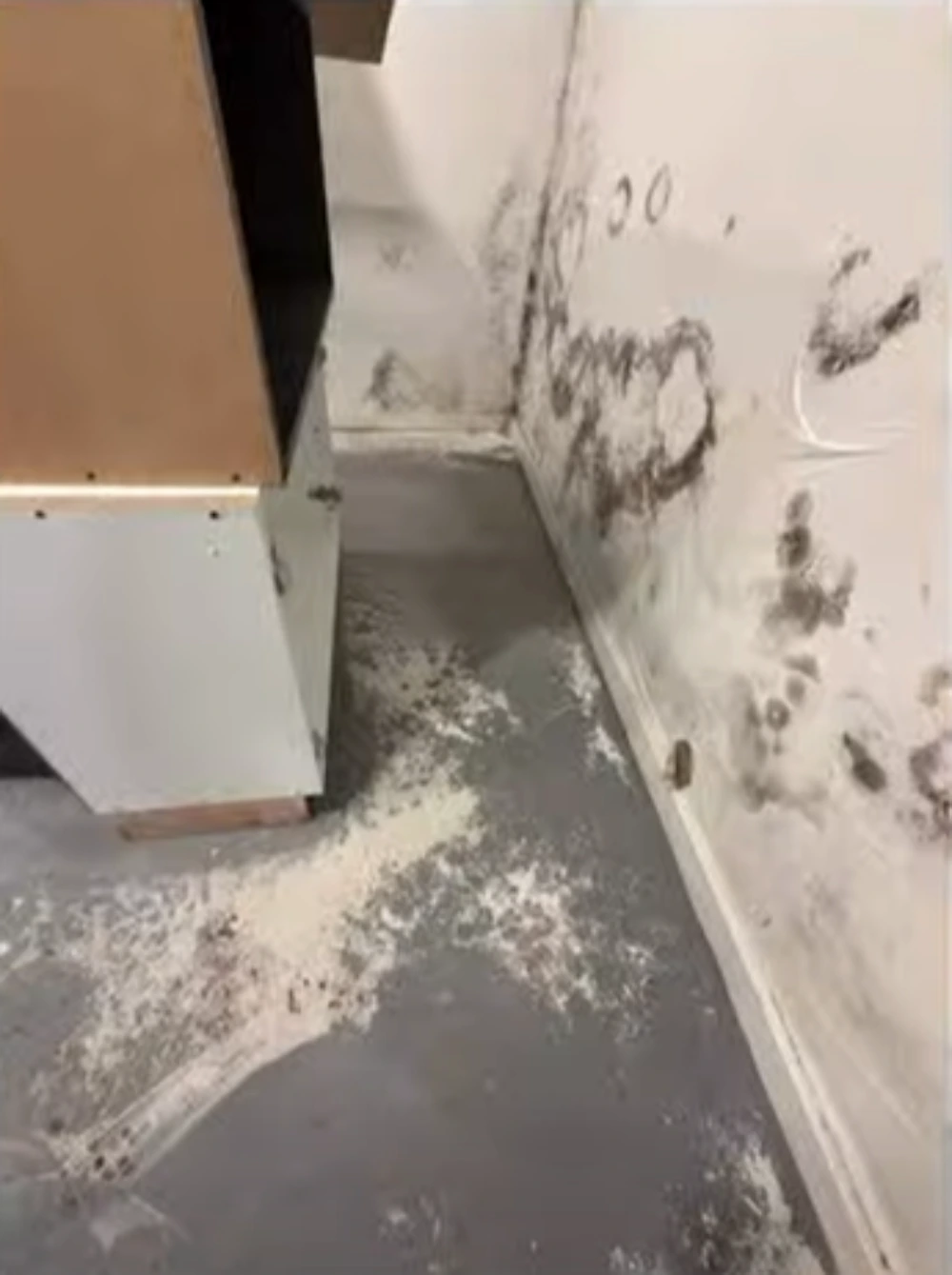
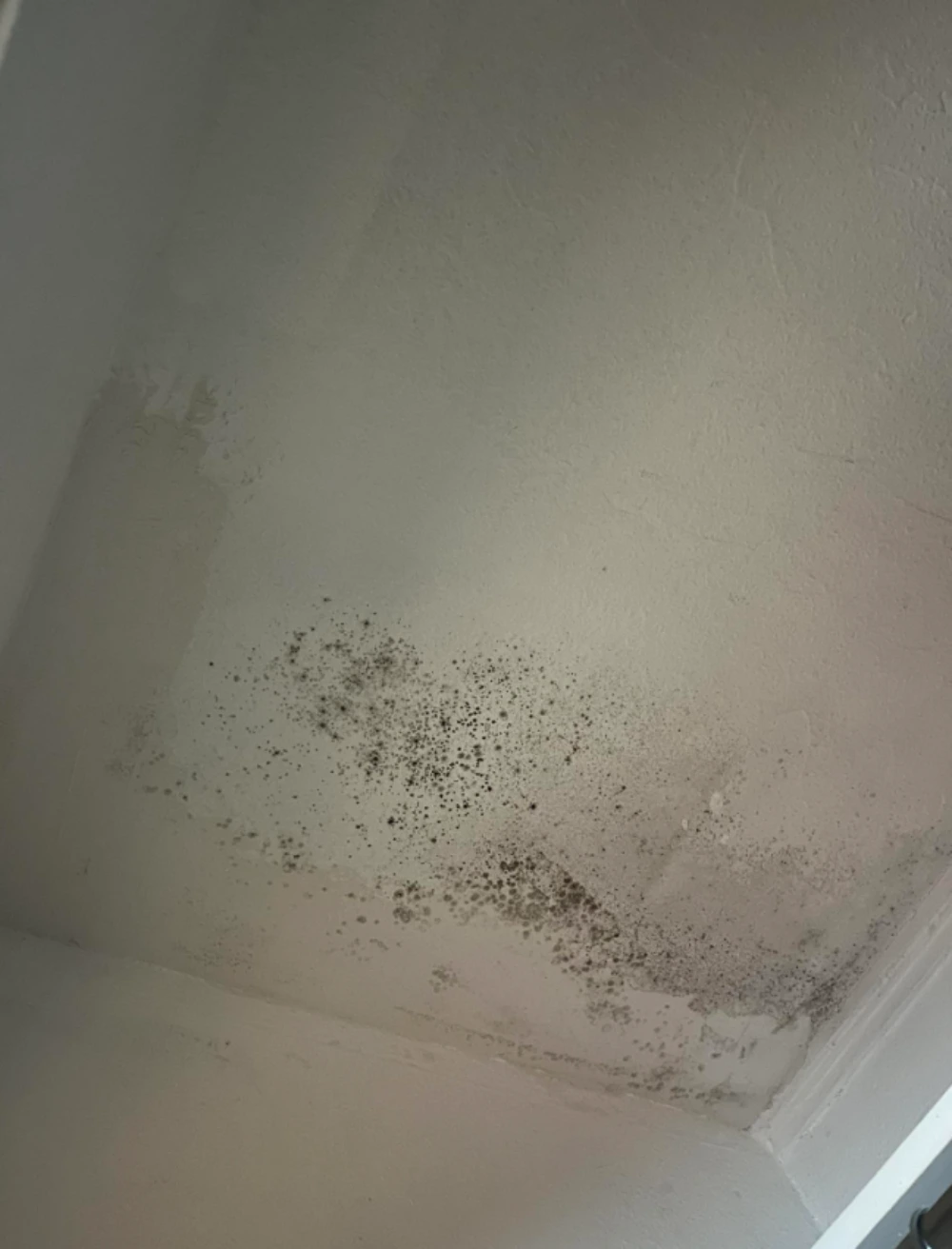
Real post-flood and water damage jobs. Inwood, Manhattan – ZIP 10034.
The call we get most after a big rain is something like this: “The basement flooded, we got the water out, but now there’s a smell.” That smell is almost always mold, and it usually started within 48 to 72 hours of the flooding – which is exactly how long mold needs to start colonizing wet drywall, wooden framing, and cardboard storage boxes.
Old water can matter as much as new water. Basements and ground floors that were pumped out after Sandy or Ida but never dried properly still turn up mold today. More in Sandy and Ida legacy mold in Inwood.
Water damage mold is different from ordinary humidity-driven mold in one critical way: the moisture event is sudden, the contaminated volume can be large, and the affected materials are often structurally embedded. In a flooded Inwood basement, you can be dealing with wet concrete block walls, saturated wood floor joists overhead, wet insulation batt, and storage that’s been sitting in standing water for hours or days. Our mold removal services for Inwood and Upper Manhattan are built around exactly these conditions.
The rule we follow here is simple: extract the water, map every wet surface with a moisture meter, dry the structure to a confirmed target reading, and then remediate any mold that has already established. Skip the drying step – which almost everyone outside this industry does – and you’re treating the symptom, not the cause.
Why Water Damage Mold Hits Inwood Buildings Harder Than Most
Inwood isn’t just any Manhattan neighborhood for water damage. A few specific factors make it a place where post-flood mold risk is genuinely elevated:
Pre-War Masonry Absorbs and Holds Water Differently
The six-story brick and concrete-block walk-ups that make up most of Inwood’s housing stock were built in the 1920s. Masonry construction absorbs moisture into the material itself and releases it slowly, over weeks or months. A basement that took on two inches of water during a storm isn’t fully dry in 24 hours of running a rented dehumidifier. The wall cavities, the block, the mortar – they’re still wet long after the floor feels dry to the touch.
Sandy-Era Moisture That Was Never Properly Dried
When Superstorm Sandy pushed surge up the Hudson waterfront in October 2012, basements across Inwood, Marble Hill, and Washington Heights took on water. The standard response was pumping out the standing water and moving on. What most buildings didn’t get was industrial drying – desiccant dehumidifiers run continuously, moisture mapping done with calibrated meters, and actual readings confirming the structure was back to normal. That work didn’t happen in most buildings. The result, which we still see on jobs today, is hidden moisture that never cleared – in concrete block walls, in old wooden floor joists, in wall cavities nobody opened up. Hurricane Ida in September 2021 added another round of flooding to buildings that had barely recovered from Sandy. The monthly spike in mold complaints citywide after Ida was the single highest month in the 2017-2023 NYC 311 dataset.
Basement Plumbing With No Drainage Plan
The pre-war walk-ups along Seaman Ave, Payson Ave, Post Ave, and the Dyckman corridor were built when basement flooding wasn’t considered a serious design problem. Many have floor drains that are undersized, clogged, or connected to systems that back up during heavy rain. Sump pumps – where they exist at all – are often old, undersized, or dependent on electricity that fails during the same storms that cause the flooding.
Hilly Topography and Groundwater Pressure
Inwood sits on a geological ridge that slopes toward the Hudson and Harlem Rivers. Buildings on the lower-elevation blocks – particularly west of Broadway near the waterfront – are subject to hydrostatic pressure that pushes up through foundation slabs and block walls during and after heavy rain. A basement can get wet from below even when nothing is leaking from above.
The 48-Hour Rule After Water Damage
Mold needs 24 to 48 hours on wet porous materials to begin establishing growth in typical indoor conditions. At 72 hours, it’s colonizing. At one week, it’s often invisible but extensive – growing inside wall cavities, in insulation, in ceiling tile above a first-floor ceiling that got saturated from above.
If you call within 24 hours of the water event, the goal is rapid drying – extract the standing water, set industrial dehumidification, monitor with moisture meters every 24 hours. Managed correctly, some water damage events can be resolved without any mold removal at all if the structural moisture readings get back to normal before mold establishes.
If you’re calling five days after the event, the conversation is different. We’re now assessing what’s already grown, what materials can be kept versus removed, and what the independent assessor’s mold remediation plan will look like. The honest answer to “is it too late?” is: it’s never too late to fix it correctly, but the longer you wait, the more material usually has to come out.
How Post-Flood Mold Remediation Actually Works
Every post-water-damage job starts the same way: we walk the space with a moisture meter and an infrared camera, map every wet surface, and then we know what we’re dealing with. Not what it looks like from the surface – what the actual moisture readings say.
The Article 32 Process – Required by Law for Jobs Over 10 Square Feet
1. Independent licensed assessor documents affected areas and writes a remediation plan. 2. We execute that plan. 3. A separate assessor does clearance testing after we’re done. You get the lab documentation.
Containment first. Negative air pressure and poly barriers so spores don’t travel through the rest of the building while we work.
Removal of contaminated porous materials. Drywall, insulation, wood that has absorbed contamination beyond surface-level. There’s no spray that fixes wet, moldy drywall inside a wall cavity – the material has to come out.
HEPA vacuuming and antimicrobial treatment on structural surfaces that are staying.
Drying to a confirmed moisture target. Not “looks dry,” but metered readings that confirm the structure is at or below normal moisture content for the material type.
Independent clearance. Air samples and surface swabs sent to an AIHA-accredited lab. If clearance passes, you have documentation. If it doesn’t, we go back.
Does water damage mold always require removing drywall?
Not always, but often. Hard, non-porous surfaces – concrete, ceramic tile, glass – can be cleaned and treated. Porous materials – drywall, insulation, particleboard – can’t be effectively cleaned once mold has penetrated the material. In our experience with Inwood buildings specifically, any wall adjacent to a basement or exterior that took on significant water almost always has more contamination inside the wall cavity than is visible from the surface.
Can I just dry it myself with fans and a dehumidifier?
A rented consumer dehumidifier is not the same as industrial drying equipment. Consumer units remove far less moisture per day than commercial desiccant units, and can’t reach the moisture inside concrete block walls or wall cavities. The test is a moisture meter reading on every potentially affected surface 24 and 48 hours after drying. If readings are normal, you’re probably fine. If they’re still elevated, you need more.
Will Insurance Cover Post-Flood Mold Removal in Inwood?
The honest answer: it depends entirely on the cause of the water damage, and the distinction matters more than most people realize.
What standard policies usually cover: Sudden, accidental water events from internal sources – a burst pipe, a washing machine supply line that fails, a dishwasher overflow – are typically covered under standard homeowner’s and renter’s policies, including the resulting mold, if you report the claim promptly. “Promptly” generally means within a few days, not weeks later after visible mold has grown.
What’s typically excluded: Gradual leaks are generally excluded. External flooding – storm surge, groundwater intrusion, sewer backup – is almost always excluded from standard homeowners policies. This is especially relevant to Inwood because the FEMA-designated flood zones along the Hudson waterfront mean that storm surge events (Sandy, Ida, future storms) are not covered under standard policies. You need separate flood insurance through the NFIP or a private carrier for that.
The Sandy and Ida Legacy Jobs We Still See in Inwood
If you’re in a pre-war building along the lower blocks near the Hudson – Post Ave, Vermilyea Ave, the Dyckman corridor, any building that took water in October 2012 – there is a realistic chance the moisture from that event never fully cleared. The typical Sandy response in this neighborhood was: pump out the water, bleach the floor and lower walls, air out for a few days, and move on.
Hurricane Ida in September 2021 hit some of these same buildings again. What we find on these jobs: elevated moisture in lower walls and floor slabs that has been there for years, sometimes with chronic mold that gets painted over each cycle. Addressing this requires the same process as any other water damage job: map the moisture, understand the source, dry the structure, remediate what’s grown.
What Does Water Damage Mold Removal Cost in Inwood?
A small, contained water event – a bathroom supply line failure affecting one wall, caught within 48 hours – might be $800 to $2,500 if the structure is salvageable. A basement that took on significant flooding and wasn’t dried correctly might be $8,000 to $25,000 or more, depending on the square footage and whether the structure requires rebuilding. Post-Sandy or post-Ida legacy moisture runs toward the higher end or beyond, because the affected area is often larger than it first appears.
Independent assessment: $350 to $900. Post-remediation clearance testing: $300 to $600. Both are required under Article 32 for jobs over 10 square feet and are separate from the remediation cost itself.
Water damage and post-flood mold remediation is available across Inwood (ZIP 10034) and nearby Upper Manhattan, including Washington Heights and Marble Hill. Same process, same written scope, same independent clearance.
Filing a claim? Our guide to mold and insurance in NYC covers sudden vs gradual leaks, flood policies and what to document in the first 48 hours.
Frequently Asked Questions – Water Damage & Mold in Inwood
The difference between a $2,000 job and a $12,000 job is often just timing. Call (917) 694-9003.
Flooded Basement or Water Damage? Call Today.
Same-day response available. Inwood, Manhattan – ZIP 10034 only. Article 32 licensed. Written scope, independent clearance, insurance documentation.
📞 Call Now – Stop the Mold Clock