
🚿 Bathroom Mold Removal · Grout · Tile · Wall Cavities · Inwood, Manhattan · ZIP 10034
Bathroom Mold Removal in Inwood, Manhattan
Bathroom mold in Inwood pre-war walk-ups is the most common surface-level mold call we get – and also the one most likely to be hiding something much larger behind the tile. A dark grout line is easy to clean. What’s behind a bathroom wall that has had a slow supply-line drip for two years is not.
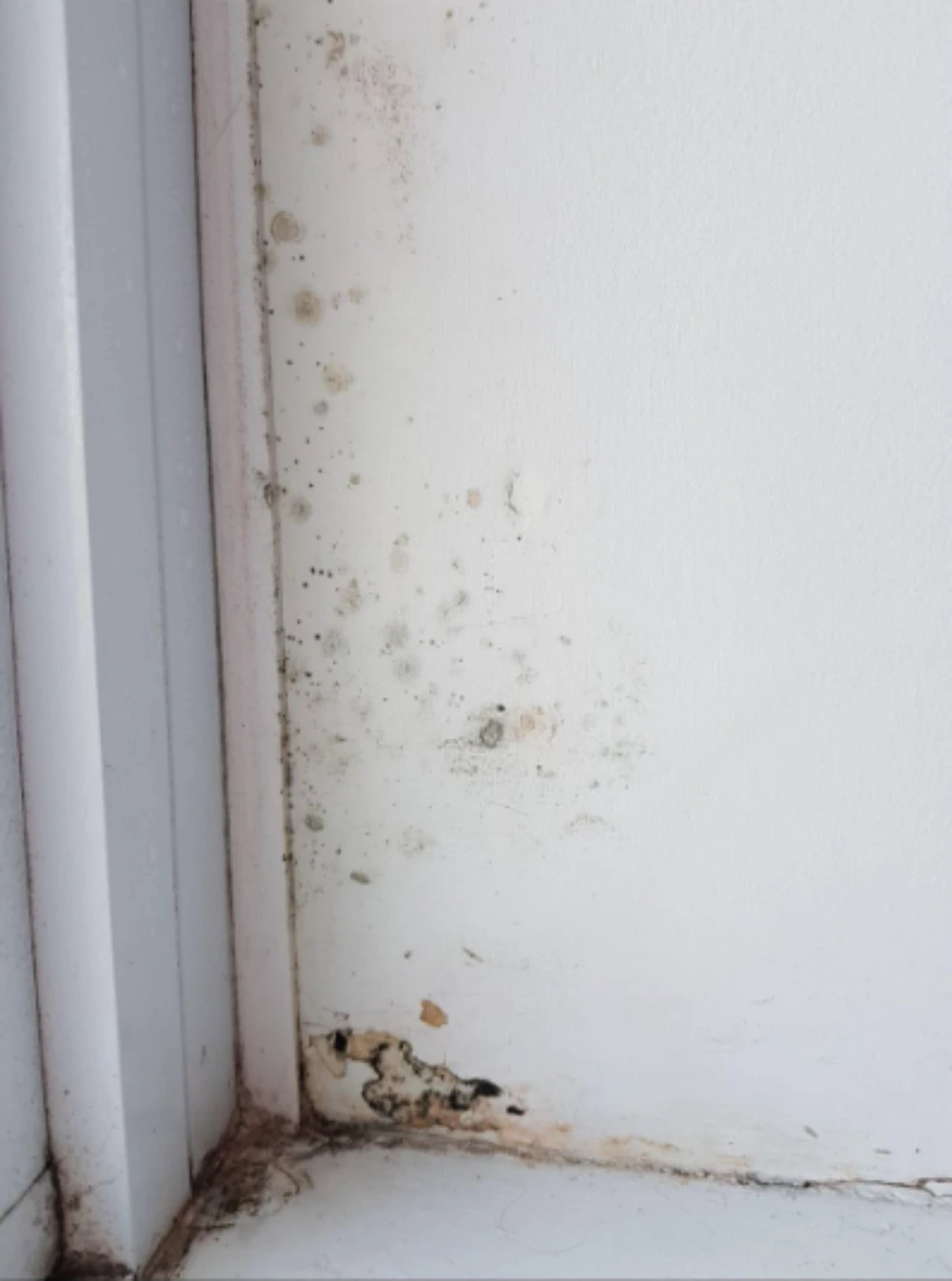
Real bathroom mold job. Inwood, Manhattan – ZIP 10034.
The bathroom in a 1920s Inwood walk-up is a specific environment. Original cast-iron bathtubs. Tile work that was grouted in the 1950s and has been cracking and regrouting ever since. Supply lines behind the wall that have been slowly corroding for decades. Un-vented exhaust that pushes moisture from showers directly into the wall cavity rather than outside. These are the conditions that make bathroom mold in these buildings not just a cosmetic issue.
When someone calls about bathroom mold in Inwood, the question I’m always asking is: what’s behind that surface? The grout line you can see is the last thing to show visible mold. The paper facing on the drywall behind the tile, the plaster substrate in older units, the wood framing on the bathroom partition wall – those surfaces have been wet much longer and have a lot more mold growth on them than the tile surface you’re cleaning every week.
Why Bathroom Mold Keeps Coming Back in Inwood Apartments
The recurring bathroom mold pattern in this neighborhood is almost always one of three things:
A grout or caulk failure that is allowing water behind the tile. Grout in older tile work shrinks and cracks over time. The caulk bead at the tub-to-wall junction fails. Water from showers and baths migrates behind the surface, saturates the substrate, and mold establishes on the back face of the tile and the material behind it. You clean the visible grout, it comes back within two to three weeks – because you’re cleaning the front while the real growth is behind.
An un-vented or inadequately vented bathroom exhaust. Pre-war walk-ups frequently have bathroom exhaust fans that vent into the wall cavity rather than through the wall to exterior. Every shower adds moisture to a space with nowhere to go. Over years, the humidity drives mold growth on every porous surface in the room – grout, paint, ceiling drywall, the back of cabinets.
A supply-line or drain-line slow leak inside the wall. The copper supply lines serving pre-war bathroom fixtures have been in place for eighty to a hundred years in many Inwood buildings. Pinhole leaks develop in the wall cavity, wet the surrounding materials slowly over months, and the first sign is often a musty smell or a soft spot in the drywall rather than any visible water.
Is bathroom mold dangerous to live with?
Bathroom mold that’s limited to grout and tile surface – Cladosporium and Memnoniella are the most common species in this environment – is an allergen concern for sensitive individuals but not an emergency. Bathroom mold that has established inside the wall cavity, particularly if it’s associated with a slow leak, may involve species that are more concerning and concentrations that affect air quality in the room. The only way to know which situation you have is to test. If the mold is recurring after repeated cleaning, it has penetrated the grout or established behind the surface – that’s the time to have it properly assessed.
When Bathroom Mold Requires Professional Remediation
You can safely clean small patches of surface mold on hard, non-porous bathroom materials – glazed tile, sealed ceramic, chrome fixtures – with diluted detergent or white vinegar. That’s legitimate and appropriate for routine maintenance in a high-humidity bathroom.
Professional remediation becomes necessary when:
- The mold keeps returning within a few weeks of cleaning – indicating it has penetrated the grout or established behind the surface
- You can smell mold but can’t find the visible source – indicating growth inside the wall cavity
- The total affected area is over approximately 10 square feet – the Article 32 threshold that triggers the licensed-party requirement
- There is any evidence of moisture behind the wall: soft drywall, peeling paint on the other side of the partition wall, a musty smell strongest near the wall
- A family member with respiratory conditions or asthma is experiencing symptoms that worsen at home
What Bathroom Mold Remediation Involves in an Inwood Apartment
A proper bathroom mold remediation in a pre-war Inwood apartment typically goes like this: the independent assessor opens the wall – usually by removing a section of tile and the substrate behind it – to assess what’s actually present inside the cavity. They take samples. They map the moisture. The remediation plan specifies what materials need to come out (almost always the substrate behind affected tiles, often a section of drywall in the adjacent wall), how the cavity needs to be dried, and what the clearance testing will measure.
The bathroom is then rebuilt – new cement board or moisture-resistant substrate, new tile, properly caulked joints. The exhaust ventilation is typically addressed at the same time if it’s been identified as a contributing factor. The finished bathroom is mold-tested by the independent assessor, who confirms the remediation is complete and issues the clearance documentation.
Can bleach remove bathroom mold permanently?
Bleach removes the visible staining on non-porous tile and glazed surfaces and kills surface mold on those materials. It does not penetrate grout to kill mold growing in the matrix of the grout itself, and it has no effect on mold growing on porous materials behind the tile. For recurring bathroom mold – the kind that comes back every few weeks despite regular cleaning – bleach is managing a symptom while the underlying condition continues. If it keeps coming back, something needs to be investigated behind the surface.
Bathroom mold removal is available across Inwood (ZIP 10034) and nearby Upper Manhattan, including Washington Heights and Marble Hill. Same process, same written scope, same independent clearance.
Bathroom mold that gets worse once the heat comes on is usually winter condensation. Our radiator condensation vs mold winter guide explains why and what to do about it.
Wondering whether a small bathroom spot is a DIY job? Our DIY vs professional mold removal guide covers vinegar, bleach and the 10 square foot rule.
Bathroom Mold Removal – Frequently Asked Questions
The dark grout line is easy to clean. What’s behind the wall after two years of a dripping supply line is not. Call and describe the situation. Call (917) 694-9003.
Bathroom Mold That Keeps Coming Back? Get It Properly Assessed.
Same-day assessments. Inwood, Manhattan – ZIP 10034. Article 32 licensed. Written scope, independent clearance.
📞 Call +1 (917) 694-9003