
🔬 Article 32 Compliant · Inwood, Manhattan · ZIP 10034
Mold Remediation in Inwood, Manhattan
Licensed mold assessment and remediation for Upper Manhattan’s pre-war buildings. Independent clearance testing. Written scope before any work begins.
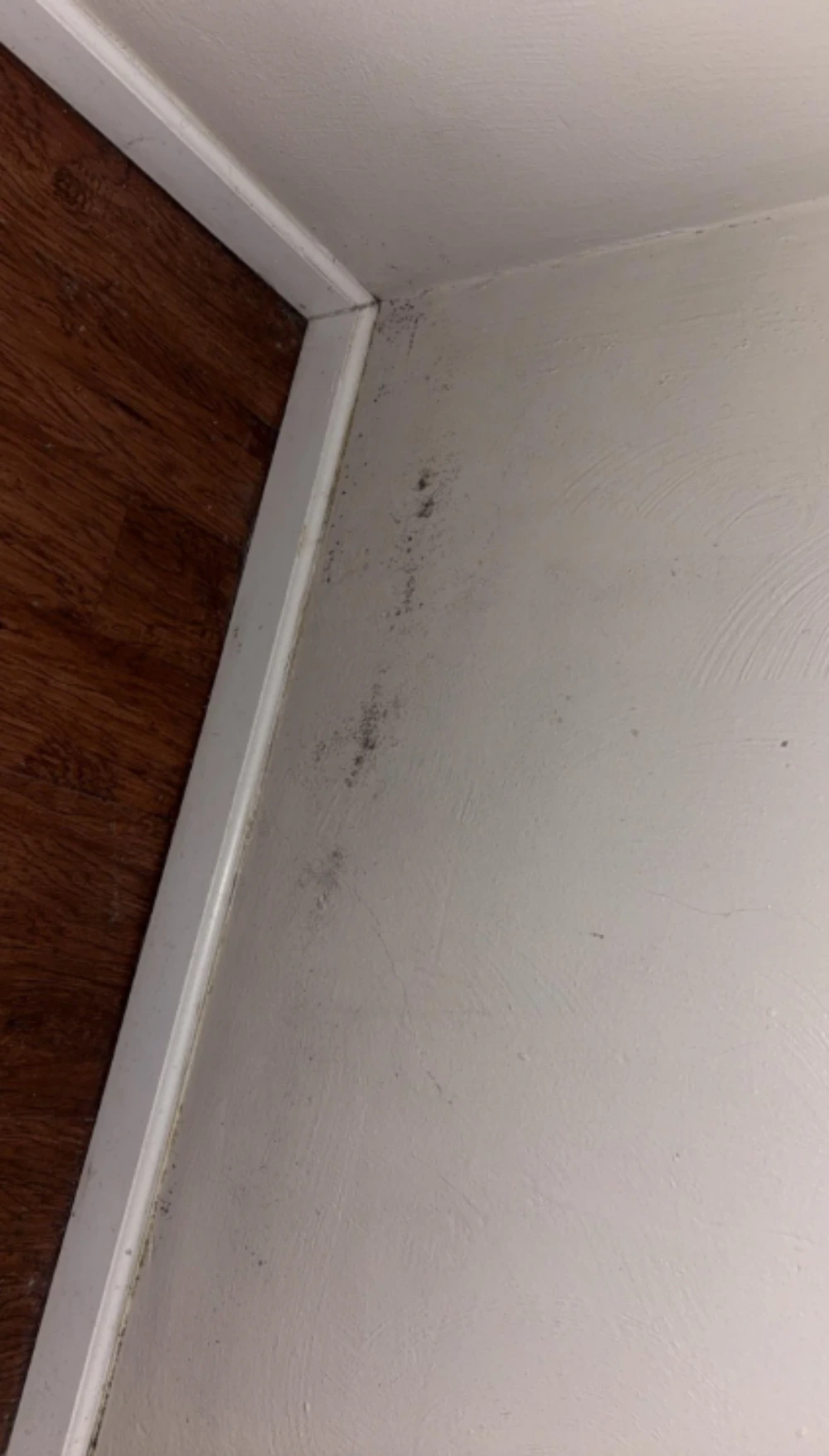
Licensed remediation – Article 32 compliant. Inwood, NY 10034.
Why Inwood Buildings Need Specialist Mold Remediation – Not Generic Cleanup
We do mold remediation in one neighborhood. Not all five boroughs, not “the greater New York area” – Inwood and the blocks around it. We know these buildings because we’re in them constantly. This page covers what mold remediation actually involves in a 1920s Inwood walk-up, what the law requires, and what the full service looks like from first call to clearance certificate.
I’ll be honest: a lot of mold calls we go to in this neighborhood don’t need full remediation. A small grout line in a bathroom that’s genuinely dry behind it – clean it properly and keep the ventilation right. If I can tell you to do that and save yourself a few hundred dollars, I will. But when a wall cavity along a Seaman Ave supply riser has been wet for three months without anyone realizing it, or when a basement on one of the lower Broadway blocks is holding Sandy-era moisture that’s still surfacing – that’s a different situation. This page helps you tell them apart.
Why Mold Is a Recurring Problem in Inwood’s Building Stock
Inwood is one of Manhattan’s least-talked-about neighborhoods and one of its most specific environments for mold problems. The combination of factors here doesn’t exist the same way in Midtown or even in Washington Heights just south of us.
1920s Masonry Construction and Aging Plumbing
Nearly every residential building in the 10034 ZIP is a six-story pre-war brick walk-up. Cast-iron waste stacks and copper supply risers from that era are decades past their design life in many buildings. A slow-developing pinhole leak in a wall cavity can wet drywall continuously for weeks or months before anyone smells it – and the masonry walls that look solid from the outside trap that moisture rather than letting it evaporate.
Sandy and Ida Legacy Moisture – Still Present
When Superstorm Sandy hit in October 2012 and Hurricane Ida in September 2021, low-lying blocks off Dyckman Street and along the Hudson waterfront took on significant water. Many basements had the standing water pumped out but were never moisture-mapped or professionally dried. That trapped moisture in concrete, masonry, and wood framing is still surfacing as new mold growth in 2026 – more than a decade after Sandy. I’ve personally been in basements on Vermilyea Ave and Post Ave where you can still measure elevated moisture levels in wall sections that were “cleaned up” years ago. The mold removal service in Inwood, Manhattan we run addresses exactly this – find the moisture, remediate what’s contaminated, and clear it independently.
Hudson Coastal Humidity and Sealed Winter Apartments
NYC averages 65-72% relative humidity in summer – the EPA’s identified risk threshold for mold growth is around 60% relative humidity indoors. In winter, sealed apartments with steam radiators and un-vented bathrooms trap condensation. Mold discovery actually peaks in fall and winter in this neighborhood, because closed windows trap moisture that summer ventilation would otherwise dissipate. The mold was growing in summer; you notice it in December.
Ridge Topography and Low-Lying Ground
The neighborhood runs uphill from the Harlem River toward Inwood Hill Park. Buildings sitting lower relative to street grade – common on blocks between Dyckman and 207th near the water – take on groundwater and stormwater first. A heavy rain event combined with a clogged sump pump or failed basement drain can create Category 2 or Category 3 water intrusion in a matter of hours.
Steam Heat Radiator Condensation
Pre-war buildings in Inwood use steam heat – old, heavy iron radiators that get extremely hot and create significant temperature differentials near exterior walls. That temperature differential drives condensation on cold wall surfaces, especially in north-facing bedrooms, below-grade spaces, and rooms adjacent to stairwells. The condensation itself isn’t mold, but sustained condensation on porous surfaces like plaster or older drywall creates ideal mold growth conditions through a winter season.
Yes – Inwood has near-ideal conditions for recurring mold problems. The 1920s masonry building stock, aging plumbing infrastructure, Sandy and Ida legacy moisture in foundations and wall cavities, coastal humidity from the Hudson, and steam-heat condensation make the 10034 ZIP one of the higher-mold-risk areas in Manhattan. According to normalized 311 complaint data, mold complaints in Upper Manhattan track directly with storm events and peak in fall and winter months.
Mold Remediation Services – What We Do in Inwood Buildings
Every service we offer is listed here with a dedicated page that goes deeper. The priority order below reflects the most common jobs we do in this specific building stock – not a generic national list.
Basement Mold Removal Inwood
The most common job in 10034. Pre-war walk-up basements – below-grade storage, laundry rooms, mechanical spaces – hold moisture from foundation intrusion, plumbing leaks, and storm events. We treat the foundation moisture, not just the wall surface.
Full service page →Water Damage & Post-Flood Mold
Burst pipes, appliance overflows, storm intrusion, sump pump failures. Highest urgency, highest documentation need. Mold begins growing on wet porous material within 24-72 hours, so response time matters. We maintain a complete insurance documentation chain from day one.
Full service page →Black Mold Removal Inwood
“Black mold” is a color description, not a diagnosis. Cladosporium, Penicillium, and Aspergillus can all appear dark – and any of them growing in a porous wall cavity or subfloor is a problem regardless of color. We don’t sell fear around the word “black.” We identify, contain, and remove it properly.
Full service page →Mold Testing & Assessment
An independent service, separately licensed under Article 32. Air samples, surface scrapings, AIHA-accredited lab analysis, and a written remediation plan. Required by law for any mold project over 10 sq ft. Also a smart first step when you’re not sure what you’re dealing with.
Full service page →Emergency / 24-Hour Response
Active pipe burst, ceiling leak, basement flooding, sewage backup. We prioritize emergency calls in the 10034 ZIP. Call directly – don’t wait for an email response when water is actively damaging your structure.
Full service page →Attic Mold Removal Inwood
Poor ventilation and inadequate vapor barriers in pre-war rooftop spaces. Common in both the six-story walk-ups and the Art Deco elevator buildings west of Broadway. Attic mold often develops slowly and goes unnoticed until a home inspection flags it.
Full service page →Bathroom Mold Removal
Grout, caulk, window sills, behind vanities, sub-floor beneath old tile. Bathroom mold is the most common DIY attempt – and the most common DIY failure, because the moisture source behind the tile or under the floor rarely gets addressed. We’ll tell you honestly when a simple clean is enough and when it isn’t.
Full service page →Kitchen Mold Removal
Under-sink leaks, unvented range hoods, behind the fridge and dishwasher. Kitchen mold hides in cabinet bases and sub-floor where a slow drip goes unnoticed for weeks. We find the moisture source first, then remediate the cabinet and flooring material correctly.
Full service page →Mold Removal Cost – Inwood, NY
Transparent, itemized local pricing with Upper Manhattan cost ranges. What drives the number up or down, what assessment and clearance testing add, and why phone estimates are unreliable. Read this before calling anyone.
See local pricing →How the Remediation Process Works – All 7 Steps
This is the sequence we follow on every job, in this order. The sequence isn’t arbitrary – it’s the one the ANSI/IICRC S520 standard and NYS Article 32 both require, and it exists because skipping steps causes failures.
Initial Consultation
We look at the situation, identify where the water is coming from, and give you an honest picture of what you’re dealing with.
Licensed Assessment
For jobs over 10 sq ft, an independent licensed assessor documents extent, runs testing if needed, and writes the remediation plan.
Written Scope
You receive the complete remediation plan in writing before any work starts. No surprises.
Containment
Polyethylene sheeting and negative air pressure prevent spores from traveling to unaffected areas during work.
Removal & HEPA
Contaminated porous material removed. Hard surfaces HEPA-vacuumed. Air scrubbers run continuously.
Antimicrobial & Dry
EPA-registered antimicrobial treatment. Structure dried to a metered target – not “looks dry.”
Independent Clearance
A separate licensed assessor performs final sampling. Lab results go to you. The job isn’t done until clearance passes.
Only if the moisture source wasn’t corrected. Mold needs moisture to grow – remove the contaminated material, dry the structure to a proper target, and fix the water source, and there’s nothing left for it to feed on. Remediation that skips moisture correction will always fail eventually. When we complete a job and the clearance passes, it stays gone – because we treated the cause, not just the symptom.
What Article 32 Means for You Specifically
Whether you’re an owner, tenant, or landlord, the Article 32 licensing framework affects your job differently.
If you’re a co-op or condo owner (most common west of Broadway, in the Art Deco buildings near Inwood Hill Park): you’re choosing and paying for the remediation directly. The written remediation plan and independent clearance certificate are your documentation for the co-op board, for any disclosure required in a future sale, and for your own peace of mind. Get the clearance certificate. Keep it.
If you’re a rent-stabilized tenant (the majority of Inwood east of Broadway): you’re entitled to a habitable apartment free of mold. Your landlord is responsible for remediation, and the law backs you. The written assessment, the remediation plan, and the clearance report are documents you can and should ask to see. If your landlord is hiring a single company to “do it all” without an independent assessor writing the plan, that’s a red flag – and potentially a non-compliant remediation that won’t hold up if the problem recurs.
If you’re a landlord or property manager with buildings on Dyckman, Nagle, Broadway, or Post Ave: the fastest, cleanest path through a mold problem is the Article 32-compliant one. The independent assessor’s written plan gives you legal cover. The clearance certificate closes the HPD violation file. Cutting corners on this costs more in the long run – repeated violations, potential Housing Court, liability if a tenant’s health is affected.
Full NYC mold law reference – Article 32, Local Law 55, HPD violations →
Mold on Dyckman Street and the Dyckman Corridor
Dyckman Street runs across the top of Manhattan from the Hudson to the Harlem River, and its buildings get mold in their own ways. Most are pre-war walk-ups with storefronts on the ground floor and apartments above. The storefront basements hold stock, walk-in coolers and old plumbing, and a leak down there can feed mold into the floors above before anyone upstairs smells it.
The east end sits low, near Sherman Creek and the Harlem River. During Sandy in 2012 the creek flooded across Tenth Avenue into the Dyckman Houses, and some basements on those blocks were never properly dried. If you live in the Dyckman Houses, the complaint path runs through NYCHA, not HPD. Our NYCHA and Dyckman Houses guide covers what to do.
For shop owners on Dyckman, we plan work around your hours, keep the work area sealed off from customers, and give you the written scope and clearance report your landlord or insurer will ask for.
Why Inwood-Only Focus Matters
We’ve worked in buildings citywide. A few years ago we narrowed to Inwood and Upper Manhattan specifically. The reason is simple: mold remediation is highly site-specific. What works in a Williamsburg brownstone with a crawl space doesn’t map directly to a 1924 six-story walk-up on Payson Ave with cast-iron waste stacks and steam heat. What matters for a tenant near the Dyckman Houses is different from what matters for a co-op owner west of Broadway preparing for a resale.
When we say we know these buildings, we mean it specifically. We know which blocks have historical flood exposure from the Hudson. We know which building vintages have the plumbing configurations most likely to produce slow wall-cavity leaks. We know the NYCHA complaint pathway is different from the private-building 311 pathway. We know the Dominican-American community on Dyckman Street deserves the same quality of information in Spanish – not a badge, actual bilingual service.
That’s what a neighborhood-focused operation looks like. Not a franchise map. Not fifty service areas. Just this one.
Mold remediation is available across Inwood (ZIP 10034) and nearby Upper Manhattan, including Washington Heights and Marble Hill. Same process, same written scope, same independent clearance.
Mold Remediation Inwood – Common Questions
How long does mold remediation take in an Inwood apartment?
A small, contained job – an isolated bathroom wall or a single closet – is typically done in one to two days, with drying time and independent clearance testing adding a few more days before the final certificate. A larger basement job, a wall cavity with significant spread, or a flood-related case runs five to ten days depending on the drying period required. We provide a specific timeline in the written remediation plan before work begins – not a phone estimate.
Do I need to leave my Inwood apartment during mold remediation?
Usually not. Most Inwood apartment jobs are contained to one room, and the negative air pressure containment setup keeps the rest of the unit livable. You may want to make alternative arrangements if the remediation is large-scale – a full basement, multiple rooms, or a situation involving a sewage backup (Category 3 water). If someone in the household has asthma, a weakened immune system, or is very young or elderly, we discuss that specifically during the assessment. We don’t give a generic answer because the right answer depends on the actual job.
How much does mold remediation cost in Inwood, NY?
Small, isolated areas – a bathroom wall, a closet – commonly run $800-$2,500. Mid-size jobs like a basement wall, a water-damaged kitchen cabinet section, or a bathroom with sub-floor involvement run $2,500-$7,500. Larger remediations involving a full basement, attic, or significant flood damage run $8,000-$25,000+. Independent assessment adds $350-$900; clearance testing adds $300-$600. Every job gets a written estimate before work starts. See our full local cost guide with Inwood-specific ranges.
What is the difference between mold remediation and mold removal?
They’re often used interchangeably but “removal” implies taking something away. “Remediation” is more accurate – it means correcting the problem to acceptable levels, which includes containment, physical removal of contaminated materials, HEPA cleaning, antimicrobial treatment, drying, and independent clearance testing. True remediation also addresses the moisture source that caused the mold in the first place. Without that last step, any method of “removal” will result in the mold returning.
Why do older Inwood buildings get mold more often than newer construction?
Several converging reasons: aging cast-iron and copper plumbing that leaks slowly before showing visible signs; original plaster and brick masonry that absorbs moisture rather than shedding it; steam heat systems that create temperature differentials driving condensation; no modern vapor barriers between exterior masonry and interior wall assemblies; and decades of accumulated moisture events – Superstorm Sandy, Hurricane Ida, winters of condensation – that have been imperfectly remediated or simply lived with. The buildings are wonderful in many ways. Moisture management just isn’t one of their strong points.
Ready to Get It Assessed? We Work in Inwood – Not Everywhere.
Same-day consultations for Inwood, Washington Heights, Marble Hill, Dyckman, and Fort Tryon. Written scope before work starts. Independent clearance testing after.
Ready to Get the Mold Removed for Good?
Same-day assessments available. Inwood, Manhattan only. Article 32 licensed. Independent clearance testing every job.
📞 Call +1 (917) 694-9003