
🏗️ Inwood Building Science · Pre-War Walk-Ups · Art Deco Co-ops · ZIP 10034
Pre-War Building Mold in Inwood: Why Old Walk-Ups Stay Damp and What Fixes It
96% of Inwood’s mold complaints in 2025 came from buildings built before 1940. Solid brick walls, century-old risers, steam heat and below-grade basements all hold water in ways newer buildings don’t. Here’s what’s happening inside the walls of a 1920s Inwood walk-up, and how to fix it so it stays fixed.
Updated September 26, 2026. Original analysis of NYC 311 and PLUTO records for ZIP 10034. Hablamos Español.
Pre-war building mold is most of what we see in Inwood. Almost every mold call we take in Inwood comes from the same kind of building: a five or six-story brick walk-up from the 1920s, with the original plumbing stacked inside the walls and steam radiators under the windows. These buildings are solid and beautiful. They were also built long before anyone thought about moisture control.
We pulled the city’s own building records and matched them against every 2025 mold complaint in ZIP 10034. The result is about as clear as data gets: the mold problem in Inwood is a pre-war building problem. Here’s why, what’s actually happening inside the walls, and what fixes it.
Pre-War Buildings and Mold in Inwood: The Numbers
Why is pre-war building mold so common in Inwood?
Because of how they were built. Most Inwood buildings went up between 1910 and 1940 with solid, uninsulated brick walls, original plumbing risers, steam heat and below-grade basements. Each of those traps moisture or keeps walls cold enough for condensation. In 2025, 96% of Inwood’s 311 mold complaints and 98% of its HPD mold violations were in pre-1940 buildings.
Those same buildings hold 74% of Inwood’s apartments, so you’d expect a lot of complaints from them. But not 96%. Per apartment, pre-war buildings logged about eight times as many mold complaints as anything built after 1940.
When were Inwood’s buildings built?
Mostly in the 1920s. Once the subway reached upper Manhattan, developers filled Inwood’s blocks fast. 165 of the neighborhood’s 368 residential buildings date to the 1920s, and 306 were built before 1940. The median Inwood building went up in 1926. Most are five or six stories (292 of 368), and 86% have ten or more apartments.
Source: NYC PLUTO, residential lots in ZIP 10034, pulled September 2026.
Are walk-ups worse for mold than elevator buildings?
In Inwood, about three times worse. Walk-ups (233 of Inwood’s buildings) logged 36.8 mold complaints per 1,000 apartments in 2025. Elevator buildings logged 12.4. Walk-ups hold under half of Inwood’s apartments but produced 76% of its mold complaints.
Source: our analysis of NYC 311 and PLUTO data, matched by tax lot. Full method on the Inwood mold data page.
Why the gap? Elevator buildings west of Broadway, many of them Art Deco co-ops from the 1930s, usually have a full-time super, a board that funds roof and riser work, and newer systems. Walk-ups often run with part-time staff and deferred maintenance, so a small leak runs longer before anyone fixes it.
Where does moisture get into a pre-war Inwood building?
Six places, over and over: plumbing risers and waste stacks, solid brick walls, roofs and parapets, steam radiators, below-grade basements, and the narrow air shafts between buildings. Nearly every job we do traces back to one of these. Knowing which one it is decides whether mold removal in Inwood lasts or comes back in a season.
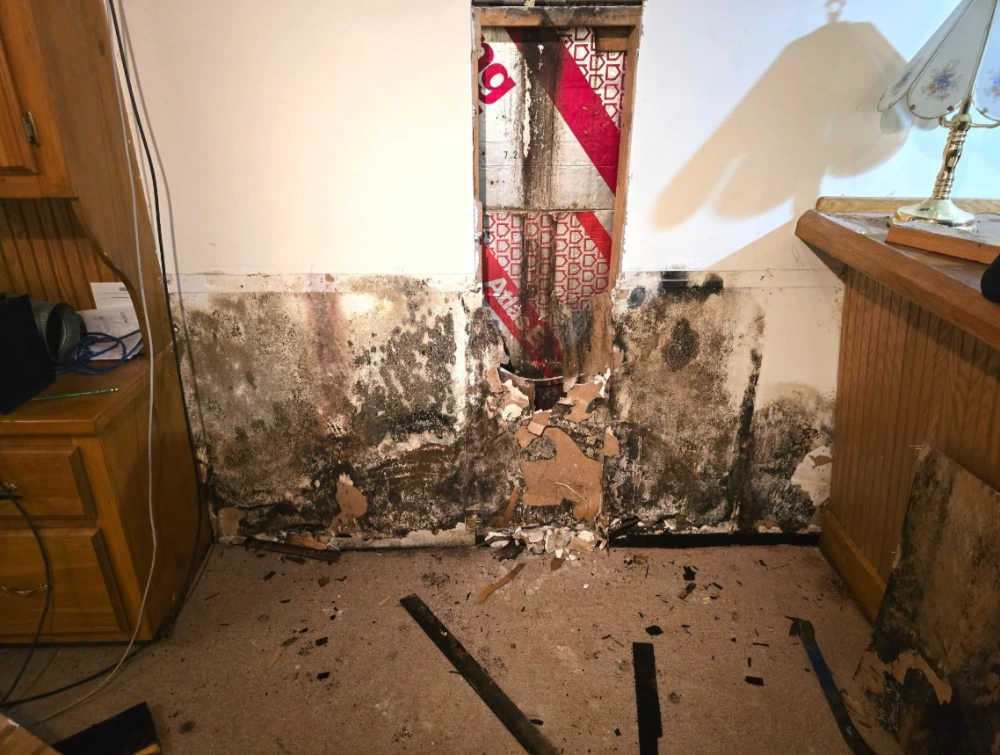
Plumbing risers and waste stacks
Galvanized or early copper supply lines and cast-iron stacks, stacked bathroom over bathroom. A pinhole leak wets the wall cavity for weeks, and the stain shows up one floor down.
Solid brick walls
No insulation, no vapor barrier. In winter the inside face of an exterior wall stays cold, and warm indoor air condenses on it, especially behind furniture and in closets.
Roofs, parapets and pointing
Flat roofs, parapet walls and worn mortar joints let rain into the top floor and down the building face. Top-floor ceilings and corner walls take the hit first.
Steam heat
One-pipe steam radiators with leaking valves and spitting air vents drip into the floor. Heat running with windows shut from October to May pushes humidity up.
Below-grade basements
Old foundations with no waterproofing, sitting on a hill that sends groundwater downhill. Laundry rooms and storage cellars stay damp year-round.
Air shafts and light courts
The narrow shafts between buildings barely get sun or wind. Bathroom and kitchen windows facing them never dry out, and neither do the walls around them.
Is plaster or drywall better against mold?
Original plaster holds up better. Plaster on masonry or metal lath has nothing for mold to eat. Paper-faced drywall does. Many Inwood apartments have been renovated with drywall over the old brick and no moisture control behind it, and that’s often where we find the worst growth: behind a new-looking wall in a 100-year-old building. With mold in pre-war apartments, the plaster itself is rarely the problem. The water behind it is.
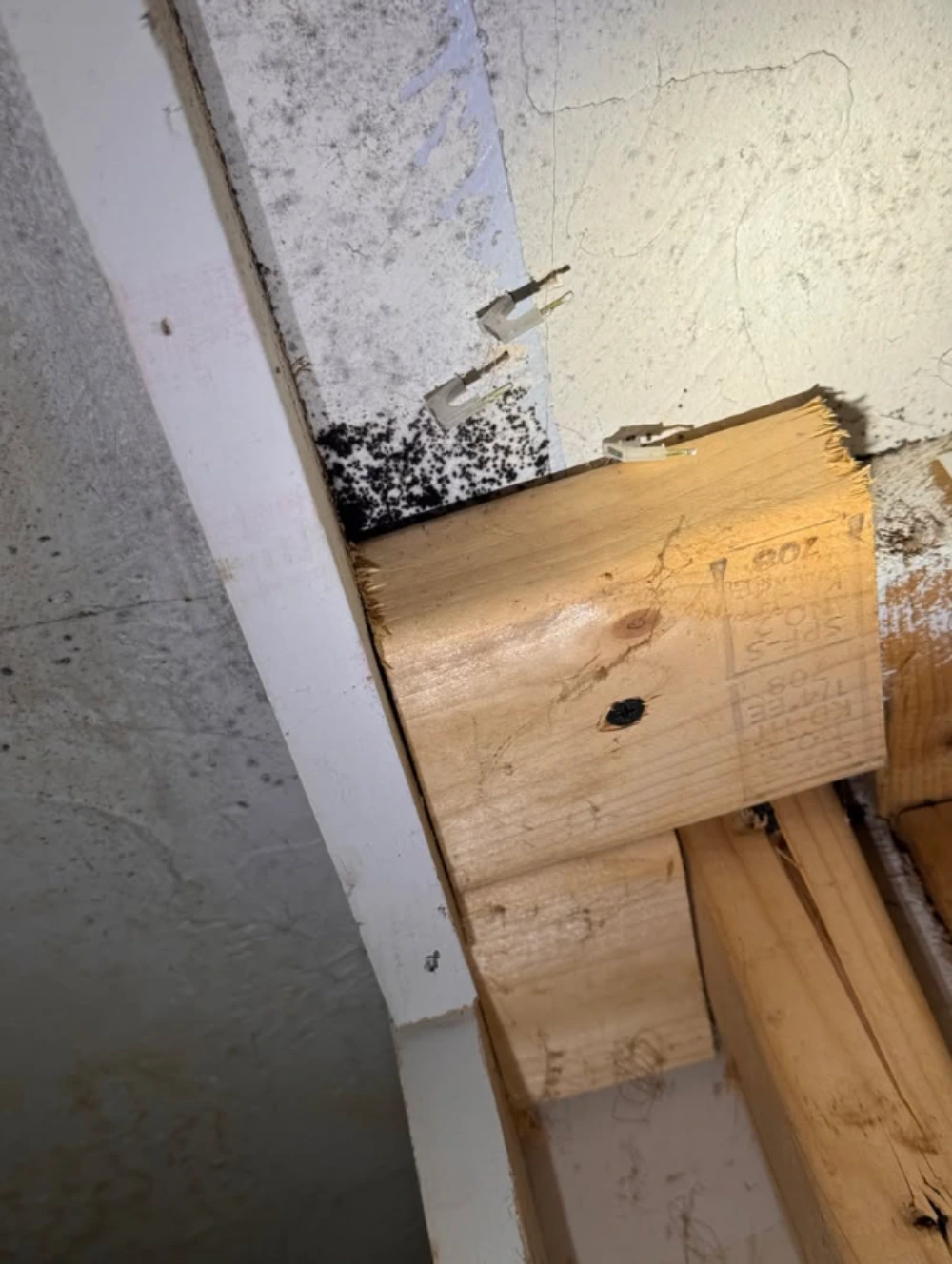
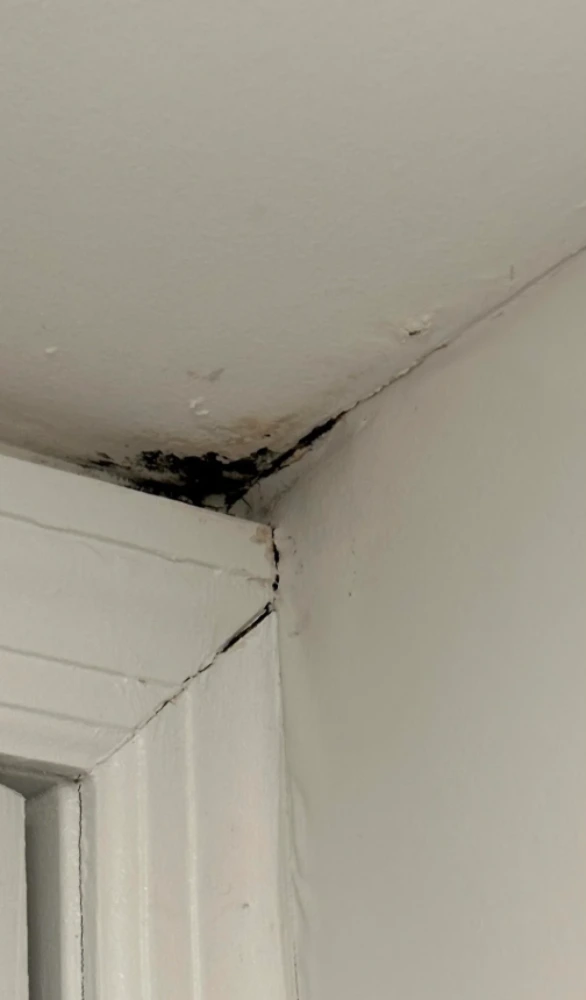
That doesn’t mean plaster is immune. Mold grows on the paint, dust and wallpaper on top of it, and wet plaster eventually softens and crumbles. But when plaster is wet, fixing the leak and drying it out often saves it. When drywall is moldy, it has to come out.
Can mold in a pre-war building be fixed for good?
Yes, if you fix the moisture source. Cutting out moldy material without repairing the riser, roof, pointing or ventilation just resets the clock. Done right, with the water stopped, the structure metered dry, and an independent assessor’s clearance passed, it stays gone. That’s the whole reason we start every job by finding the water.
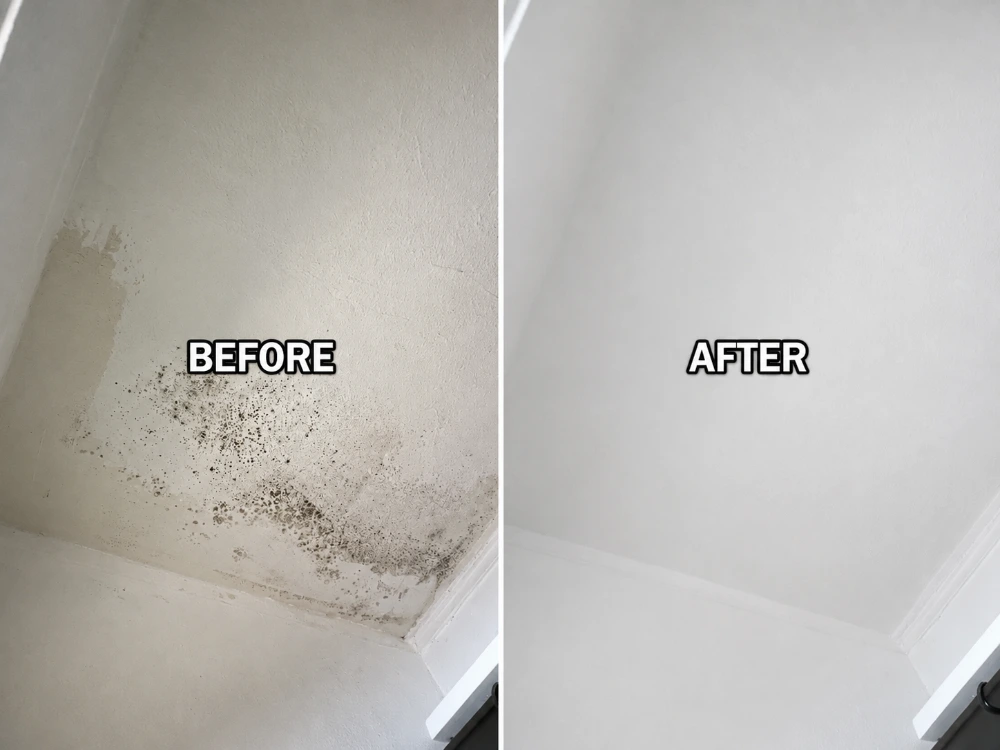
For anything over 10 square feet, New York’s Article 32 requires a separately licensed assessor to write the plan and clear the work. We remediate, and we coordinate the independent assessor for you. See our mold remediation process or the specific guides for basements, bathrooms and water damage.
How do you prevent mold in pre-war apartments?
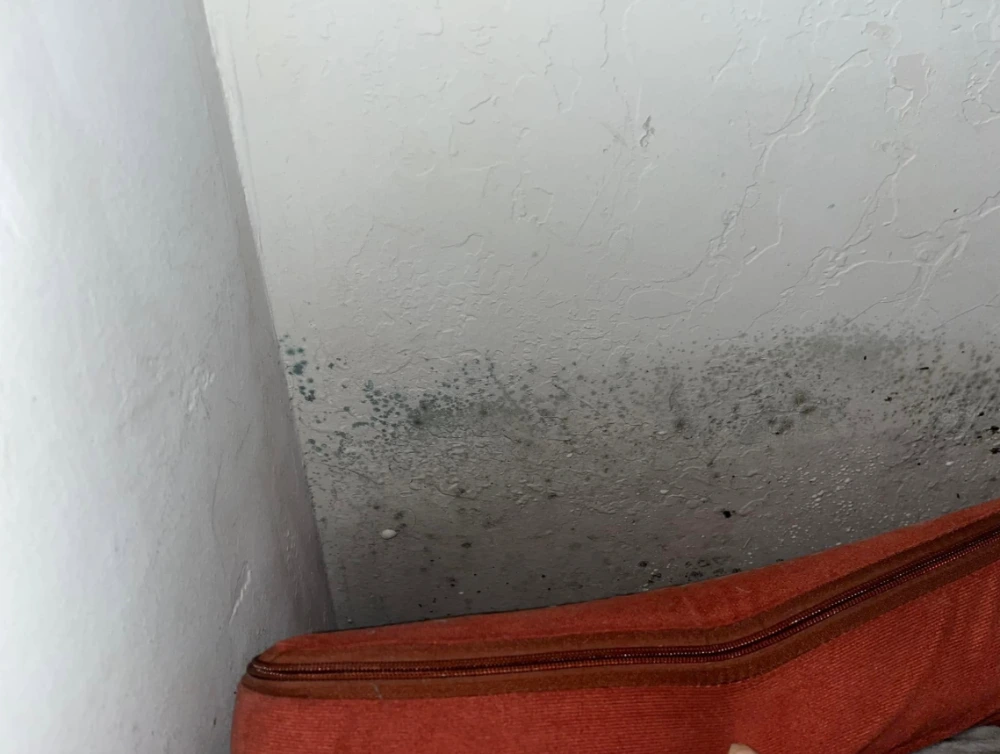
Keep humidity under 60%, keep air moving along exterior walls, and report leaks in writing early. You can’t re-insulate a 1920s building, but running the bathroom fan after showers, pulling furniture off outside walls and never painting over a stain prevent most of the mold we see. The habits that make a real difference:
- Keep indoor humidity under 60%. A $20 hygrometer tells you where you stand.
- Pull furniture a few inches off exterior walls so air can move behind it.
- Run the bathroom fan, or crack the window, for 20 minutes after every shower.
- Report radiator valves that hiss or drip, and any ceiling stain, in writing.
- Don’t paint over a stain. If it comes back, the water is still there.
Renting? Your landlord has to inspect for mold every year under Local Law 55 and fix the cause. See tenant rights and mold. Owning or managing? Our Local Law 55 checklist and landlord compliance guide cover the rest.
Is this just an Inwood problem?
No, it’s an Upper Manhattan problem. Washington Heights is even older, with a median build year of 1915 and 92% of buildings pre-1940, and its mold complaint rate is about the same as Inwood’s. Marble Hill, across the Harlem River, is mostly older one and two family houses with their own issues: attics, crawl spaces and hillside basements. See Washington Heights and Marble Hill. Pre-war building mold shows up all over Upper Manhattan, but Inwood has more of it per apartment than almost anywhere.
Frequently Asked Questions: Mold in Pre-War Buildings
Why do pre-war buildings in Inwood get more mold?
Are walk-up buildings worse for mold than elevator buildings?
Is plaster or drywall better against mold?
Can mold in a pre-war building be fixed for good?
Does steam heat cause mold?
How do I know if my building has a hidden leak?
Mold in Your Pre-War Inwood Apartment or Building?
Inwood, Manhattan – ZIP 10034. We find the moisture source first, give you a written scope, and use independent clearance testing. No pressure, no fear-mongering.
📞 Call (917) 694-9003 – Describe What You’re Seeing