
🏢 Landlord Compliance · Proactive Protection · Inwood, Manhattan · ZIP 10034
How Landlords Can Protect Themselves Legally From Mold Claims in Inwood, NY
Most of what we get called about is a violation that already happened. This page is about the buildings that never get one. Proactive Local Law 55 compliance, proper documentation, and knowing which parts of a pre-war Inwood building actually cause mold claims are what keep a landlord out of Housing Court in the first place.
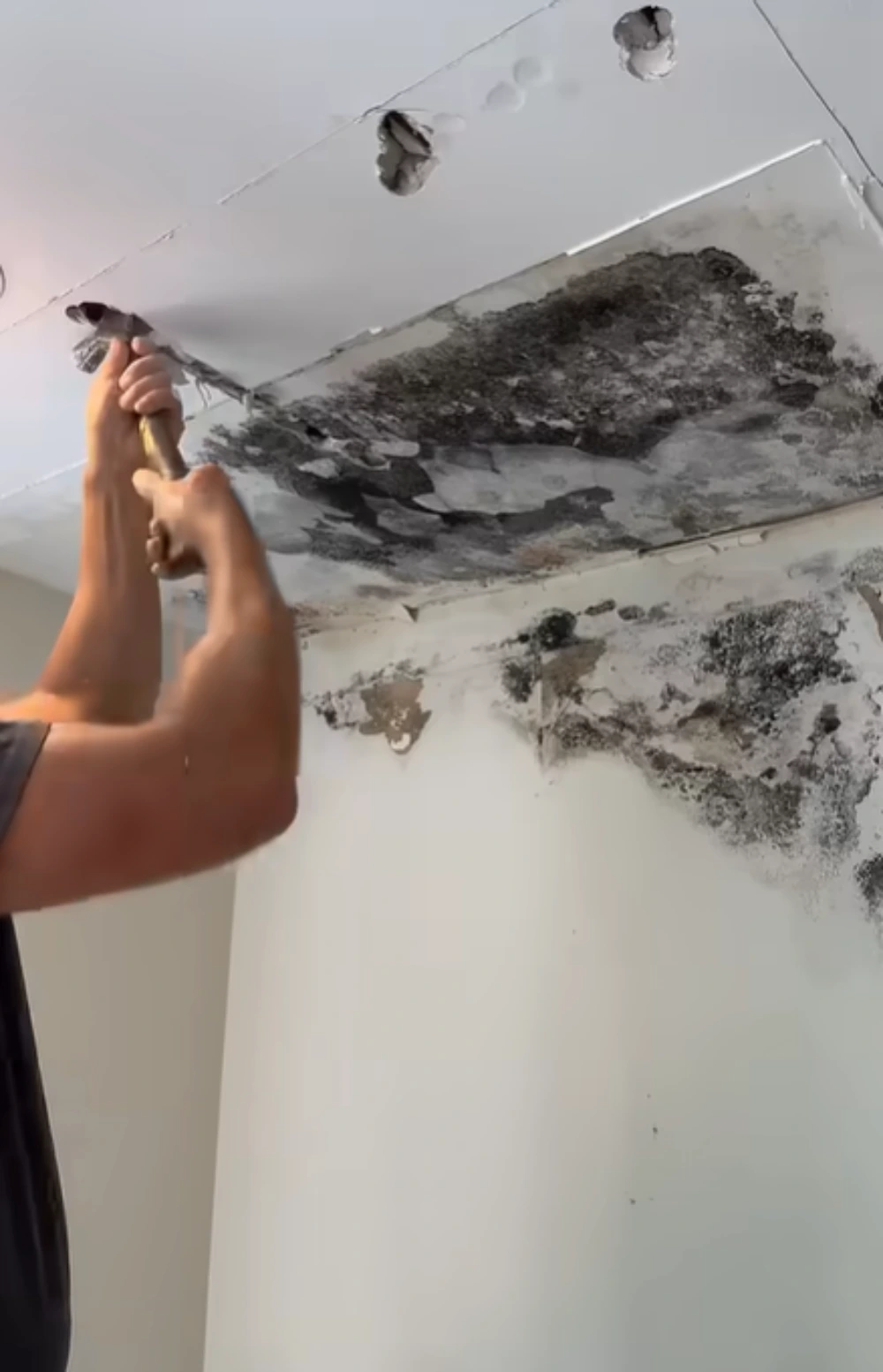
Proactive mold inspection in a multi-unit Inwood building. ZIP 10034.
The landlords who never end up in a dispute over mold are not the ones with newer buildings or fewer units, Inwood’s stock is almost entirely 1920s pre-war walk-ups regardless of who owns them. They are the ones who treated Local Law 55 as an actual annual routine instead of something to think about after a tenant complains, and who can produce a paper trail the moment anyone asks for one. Everything on this page is about building that position before you need it, not after.
The numbers make the case for prevention. In 2025, about 1 in 3 Inwood residential buildings received at least one HPD mold violation, and 725 are still open across ZIP 10034 (full Inwood mold data). A building that never gets on that list is the cheapest building to own.
Why Proactive Compliance Is Cheaper Than Reactive Cleanup
An HPD violation with a short cure window, an HP Action, or a DHCR decreased-services complaint all cost more in time, legal exposure, and often in the scope of remediation required, than catching the same moisture problem during a routine inspection before it has spread. A small leak behind a bathroom wall caught during an annual inspection is a contained job. The same leak discovered eighteen months later because a tenant finally complained is a wall cavity, a subfloor, and possibly an adjoining unit.
What Does NYC Local Law 55 Actually Require of Landlords?
Local Law 55, the Asthma-Free Housing Act, applies to buildings with three or more residential units, which covers the large majority of Inwood’s building stock. It requires landlords to proactively inspect every unit annually for mold and pest hazards, not just respond to complaints, and to provide tenants with the NYC DOHMH Indoor Allergens fact sheet at lease signing, renewal, and annually thereafter. A mold condition of 10 square feet or more in a building with 10 or more units also triggers the NYS Article 32 licensed-assessor and remediator requirement.
The Documentation That Protects You If a Mold Claim Is Filed
If a tenant does file a 311 complaint, a DHCR complaint, or pursues an HP Action, the difference between a fast resolution and a drawn-out case usually comes down to what you can actually produce. Keep records of:
- Annual inspection dates and findings for every unit, not just a general statement that inspections happen
- Proof that the DOHMH Indoor Allergens fact sheet was provided at lease signing, renewal, and annually
- Written scopes of work and licensed assessor and remediator documentation for any mold job over 10 square feet
- Timestamped records of when a tenant complaint was received and when a response or repair was made
- Certification of Correction filings for any prior HPD violations
How Fast Do I Need to Respond to a Tenant’s Mold Complaint?
An HPD violation for a hazardous mold condition, Class B, typically carries about a 30-day cure window. An immediately hazardous condition, Class C, carries a 21-day cure window. HPD classifies mold violations by size, and Class C means 30 or more square feet of mold in a room. Waiting until a violation is issued to start that clock is the expensive way to find out how fast you needed to move, responding to a tenant complaint promptly, before HPD is ever involved, avoids the cure-window pressure entirely.
Hiring the Right Contractor Protects You Too
Using a mold contractor who is properly Article 32 licensed, with a genuinely separate, independently licensed assessor and remediator, is not just a compliance checkbox, it is part of what protects you if the work is ever questioned later. A landlord who hired an unlicensed operator, or one company doing both the assessment and the removal on a job over 10 square feet, has weakened their own position if a tenant later disputes whether the mold was actually resolved.
Can I Be Held Liable If I Hire an Unlicensed Mold Contractor?
Hiring an unlicensed contractor, or one operating outside what Article 32 permits, does not protect a landlord from liability, it typically increases it. If the remediation is later found to be inadequate, having used a non-compliant contractor undermines the argument that you took the problem seriously and handled it correctly the first time.
Licensed assessment, the kind of documentation that holds up. Inwood, Manhattan – ZIP 10034.
Building-Specific Risk Factors in Pre-War Inwood Buildings
Knowing where mold actually starts in this building stock lets you inspect the right places instead of waiting for a tenant to smell it. The recurring risk points across Inwood’s 1920s walk-ups: original cast-iron waste stacks and copper supply risers that are now eighty to a hundred years old and prone to slow, hidden leaks; basement and cellar areas with limited ventilation and, in some buildings, legacy Sandy-era moisture in the foundation that was never professionally dried; un-vented or poorly vented bathroom exhausts pushing shower steam into wall cavities instead of outside; and roof or parapet deferred maintenance that shows up as a ceiling leak two floors down. An annual inspection that specifically checks these points, rather than a generic walkthrough, catches problems months or years before they become a tenant complaint.
What to Do Before a Tenant Ever Files a Complaint
Set a fixed annual inspection schedule and keep it, rather than treating it as a when-we-get-to-it task. Distribute the DOHMH fact sheet as part of your standard lease paperwork so it never gets missed. Flag units with known risk factors, an aging riser, a basement storage area, a bathroom with no exterior vent, for a closer look during that inspection rather than a quick glance. And if an inspection turns up moisture or early mold, treat it the same way you would want a tenant complaint treated: promptly, with a licensed assessment, not a quick paint-over.
Want your annual Local Law 55 inspections done by someone who knows exactly where pre-war Inwood buildings actually fail? That’s what we do. Call (917) 694-9003.
Landlord Legal Protection – Frequently Asked Questions
Compliant Before a Complaint Ever Comes In.
Annual Local Law 55 inspections and licensed remediation for Inwood multi-unit buildings. ZIP 10034. Article 32 licensed.