
🏠 Service · Inwood, Manhattan · ZIP 10034
Basement Mold Removal in Inwood, Manhattan
Pre-war walk-up basements, foundation moisture, and Sandy-era legacy dampness. The most common mold job in Inwood – done properly, with independent clearance.
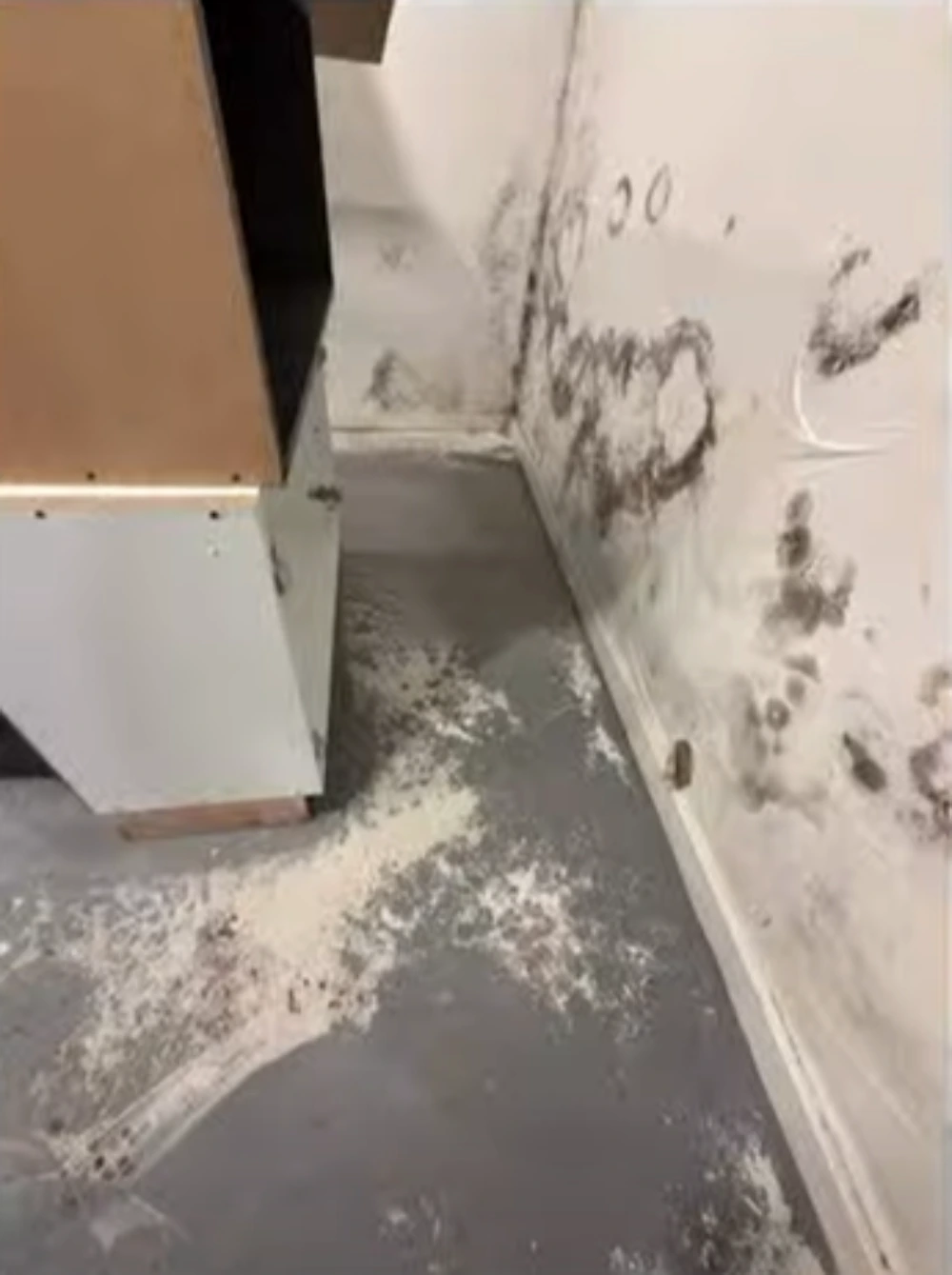
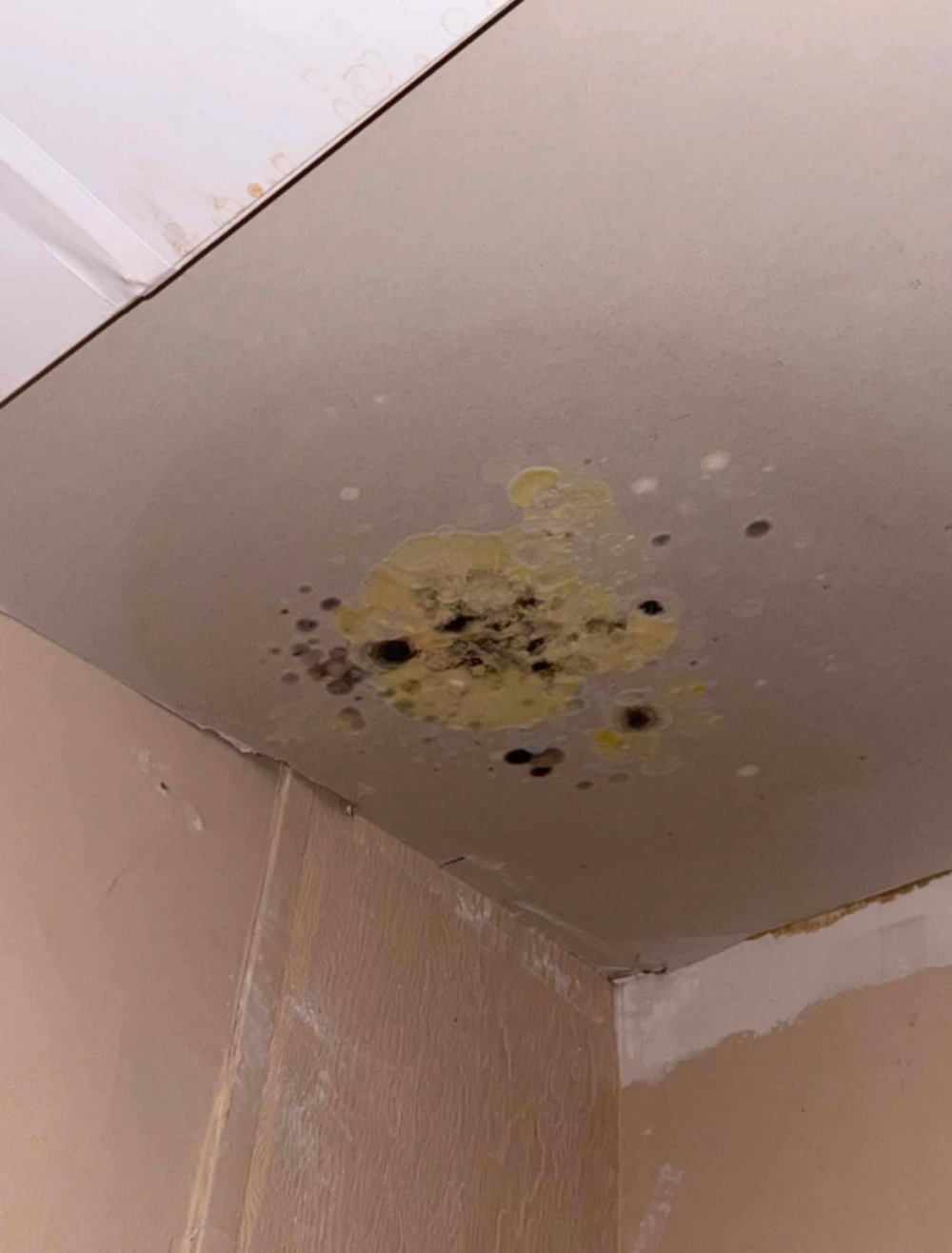
Real jobs. Inwood, Manhattan – ZIP 10034.
Pre-War Walk-Up Basements, Foundation Moisture & Full Remediation
Basement mold is the most common job we do in Inwood. Not because the people here don’t care about their buildings – but because these basements were built in the 1920s, they’ve been absorbing moisture for a century, and the specific flood history of this neighborhood has left a legacy that no amount of bleach will fix. This page covers what basement mold in a 10034 walk-up actually looks like, why it keeps coming back, and what proper remediation involves.
I want to say something upfront: not every dark spot in a basement needs a professional remediation. A small surface stain on a concrete block wall in a dry basement – sometimes that’s efflorescence, mineral salt deposits left by water evaporation, not mold at all. Other times it’s a small patch of Cladosporium that’s been there since before the current tenants moved in, not currently growing, not spreading. I’ll tell you if what you’re looking at needs professional intervention. I’ll also tell you if it doesn’t.
Why are Inwood basements so prone to this? Most sit below grade in buildings from the 1920s, and the lowest blocks near Sherman Creek flooded during Sandy. See why pre-war Inwood buildings get mold and Sandy and Ida legacy mold.
But when a pre-war basement has genuine mold – and most of the ones we see in Inwood do – it’s almost never just the surface. It’s in the masonry, behind the storage shelving nobody’s moved in fifteen years, in the wall cavities adjacent to plumbing chases, in the joists above the ceiling of the sub-basement. That’s what this page is about.
Why Inwood Basements Are Uniquely Prone to Mold
I work in basements across Upper Manhattan. The ones in Inwood are different from Washington Heights, and they’re very different from anything in a post-war building. Here’s what makes them specific – and why every job on our full mold removal service in Inwood page starts with reading the building first:
The foundations are porous masonry, not poured concrete. Most of the pre-war walk-ups in 10034 sit on rubble stone or brick foundations – some with no vapor barrier between the masonry and the basement interior at all. Water migrates through these foundations constantly, especially after a rain event. The basement floor might be dry to the touch and show a moisture reading above 80% in the lower wall section. You can’t always see what’s wet.
Sandy-era moisture is still present in many buildings. In October 2012, the Hudson River storm surge and associated flooding hit low-lying sections of Inwood particularly hard – blocks off Dyckman Street, the lower sections of Vermilyea Ave and Post Ave near the waterfront, and anywhere the grade dipped below street level. I’ve been in basements in this neighborhood where the owner showed me photos from 2012 of water up to the ceiling. The water got pumped out. Nobody ever brought in industrial drying equipment. Nobody ever moisture-mapped the walls. That moisture is still there – in the masonry, in old wooden floor joists, in framing that was never exposed to the drying conditions needed to return it to safe moisture levels. Thirteen years later, mold is still surfacing from those foundations.
Hurricane Ida (September 2021) added another round. Ida’s rainfall exceeded Sandy’s water volume in some Upper Manhattan neighborhoods in terms of street flooding. Basements that had dried out after Sandy took on water again. Some of those have been “cleaned” twice – once after Sandy, once after Ida – without ever being properly dried or assessed. Layers of mold remediation on top of inadequate drying is not remediation. It’s temporary concealment.
The plumbing configuration creates wall-cavity leaks. In a typical 1920s Inwood walk-up, the waste stacks and supply risers run through wall cavities in the basement mechanical rooms and storage areas. These pipes are old. They develop slow leaks – not the catastrophic burst that gets noticed immediately, but a drip-per-minute leak that saturates the adjacent masonry and framing over months. By the time someone notices the musty smell or the black spotting, there’s often significant mold growth in a cavity that looks fine from the surface.
Because cleaning the visible surface doesn’t address the moisture source. In a pre-war masonry basement, the mold is typically growing on porous material – concrete block, brick mortar, wood framing, old drywall – and the moisture feeding it is coming from the foundation itself, a plumbing leak, or legacy storm moisture in the masonry. Bleach on the surface kills what’s visible. It doesn’t dry out a wet foundation wall or fix a leaking riser. Within weeks, the mold returns because the substrate is still wet and the spores in the surrounding air immediately recolonize. True remediation requires finding and correcting the moisture source first.
Warning Signs – What Basement Mold in an Inwood Walk-Up Looks Like
These are the actual signs we see most often. Some of them you can see. Some you can smell. Some require a moisture meter and a trained eye.
Three Real Basement Mold Scenarios from Inwood Buildings
Not hypotheticals. Three patterns we’ve actually dealt with in buildings in this neighborhood, described accurately but without identifying details.
Legacy Sandy Moisture Surfacing 12 Years Later
A building super called us to look at what looked like a new mold problem in the ground-floor storage room – black spotting appearing on the lower three feet of a concrete block wall. The building had flooded during Sandy. The super had been in the building since before the storm. His recollection: water was pumped out within a week, the wall dried “on its own,” the storage room was back in use within a month.
Moisture meter readings in that wall were still elevated – 18-22% moisture content in the block – in 2025. The “drying” in 2012 was evaporation of standing water, not remediation of moisture in the masonry itself. The mold wasn’t new. It had been growing slowly in the lower courses of block for years and had reached visible density by the time the super called.
Slow Waste-Stack Leak Behind a Finished Wall Section
Tenant in a first-floor unit on the Dyckman corridor complained of a musty smell for two building inspection cycles. Landlord’s contractor looked at the unit, found nothing. We were called to look at the basement. Behind a framed-out wall section adjacent to the laundry room – a common “finished basement” addition in these buildings from the 1970s renovation era – we found a slow drip from a cast-iron waste stack connection that had been leaking into the wall cavity for what the moisture patterns suggested was months to years.
The framed wall was 2×4 construction with drywall. The drywall and wood framing were saturated with mold growth from floor level to approximately four feet up, not visible from either side without opening the wall. The concrete block behind the framing had surface mold growth as well.
Sump Pump Failure After Ida – Discovered 14 Months Later
A landlord doing their Local Law 55 annual inspection noticed mold in a mechanical room that accessed the building’s sub-basement sump area. The sump pump had failed at some point during or after Hurricane Ida – the owner wasn’t certain of the exact date. The sub-basement had been wet for an extended period. The mold growth on the concrete walls, exposed floor joists above, and wood framing was extensive – well over 100 sq ft of affected surface area by the time we assessed it.
Under Article 32, at this scale, a licensed mold assessor was required to write the remediation plan before any work. We arranged the assessment, received the written plan, performed the remediation – containment, HEPA filtration, removal of affected materials, antimicrobial treatment – and arranged independent clearance testing. The entire paper trail was provided to the landlord for the Certification of Correction.
The Remediation Process for a Basement Job in a Pre-War Building
Basement jobs in Inwood walk-ups have some specific considerations that a generic remediation process guide won’t cover.
If the mold keeps coming back, the moisture source was never fixed. That’s the conversation to have. Call (917) 694-9003.
Moisture Mapping Before Anything Else
Before we talk about remediation scope, we map the moisture. Penetrating moisture meters on every section of wall, floor, and ceiling in the affected area. This tells us what’s wet versus what’s moldy, which aren’t always the same. Dry mold on a dry surface is a different scope than active mold on a still-wet surface. The moisture map determines the real extent of the problem – which is almost always larger than what’s visible.
Licensed Assessment and Written Plan (for jobs over 10 sq ft)
Under NYS Article 32, any mold project over 10 square feet requires an independent licensed mold assessor to document the extent and write the remediation plan before work begins. Most real basement mold jobs in Inwood exceed this threshold. We coordinate the assessment and you receive the written plan. No work starts without it.
Containment – Specific to Basement Airflow
Basements in pre-war walk-ups are connected to the building’s air system in ways that modern construction isn’t – open stairwells, utility chases, gaps between the basement ceiling and the first-floor subfloor. Containment in this environment requires negative air pressure setup that accounts for those pathways, not just plastic sheeting across the basement door. We don’t skip this step, because disturbed mold spores in an uncontained basement become a whole-building problem.
Physical Removal of Contaminated Porous Materials
Drywall, wood framing, insulation, ceiling tile – any porous material with mold growth comes out. Concrete block and brick can be treated in place if the growth is surface-level and the block can be dried. Wood floor joists with deep mold penetration – which we see in basements with long-term exposure – require removal and replacement, not just surface treatment. We don’t make this call speculatively; the assessor’s plan documents exactly what stays and what goes.
HEPA Vacuuming and Air Scrubbing
After removal, HEPA vacuuming of all surfaces in the containment zone – not just the visibly affected ones. Air scrubbers run continuously throughout the job and for a period after removal, cycling the air in the containment zone through HEPA filtration multiple times per hour. This is the standard under ANSI/IICRC S520 and it’s what makes clearance testing reliable.
EPA-Registered Antimicrobial Treatment and Metered Drying
Hard, non-porous surfaces remaining in the containment zone – concrete, block, metal – get EPA-registered antimicrobial treatment. Then industrial drying equipment runs until moisture readings in every section of the remediated area reach the target range specified in the remediation plan. “Looks dry” is not a measurement. We don’t release a basement until the moisture meter says it’s dry.
Independent Post-Remediation Clearance Testing
A separate licensed mold assessor – not us, not the original assessor – collects air samples and surface samples in the remediated area, sends them to an AIHA-accredited laboratory, and issues a written clearance report. If the lab results meet the standard, the job is cleared. If they don’t, we go back in. We don’t release a job based on a visual inspection. The clearance report goes to you – keep it.
Moisture meters. After remediation and drying, we take final readings across the entire remediated area. If moisture readings in the masonry or framing are still elevated, the moisture source hasn’t been corrected – either the plumbing leak is still active, or the foundation waterproofing still needs to be addressed. We don’t close out a job with elevated readings. That’s also why clearance testing matters: air sampling in a still-damp environment will fail, giving you an objective third-party confirmation that either the work is complete or it isn’t.
Tenant and Landlord Rights – Basement Mold Specifically
If you’re a tenant in a ground-floor or first-floor unit with mold odors or visible mold that the landlord attributes to “the basement” or “the building’s plumbing” – the landlord is still responsible. The source being the basement doesn’t exempt them. Under NYC Local Law 55, landlords of 3+ unit buildings must proactively inspect for mold and maintain habitable conditions. A first-floor apartment with a musty smell from basement mold is a habitability issue, and you have the right to file a 311 complaint and force an HPD inspection.
If you’re a landlord and your building has basement mold – proactive remediation now costs less than an HPD violation, the cure-window pressure, and the potential Housing Court action from a tenant’s HP filing. For basements in buildings with 10+ units, Article 32 applies: a licensed assessor writes the remediation plan, a separate licensed contractor does the work, and a separate assessor performs clearance. The documentation from that process is your Certification of Correction.
Tenant rights and mold in NYC rentals – full guide →
Landlord compliance guide – Local Law 55 and HPD violations →
What Basement Mold Remediation Costs in Inwood
Basement jobs are the most variable in cost because the extent of moisture penetration and mold growth varies dramatically by building age, the severity of past water events, and how long the problem has been developing.
- Small, isolated basement area (one section of block wall, no structural materials affected): $800-$2,500
- Mid-size basement job (laundry room, storage area with some framing involvement): $2,500-$7,500
- Large basement remediation (significant structural material removal, full mechanical room, post-flood): $8,000-$25,000+
- Independent assessment: $350-$900 (required for jobs over 10 sq ft)
- Post-remediation clearance testing: $300-$600
What moves the number significantly: how much porous material has to come out (drywall and framing vs. surface block treatment only), the drying time required to reach target moisture levels, and whether plumbing or structural work is needed that isn’t part of the mold scope. We give itemized written estimates. See our full local cost guide for more detail.
Basement mold removal is available across Inwood (ZIP 10034) and nearby Upper Manhattan, including Washington Heights and Marble Hill. Same process, same written scope, same independent clearance.
Basement Mold Inwood – Common Questions
Can I remove basement mold myself in my Inwood apartment?
For very small, isolated patches on hard, non-porous surfaces like sealed concrete – yes, with proper protective equipment (N-95 mask minimum, gloves, eye protection). For anything on porous materials like block with open joints, wood, drywall, or old ceiling tile – no. Those materials need to come out, and disturbing them without containment spreads spores throughout the basement and potentially into the units above. For any area over 10 square feet, NYS Article 32 requires a licensed mold assessor and remediation contractor. If a baseline musty smell remains after a DIY clean, the problem hasn’t been addressed – it’s just less visible.
Why does my basement mold keep coming back after bleaching it?
Because bleach doesn’t dry a wet foundation wall or fix a plumbing leak. Bleach oxidizes visible surface mold on non-porous surfaces. On concrete block, brick, or wood – all porous – the mold is growing into the material, not just on it. The hypochlorite in bleach doesn’t penetrate deep enough to kill the root structure, and the water in bleach solutions can actually add moisture. The mold returns because the substrate is still wet and the moisture source hasn’t changed. The fix isn’t a different cleaning agent – it’s finding and correcting the moisture source.
How long does basement mold remediation take?
A small basement job – one wall section, no structural material removal – is typically done in two to three days, with drying and clearance testing adding a few more days. A larger job with significant porous material removal runs five to ten days for the remediation itself, then additional drying time (often three to seven days) before clearance testing can be done reliably. We provide a specific timeline in the written remediation plan. Rushing the drying phase is the most common reason clearance tests fail.
Is my landlord responsible for basement mold in my Inwood building?
Yes – in buildings with 3 or more units (which is virtually every building in Inwood), NYC Local Law 55 requires landlords to proactively inspect for mold and maintain mold-free conditions. If basement mold is affecting your unit – through odor, visible spread, or health effects – your landlord is required to address it. If they don’t respond after written notice, you can file a 311 complaint, which triggers an HPD inspection and potential violation. See our tenant rights guide for the full step-by-step process.
Does homeowners or renters insurance cover basement mold removal?
It depends entirely on the cause. A sudden pipe burst in the basement that causes mold is often covered by standard homeowners or renters insurance if reported promptly. Gradual leaks, rising groundwater, foundation seepage, and storm surge are typically excluded – those require separate flood coverage (NFIP or private flood insurance). Sandy-era and Ida-era mold that surfaces now, years after the original event, is generally not covered under current policies. Any contractor who promises coverage without understanding your specific policy and cause of loss is speculating.
What type of mold is most common in Inwood basements?
The most common species we encounter in laboratory results from Inwood basement air samples and surface samples are Cladosporium, Penicillium, and Aspergillus – all of which can appear dark and are frequently misidentified as “black mold” or Stachybotrys chartarum. True Stachybotrys (the species most associated with the “toxic black mold” label) is less common but does occur in situations with sustained high moisture, such as basements with long-term flood history. The species matters for understanding health risk, but remediation protocol is similar: containment, removal of contaminated porous materials, HEPA cleaning, drying. That’s why independent lab testing – not visual identification – is the right approach.
Basement Mold in Your Inwood Building? Let’s Look at It.
We handle basement mold jobs in Inwood, Washington Heights, Marble Hill, Dyckman, and Fort Tryon. Written estimate before any work starts. Independent clearance testing after. No fear-mongering, no inflated scopes.
Basement Mold? Get It Assessed Today.
Same-day assessments available. Inwood, Manhattan – ZIP 10034 only. Article 32 licensed. Independent clearance.
📞 Call – Let’s Find Where the Moisture Is Coming From