🔬 Mold Assessment · Air Testing · Article 32 · Inwood, Manhattan · ZIP 10034
Mold Testing & Assessment in Inwood, Manhattan
Mold testing and mold remediation are legally required to be done by two different, independently licensed companies in New York State. This page explains why that matters, what an assessment actually includes, what air testing can and cannot tell you, and what to expect from the process in a 10034 building.
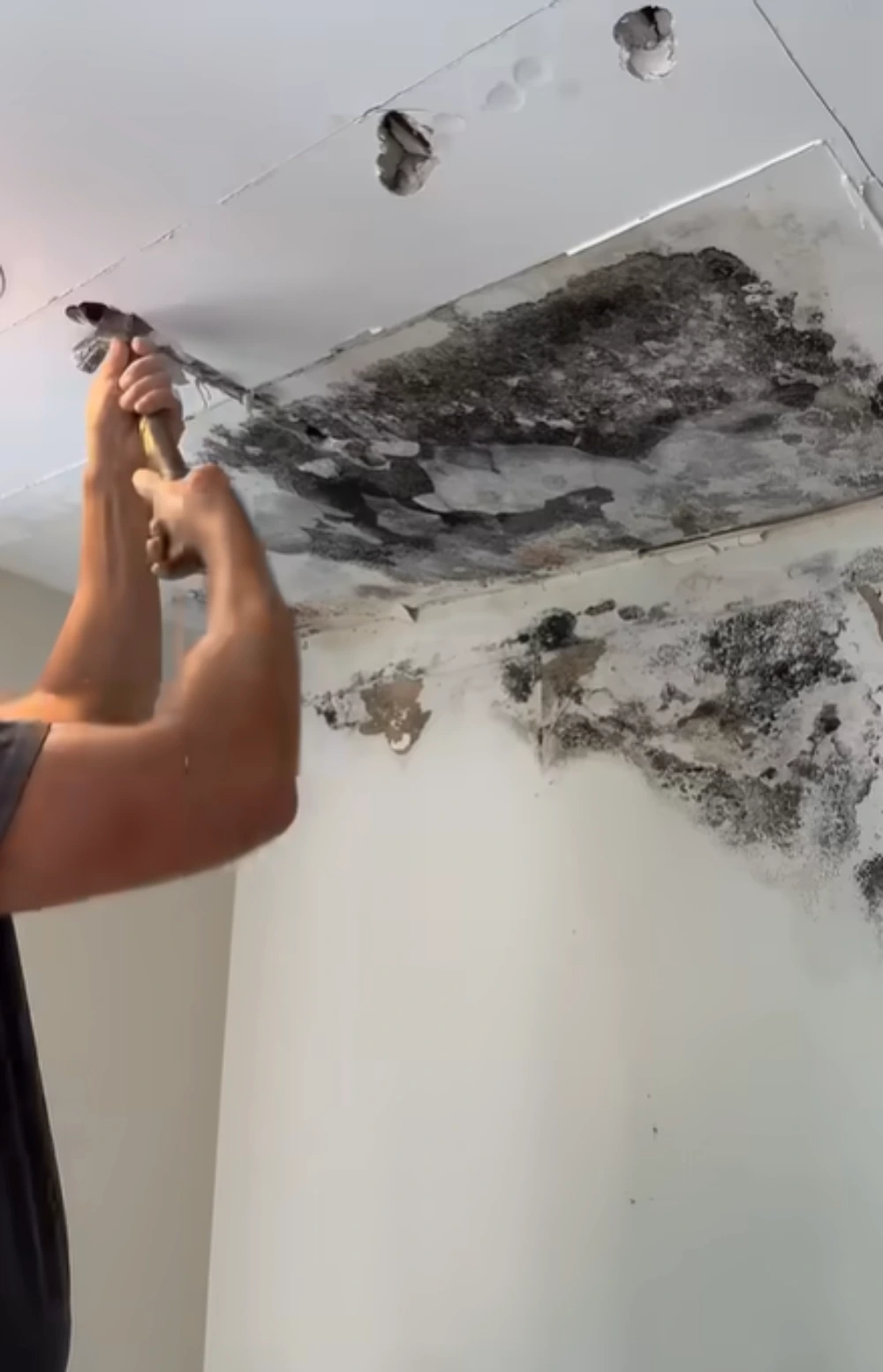
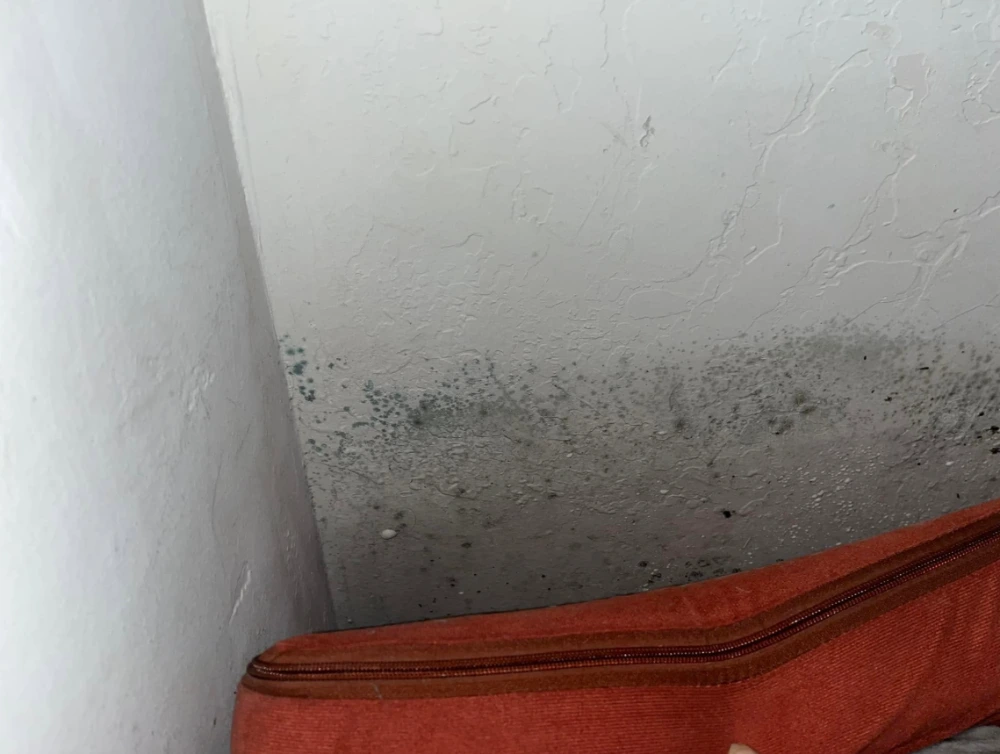
Real assessment work. Inwood, Manhattan – ZIP 10034. AIHA-accredited lab results.
Why Mold Testing and Mold Removal Must Be Done by Separate Companies
This is the piece of information most mold companies prefer you not know in detail, because once you understand it, you understand why “we test AND remove your mold” – all in one call, all in one invoice – is legally questionable for any project over 10 square feet in New York.
What Article 32 Actually Requires
Under New York State Labor Law Article 32, enacted in 2016 specifically in response to post-Sandy remediation fraud, any mold project larger than 10 square feet requires: (1) A licensed Mold Assessor to inspect, test, and write a written remediation plan. (2) A separately licensed Mold Remediation Contractor to execute that plan. (3) A separate third party to do post-remediation clearance testing. These are three different license types, and the state created this structure deliberately: the company diagnosing and scoping the problem should not financially benefit from inflating its scope.
At our operation, we handle the remediation side. The assessment and clearance are done by independently licensed assessors who have no financial stake in the remediation scope. That’s the law, and it’s the right way to do it. The full process – from initial call through independent clearance – is explained on our mold removal in Inwood, Manhattan service page.
Does every mold job require an assessment?
For any project over 10 square feet, yes – Article 32 requires a licensed assessor and a written remediation plan before work starts. In practical terms: if the mold growth you can see is larger than about a standard sheet of drywall, you’re above the threshold. In most real Inwood jobs – basements, bathroom walls with plumbing behind them, exterior walls with recurring moisture – the visible mold is almost always the smaller portion of what’s actually present, and the total affected area is usually above the threshold.
What Mold Testing Actually Includes – and What It Can and Cannot Tell You
There’s a lot of confusion about what “mold testing” means, partly because the term covers several different things, and partly because some companies use “testing” as a sales tactic without providing genuinely useful information.
Air Sampling
Air sampling is the collection of air from inside the space and from outside (the “control” sample) using a pump that draws air through a collection cassette. The cassette goes to an AIHA-accredited laboratory. The lab counts and identifies mold spores by genus and sometimes species, and reports concentrations in spores per cubic meter.
What air sampling tells you: whether the indoor mold spore concentration is elevated compared to the outdoor baseline, and which genera are present. Elevated indoor counts of genera like Stachybotrys, Chaetomium, or Penicillium/Aspergillus at concentrations significantly above the outdoor sample indicate an indoor mold problem.
What air sampling cannot tell you: exactly where the mold is growing, how extensive the growth is, or what the moisture source is. Air sampling is a screening tool, not a map.
Surface Sampling (Tape Lifts and Swabs)
When you can see mold growth and want to know what species it is, a surface sample is collected – either with a piece of clear tape pressed against the growth (tape lift) or with a sterile swab. This is sent to the lab and analyzed. Surface sampling tells you what’s actually growing in that specific location – useful for identifying the species accurately before deciding on remediation approach.
Moisture Mapping
This is the most practically important part of a real assessment for Inwood buildings. A thorough assessment includes moisture meter readings at every potentially affected surface, and often an infrared camera scan, which detects temperature differentials indicating hidden moisture behind walls. Without knowing where the moisture is, you can remediate visible mold but have no idea whether you’ve addressed the actual problem.
How to Interpret Mold Testing Results – Without Getting Talked Into Something You Don’t Need
Air sampling results come back from the lab as a list of genera with spore counts. Here’s what matters:
The comparison between indoor and outdoor samples is the key number. There is no universally accepted “safe” spore count for indoor air – the relevant question is whether indoor levels are elevated relative to the outdoor baseline. A “high” indoor count of Cladosporium on a windy October day, when outdoor Cladosporium counts are also high, means much less than the same indoor count in January when outdoor counts are low.
Indicator molds matter most. Stachybotrys, Chaetomium, and Memnoniella are what assessors call indicator molds – genera that require chronic, wet, cellulose-rich conditions to grow, and are rarely found outdoors at significant concentrations. Finding any of these in an indoor sample at elevated levels is a red flag warranting investigation regardless of the outdoor baseline.
The overall picture matters more than any single number. A good assessor interprets the results in the context of the visual inspection, the moisture readings, and the specific characteristics of the building – a 1920s pre-war walk-up in Inwood is a different context than a 2010 glass tower in Midtown.
I got test results back that say “high mold” – what does that mean?
High relative to what? This is the question to ask. Some testing companies use dramatic-sounding language without providing the outdoor control comparison that makes the result meaningful. Ask to see the outdoor sample result alongside the indoor result. Ask what genera were elevated and by how much. Ask whether the elevated genera are ones that require chronic water damage to grow, or common outdoor species that happen to be in season.
What an Article 32 Assessment Looks Like From Start to Finish
Visual Inspection and Moisture Mapping
The assessor visits the space and does a thorough visual inspection – looking for visible mold growth, water staining, material damage, moisture sources, and ventilation conditions. Moisture meter readings at every potentially affected surface. Infrared camera scan if warranted.
Sampling
Air samples and surface samples collected as appropriate. Cassettes go to an AIHA-accredited lab with a 3 to 5 business day turnaround. Rush service (24 to 48 hours) is available for urgent situations, including HPD violation cure windows.
Written Remediation Plan
The assessor writes a mold remediation plan – identifying the affected areas, estimated extent, materials involved, methods to be used, and a cost/time estimate for the remediation work. This written plan is the deliverable Article 32 requires before any remediation begins. The remediator cannot deviate materially from this plan.
Remediation (by a Separate Licensed Contractor)
The licensed remediator – separately from the assessor – executes the plan. We handle this step in cases where we are engaged for the remediation work.
Independent Clearance Testing
After remediation is complete, the assessor (or a different licensed assessor – it cannot be the remediator) returns to do clearance testing. Air samples and surface samples are taken again. If the results show the space is back to normal, clearance is granted and you get the documentation.
What Mold Testing Cannot Tell You – and Why the Moisture Source Matters More
This section exists because I want to be straight with you about the limits of testing as a tool.
Air sampling tells you whether mold is elevated in the air you’re breathing. It doesn’t tell you where the mold is growing, how extensive the growth is, or – most importantly – why it’s there. A “clean” air test in a space with a known moisture problem is not a green light to do nothing. If you have visible mold, elevated moisture readings in walls, a musty smell, or a known water event history, those are valid reasons to investigate further regardless of what an air test shows.
The moisture source is the actual problem. Mold is the symptom. A building that has been incompletely dried after flooding, or has a chronic plumbing leak inside a wall, or has groundwater pushing through the foundation – that building will have mold. Removing the mold without addressing the moisture is a temporary fix. The mold comes back.
This is why every legitimate assessment includes moisture mapping, not just air sampling. The air tells you whether you have a problem. The moisture meter tells you where it is and what’s causing it.
What Assessors Typically Find in Inwood’s Pre-War Buildings
Having worked in these buildings, here’s what shows up most consistently:
Elevated Penicillium/Aspergillus in basements with groundwater intrusion – the chronically damp environment supports ongoing growth even without a specific leak. Often found in old cardboard boxes and stored materials long before it reaches the structural walls.
Cladosporium on window frames and exterior wall surfaces – driven by coastal humidity and the temperature differential between old masonry walls and the interior air in winter. Common in every building type in this neighborhood.
Stachybotrys in buildings with unresolved Sandy or Ida flooding – specifically in the lower-block buildings near the Hudson waterfront that took surge and were not professionally dried. The pattern is first-floor or basement walls that have been chronically elevated in moisture for years, with heavy growth on the back face of drywall or on wooden structural members behind the wall.
Hidden moisture in walls where there is no visible mold but a persistent musty smell – this is the infrared camera finding. The smell is real, the mold is real, it’s just growing on a surface you can’t see from the room side.
What Does Mold Assessment and Testing Cost in Inwood?
Independent mold assessment: typically $350 to $900 in Inwood, depending on the size of the space and the number of samples collected. This includes the site visit, the sampling, the lab fees, and the written remediation plan.
Post-remediation clearance testing: typically $300 to $600, including the site visit, sampling, lab fees, and the written clearance report.
Independent mold testing, coordinated with a separately licensed assessor, is available across Inwood (ZIP 10034) and nearby Upper Manhattan, including Washington Heights and Marble Hill. Same process, same written scope, same independent clearance.
Frequently Asked Questions – Mold Assessment and Testing in Inwood
Sometimes you need air sampling. Sometimes a moisture meter tells you what you need to know. We’ll be honest about which is which. Call (917) 694-9003.
Need a Mold Assessment in Inwood? Start Here.
Independent assessment, written remediation plan, AIHA-accredited lab results. Inwood, Manhattan – ZIP 10034 only. Article 32 licensed. Assessment and remediation always separate.
📞 Call to Talk Through Whether Testing Makes Sense