
🏠 Tenant Rights · Inwood, Manhattan · ZIP 10034
Can I Break My Lease Because of Mold in NYC? Your Options Before You Move Out
Mold that your landlord won’t fix can breach New York’s warranty of habitability. But walking out early is the riskiest way to use that right. Here are your real options, in order, and what to document before you decide.
Updated October 8, 2026. Law checked against NY Real Property Law §235-b and §227-e. General information, not legal advice.
Can I break my lease because of mold in NYC?
Not automatically. New York has no rule that lets you walk away from a lease just because there is mold. But serious mold your landlord won’t fix can breach the warranty of habitability under Real Property Law 235-b. That opens real remedies, and moving out early is only one of them, and the riskiest.
Whether you can break your lease because of mold is the question we get from Inwood tenants more than almost any other. About 92% of the neighborhood rents, mostly in 1920s walk-ups, and in 2025 roughly 1 in 3 residential buildings in ZIP 10034 received an HPD mold violation. As of our September 2026 pull there were 725 open mold violations in Inwood (see our Inwood mold data). So if you are fed up, you are not alone. Here is how to get out of the mold, with or without getting out of the lease.
What does the warranty of habitability actually say?
Every residential lease in New York, written or oral, includes a promise from the landlord that the apartment and common areas are fit to live in, and that tenants won’t be exposed to conditions dangerous to their life, health or safety. A lease clause that waives this is void. It does not cover conditions the tenant caused.
You can read the full text of Real Property Law 235-b on the State Senate site. That last part matters with mold. If the source is a leaking riser, a roof leak, a broken exhaust fan or a wet basement wall, that is the building. If the landlord argues it is your humidity or housekeeping, the moisture source becomes the whole argument, which is why documentation matters so much. Our guide for when the landlord says it’s just condensation covers that fight.
What are my options if my landlord won’t fix the mold?
Most Inwood tenants have five options, roughly from safest to riskiest: written notice and a 311 complaint, an HP Action in Housing Court, a claim for a rent reduction, a negotiated lease buyout or surrender, and moving out early. Each one has a different cost and risk. Most people start at the top.
| Option | What it does | Main risk |
|---|---|---|
| Written notice, then 311 / HPD | HPD can inspect and issue a violation with a deadline to fix | Low. Takes time; landlord may do a cosmetic fix |
| HP Action in Housing Court | A judge can order repairs | Low to moderate. Court dates; free help is often available |
| Rent reduction (abatement) | Money back for the period the apartment wasn’t habitable | Moderate. Withholding rent can lead to a nonpayment case |
| Negotiated lease surrender | You leave early with a signed agreement ending the lease | Low, if it is in writing and covers rent and deposit |
| Move out, claim constructive eviction | You argue the mold forced you out, so rent stopped | High. Landlord may sue for rent; a court decides |
For the first two, our 311 and HPD complaint guide and landlord won’t fix mold guide walk through each step. For the third, read can I withhold rent for mold before you stop paying anything.
What is constructive eviction, and why is it risky?
Constructive eviction is the legal argument that the landlord’s failure made the apartment so unusable you had to leave, which ends your duty to pay rent. It generally requires that you actually move out. Whether it applies is decided by a court, often after the landlord sues you for unpaid rent, so you carry the risk until then.
This is where people get hurt. They leave in frustration, stop paying, and months later get served for the rest of the lease. If the mold was serious and well documented, they may win. If the paperwork is thin, they may not.
There is one protection worth knowing. Under Real Property Law 227-e, when a tenant leaves early, the landlord must make reasonable, good faith efforts to re-rent the apartment, and once a new tenant’s lease starts, yours ends. A lease clause that waives that duty is void. It limits what you could owe; it does not erase it.
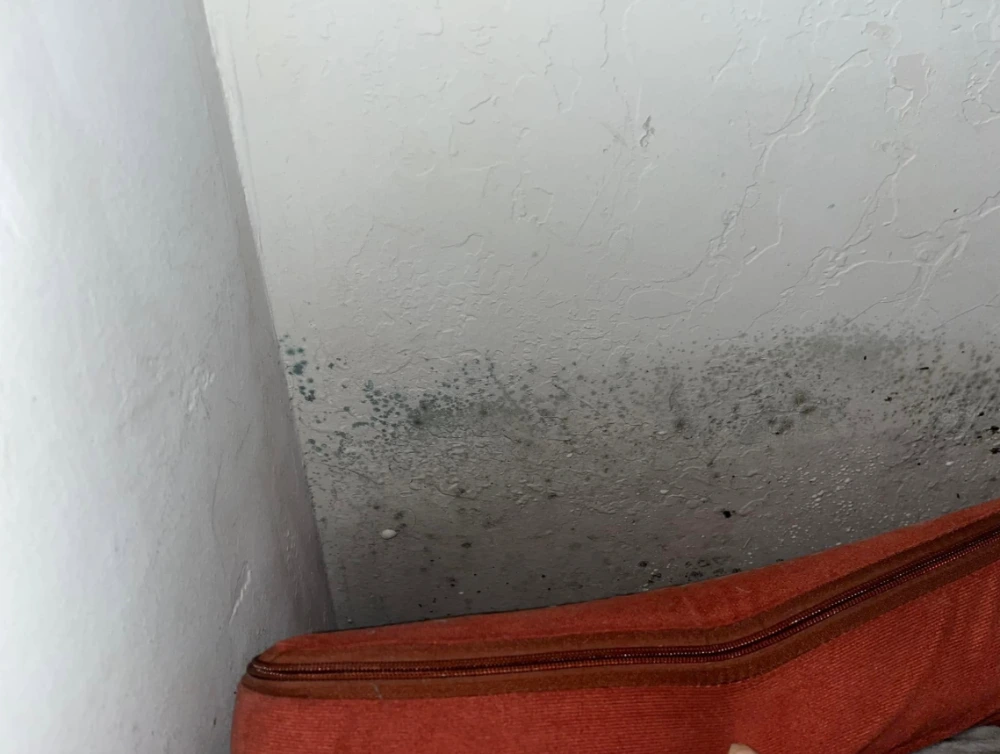
What should I document before deciding anything?
Build a paper trail before you make any move: dated photos and video, copies of every written notice to the landlord, your 311 complaint numbers, any HPD violations on the building, and, if possible, an independent mold assessment. If a doctor has advised you about mold exposure, keep that note too. Courts decide these cases on records, not on how bad it smelled.
- Photos and video, dated, with something for scale. Retake them every week or two.
- Written notice to the landlord or managing agent, with proof of delivery. Texts help; a dated letter is stronger.
- 311 complaint numbers and any HPD inspection results. You can look up violations on your building on HPDONLINE.
- An independent assessment by a licensed mold assessor, if you can get one. In New York the assessor must be separate from whoever does the removal.
- A log of dates: when it started, when you reported it, what the landlord did or didn’t do.
Want the mold fixed, not just documented?
Share this page with your landlord or managing agent. We remediate mold in Inwood buildings to a written scope, with an independent licensed assessor clearing the work. Call (917) 694-9003.
Landlord or property manager? If a tenant has sent you this page, call (917) 694-9003. We find the moisture source, remediate to a written scope, and coordinate the independent assessor and clearance paperwork HPD asks for.
Does it matter if my apartment is rent-stabilized or NYCHA?
Yes, a lot. A rent-stabilized lease in Inwood is hard to replace, so breaking it to escape mold can cost far more than the mold. Repairs and rent reductions usually make more sense. NYCHA tenants, including in the Dyckman Houses, are dealing with the city as landlord, and an HP Action in Housing Court is generally the main route to force repairs.
Our rent-stabilized tenant rights page and NYCHA and Dyckman Houses page cover each in more depth.
Where can I get free or low-cost legal help?
Before you break a lease or stop paying rent, talk to a tenant lawyer or a legal services organization. Many Inwood tenants qualify for free or low-cost help, and Housing Court has help desks for tenants bringing HP Actions. Our legal help page lists where to start.
See our low-cost and free legal help guide, and the tenant rights hub for the full picture. The legal rules behind all of this are summarized on our NYC mold laws page.
If you are weighing whether to break your lease because of mold, start at the top of the options table and talk to a tenant lawyer before you move out.
This page is general information, not legal advice. Every lease and every case is different. Talk to a lawyer before you move out or stop paying rent.
We work across Inwood (ZIP 10034) and nearby Upper Manhattan, including Washington Heights and Marble Hill.
Frequently Asked Questions
Seeing Mold in Your Inwood Apartment or Building?
Inwood, Manhattan – ZIP 10034. We find the moisture source first, give you a written scope, and use independent clearance testing. No pressure, no fear-mongering.
📞 Call (917) 694-9003 – Describe What You’re Seeing